
⚡ Executive Bazi & Nayin Summary: The Tân Tỵ (辛巳 — Xin Si) Pillar
Deep qi lies hidden. Look beyond the surface zodiac. Within classical Ziping Four Pillars metaphysics and the ancient Nayin doctrine of San Ming Tong Hui, the Tân Tỵ (辛巳 — Xīn Sì / Xin Si) pillar represents a profound structural convergence between Heavenly Stem Tân (Yin Metal) above and Earthly Branch Tỵ (Yin Fire) below, forging the distinctive Self-Disciplined Authority (Quan Sát Chế Thân) formation across the Year, Month, Day, and Hour Palaces.
- Sexagenary Rank & Xun Void: Ranks #18/60 in the Sixty Jiazi cycle, belonging to the Giáp Tuất (Jia Xu) Xun (Emptiness / Void at Thân, Dậu (Shen, You)), symbolized by the Snake (巳).
- Stem–Branch Axis & 12 Life Stage: Branch Controls Stem (Officer/Killings Below) — Tân seated on Tỵ occupies the Tử (Stillness) stage (Quiet inward concentration and philosophical depth; dedicating oneself to a specialized craft or scholarly discipline yields master-level authority.).
- Hidden Stems & Seated Ten Gods: Branch Tỵ conceals Bính (丙 — Main Qi 60%, Direct Officer (Chính Quan)), Mậu (戊 — Middle Qi 30%, Direct Resource (Chính Ấn)), Canh (庚 — Residual Qi 10%, Rob Wealth (Kiếp Tài)); the primary seated Ten God is Direct Officer (Chính Quan) (正官).
- Classical Nayin Destiny (San Ming Tong Hui): White Wax Metal (Bạch Lạp Kim — 白鑞金) — Metal Element (Molten precious metal, pewter-silver, and nascent gold coalescing in the mold).
- Harmony & Clash Matrix: Heaven-and-Earth Twin Harmony with Bính Thân (Bing Shen); Stem-Clash Branch-Opposition with Đinh Hợi (Ding Hai), Ất Hợi (Yi Hai); Same-Stem Clash with Tân Hợi (Xin Hai); Three-Harmony Trine Tỵ – Dậu – Sửu (Si–You–Chou Metal Bureau); Six Harmony Thân / Shen (Transforms to Water).
- Shen Sha & Nobleman Stars: Heavenly Nobleman at Dần, Ngọ (Yin, Wu); Academic Star at Tý (Zi); Thriving Lu at Dậu (You); Sky Horse at Hợi (Hai); Peach Blossom at Ngọ (Wu); Elegant Canopy at Sửu (Chou); Formation: Ten-Great-Reversals Day (Thập Ác Đại Bại — Requires Strict Treasury Discipline).
1 What Is Tân Tỵ (Xin Si)? Stem–Branch Anatomy & Ziping Qi Mechanics

Qi demands a root. Destiny follows its source. In classical sexagenary horology and Ziping Four Pillars Bazi, Tân Tỵ (辛巳 — Xīn Sì / Xin Si) stands as Pillar #18/60 of the Sixty Jiazi cycle, forged by the vertical union of Heavenly Stem Tân (辛) representing manifest heavenly timing and Earthly Branch Tỵ (巳) representing the terrestrial foundation that anchors the entire chart from below.
Examine the upper canopy first. At the Heavenly Stem level, Tân embodies Yin Metal (Due West, thriving in Autumn), evoking the classical image of Refined jewelry and crown gold, polished jade ornaments, pristine autumn frost; the canonical treatise Di Tian Sui (滴天髓) captures its essence in the immortal verse “辛金軟弱,溫潤而清,畏土之疊,樂水之盈” (Xīn jīn ruǎn ruò, wēn rùn ér qīng, wèi tǔ zhī dié, lè shuǐ zhī yíng); Di Tian Sui (滴天髓) likens Xin Metal to refined gold and pearls—delicate, lustrous, and pure; it dreads thick Wu Earth burying its radiance ('Heavy Earth Burying Metal'), yet rejoices in brimming Ren Water that washes away dust to create the noble 'Metal White, Water Clear' (Kim Bạch Thủy Thanh) pattern.
The terrestrial root decides endurance. Never overlook the lower branch. At the Earthly Branch foundation, Tỵ belongs to Yin Fire, corresponds to the Snake zodiac, governs the solar month of 4th Lunar Month (Early Summer — Fire Thrives, Metal Born), aligns with South-Southeast (142.5°–157.5°), and rules the double-hour 09:00 – 11:00; what gives Branch Tỵ its profound multidimensionality in Bazi analysis is its internal reservoir of Hidden Stems (Ren Yuan Yong Shi) containing Bính (丙 — Main Qi 60%, Direct Officer (Chính Quan)), Mậu (戊 — Middle Qi 30%, Direct Resource (Chính Ấn)), Canh (庚 — Residual Qi 10%, Rob Wealth (Kiếp Tài)), while clearly distinguishing the Classical Nayin layer (White Wax Metal — Metal) from the Five-Element Stem–Branch axis (Tân Metal seated on Tỵ Fire).
2 Nayin White Wax Metal (Bạch Lạp Kim) — Exegesis from San Ming Tong Hui & Lan Tai Miao Xuan
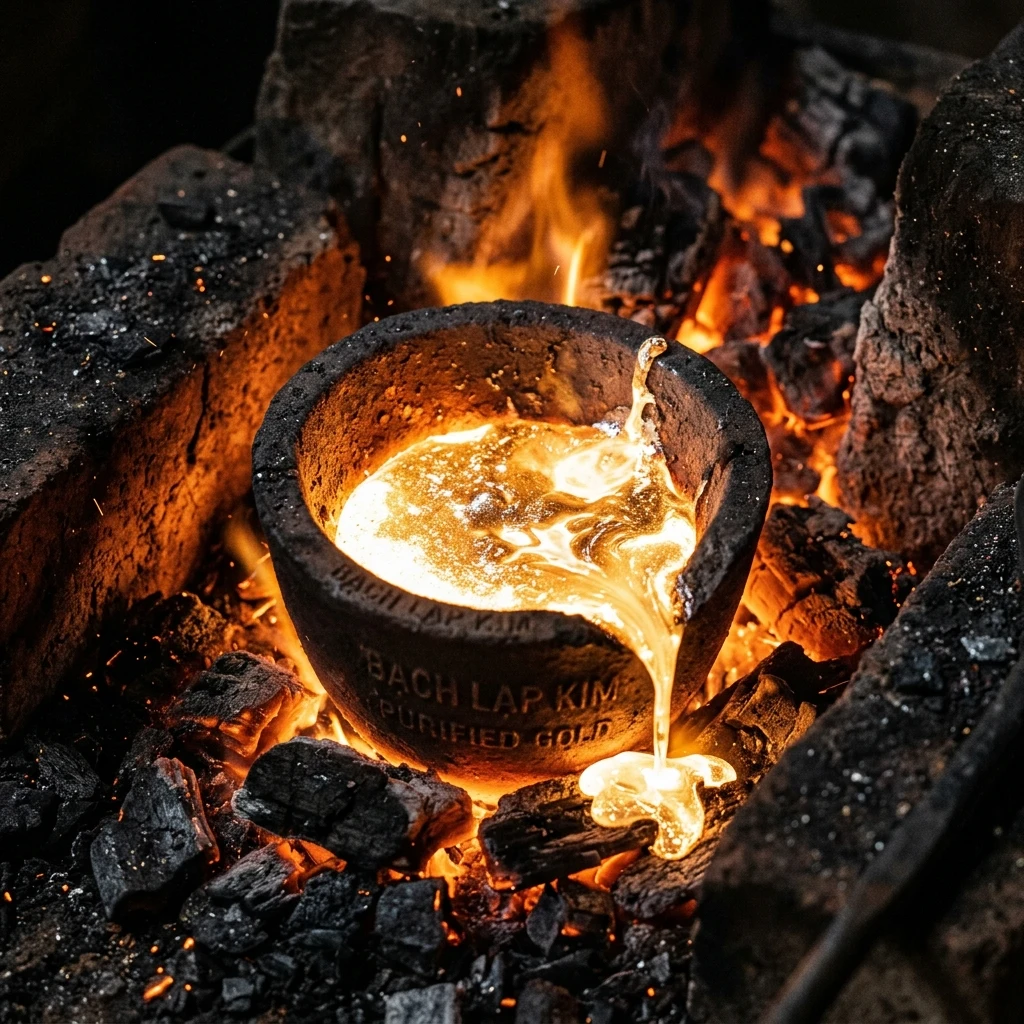
Nayin is acoustic resonance. Its metaphysical law is subtle. Unlike the raw Five Elements of individual stems and branches, Nayin Five Elements (納音五行) derive from the ancient harmonic pairing of the Sixty Jiazi with the Five Musical Tones and Twelve Pitch Pipes, wherein Tân Tỵ (辛巳) and its twin pillar Canh Thìn (Geng Chen) share the Nayin identity of White Wax Metal (Bạch Lạp Kim — 白鑞金, Molten precious metal, pewter-silver, and nascent gold coalescing in the mold) under the Metal Element.
Here lies the subtlest distinction. Never conflate the two twins. Although both carry the banner of White Wax Metal, because Tân Tỵ occupies the Tử (Stillness) life stage within the Giáp Tuất (Jia Xu) Xun (Void at Thân, Dậu (Shen, You)), it rejoices when encountering complementary Nayin pillars such as Lư Trung Hỏa (with Water balance), Giản Hạ Thủy (Ravine Water), Tuyền Trung Thủy (Spring Water), Thành Đầu Thổ (City-Wall Earth) to achieve noble stature, while requiring vigilance against incompatible Nayin forces like Đại Hải Thủy (Great Ocean Water — sinking nascent metal), Thiên Thượng Hỏa (Heavenly Fire — over-melting).
📜 Classical Exegesis from San Ming Tong Hui & Lan Tai Miao Xuan on White Wax Metal (白鑞金)
Canonical Record in San Ming Tong Hui (Ming Dynasty): The classical text states the principle with crystalline precision. Its metaphysical reasoning runs deep. San Ming Tong Hui (三命通會) writes: 'Bai La Jin (White Wax Metal) is a slice of Kunlun jade and a pearl left on the riverbank; Metal qi first condenses at Nourishment in Chen and Long Life in Si, pliable and lustrous white like molten silver-wax.'.
Canonical Poetic Imagery in Lan Tai Miao Xuan (Song Dynasty): The pairing of symbolic forms follows strict laws. Only true structural resonance yields high nobility. Lan Tai Miao Xuan (蘭臺妙選) observes: 'Because White Wax Metal is still tender and nascent, it requires gentle Furnace Fire smelting together with City-Wall Earth or Wall Earth as a casting mold and Ravine Water for quenching.'.
Differentiating Tân Tỵ from Canh Thìn: Shared Nayin, divergent polarity. Yang and Yin paths unfold differently. Within the Tân Tỵ (Yin) pillar: Tân Tỵ (Xin Si) is 'Self-Generating Metal' (Metal at Long Life in Si); beneath it, Bing Fire Direct Officer and Wu Earth Direct Resource share the same palace, producing luminous scholarly elegance and noble poise. Conversely, within its twin pillar Canh Thìn: Canh Thìn (Geng Chen) is 'Self-Nourished Metal' and a premier Kui Gang (Khôi Cương) pillar; Geng Metal sits atop moist Chen Earth that generates Metal while storing the Water Vault, granting immense inner reserves and commanding dignity.
3 Tân Tỵ Birth Years, Lichun Solar Term Boundary & Eight Mansions Gua
Sixty years complete one great cycle. Astronomical law admits no ambiguity. Every 60 years the Tân Tỵ (辛巳) pillar returns, yet natives born in different 60-year epochs or of different genders carry distinct Eight Mansions (Ba Zhai) Ming Gua; above all, the transition of the Year Pillar in Bazi and Feng Shui is governed strictly by the astronomical Start of Spring (Lichun / Lập Xuân around February 3–5), NOT Lunar New Year's Day (Tết) (those born before Lichun of 2001 belong to the preceding Canh Thìn year, whereas those born after Lichun of the following year belong to Nhâm Ngọ):
| Gregorian Solar Year | Sexagenary Year Pillar | Nayin Destiny | Zodiac Animal | Eight Mansions Ming Gua (Male / Female) |
|---|---|---|---|---|
| 1941 (After Lichun / Start of Spring) | Tân Tỵ (辛巳 — Xin Si) | White Wax Metal (Bạch Lạp Kim — Metal) | Snake (巳) | Male: Kun (Earth — West Group) Female: Kan (Water — East Group) |
| 2001 (After Lichun / Start of Spring) | Tân Tỵ (辛巳 — Xin Si) | White Wax Metal (Bạch Lạp Kim — Metal) | Snake (巳) | Male: Dui (Metal — West Group) Female: Gen (Earth — West Group) |
| 2061 (After Lichun / Start of Spring) | Tân Tỵ (辛巳 — Xin Si) | White Wax Metal (Bạch Lạp Kim — Metal) | Snake (巳) | Male: Kan (Water — East Group) Female: Gen (Earth — West Group) |
4 Psychological Profile, Behavioral Architecture & Male/Female Temperament of Tân Tỵ

Character shapes destiny. Inner qi directs outer action. The psychological architecture of an individual carrying the Tân Tỵ (辛巳) pillar synthesizes the outward disposition of Heavenly Stem Tân (Refined jewelry and crown gold, polished jade ornaments, pristine autumn frost), the subterranean drive of Earthly Branch Tỵ (concealing Direct Officer (Chính Quan)) at the Tử (Stillness) stage, and the symbolic resonance of White Wax Metal; Earthly Branch Tỵ (Fire) counters Heavenly Stem Tân (Metal) from below ('Jie Jiao'), forging ironclad self-discipline, resilience under high-stakes pressure, and institutional authority.
Male & Female Expressions of Tân Tỵ: Men uphold honor and strategic resolve. Women embody resilient grace and discernment. A male chart anchored by Tân Tỵ blends the exquisitely discerning, articulate, aesthetically gifted, dignified, and committed to high standards ethos of Tân with the pragmatic execution of seated Direct Officer (Chính Quan) to build enduring enterprises; meanwhile, a female chart with Tân Tỵ radiates self-reliant intelligence infused with Direct Officer (Chính Quan) (Principled, honorable, civic-minded, upholding institutional order and status), though under the influence of Ten-Great-Reversals Day (Thập Ác Đại Bại — Requires Strict Treasury Discipline) she benefits from releasing perfectionism and nurturing open emotional dialogue.
Psychological Shadow to Transmute: Excessive rigidity invites fracture. Over-brooding drains vital spirit. The primary vulnerability of Tân seated on Tỵ is a tendency to become proud, perfectionistic, sensitive to粗 (coarse) criticism, and easily wounded in self-esteem, particularly during transit years triggering Stem-Clash Branch-Opposition (Đinh Hợi (Ding Hai), Ất Hợi (Yi Hai)) or activating the Xun Void branches (Thân, Dậu (Shen, You)), when cognitive rigidity or emotional isolation must be consciously tempered.
5 The Tân Tỵ Pillar in a Bazi Chart: 4 Natal Palaces & 4-Season Climate Regulation
Bazi centers upon the Day Master. Four pillars govern four life realms. Taking Heavenly Stem Tân (Yin Metal) as the reference point, the internal hidden-stem matrix beneath Earthly Branch Tỵ and the functional role of Tân Tỵ across the Year, Month, Day, and Hour Palaces unfold as follows:
5.1. Hidden Stems, Seated Ten Gods & 12 Life Stage Matrix of Tân Tỵ
| Hidden Stem Layer / System | Heavenly Stem / Coordinate | Seated Ten God / State | Metaphysical Function & Real-World Manifestation |
|---|---|---|---|
| Main Qi (60%) | Bính (丙) — Yang Fire | Direct Officer (Chính Quan) (正官) | Principled, honorable, civic-minded, upholding institutional order and status |
| Middle Qi (30%) | Mậu (戊) — Yang Earth | Direct Resource (Chính Ấn) (正印) | Scholarly, benevolent, sheltered by mentors and orthodox academic prestige |
| Residual Qi (10%) | Canh (庚) — Yang Metal | Rob Wealth (Kiếp Tài) (劫財) | Competitive, bold, action-oriented, daring to leverage collective momentum |
| 12 Stages of Growth | Tân seated on Tỵ | Tử (Stillness) Stage | Quiet inward concentration and philosophical depth; dedicating oneself to a specialized craft or scholarly discipline yields master-level authority. |
| Xun Void (Không Vong) | Giáp Tuất (Jia Xu) Xun | Void: Thân, Dậu (Shen, You) | Whichever natal palace houses Thân, Dậu (Shen, You) experiences lightened material attachment or sublimes toward research, strategy, and spiritual philosophy. |
5.2. Diagnostic Differentiation of Tân Tỵ Across the 4 Palaces (Year – Month – Day – Hour)
🏛 1. Tân Tỵ in the Year Pillar (Ages 01 – 16)
Ancestral root of the chart. Foundation of early upbringing. Placed in the Year Pillar, Tân Tỵ establishes the native's White Wax Metal (Metal) Nayin destiny; Stem Tân reveals a family tradition that is exquisitely discerning, articulate, aesthetically gifted, dignified, and committed to high standards, while Branch Tỵ concealing Direct Officer (Chính Quan) indicates early self-reliance or leaving the ancestral hometown if clashed by the Month Branch (Hợi (Hai)).
🧭 2. Tân Tỵ in the Month Pillar (Ages 17 – 32)
The Month Decree commands authority. Six-tenths of destiny hinges here. Occupying the Month Pillar (solar season of 4th Lunar Month (Early Summer — Fire Thrives, Metal Born)), the Fire qi of Branch Tỵ and its hidden stems (Bính, Mậu, Canh) define the primary Structural Pattern, while Stem Tân projecting above empowers Metal executive leadership throughout young adulthood.
👑 3. Tân Tỵ in the Day Pillar (Ages 33 – 48)
Sovereign axis of the self. Inner chamber of marriage. As the Day Pillar, Tân Tỵ forms the Self-Disciplined Authority (Quan Sát Chế Thân) configuration at the Tử (Stillness) stage; the Spouse Palace Tỵ housing Direct Officer (Chính Quan) (正官) and Ten-Great-Reversals Day (Thập Ác Đại Bại — Requires Strict Treasury Discipline) portrays a spouse endowed with Principled, honorable, civic-minded, upholding institutional order and status, ensuring resilient matrimony when Hợi (Hai) clashes are harmonized.
🌳 4. Tân Tỵ in the Hour Pillar (Age 49 Onward)
Harvest of the golden years. Sanctuary of children and legacy. Seated in the Hour Pillar (09:00 – 11:00), the White Wax Metal qi and Self-Disciplined Authority (Quan Sát Chế Thân) structure crystallize in late life; when Tân Metal and Tỵ Fire serve as Favorable Useful Gods, the native enjoys affluent longevity and accomplished offspring.
5.3. Four-Season Climate Regulation Matrix (Tiao Hou Yong Shen) from Qiong Tong Bao Jian
Climate governs nobility. Seasonal balance takes precedence. According to Qiong Tong Bao Jian (窮通寶鑑), for the Tân Tỵ pillar to achieve upper-tier prosperity, the chart must first secure its Climate-Regulating Useful God (Điều Hậu Dụng Thần) to balance Cold, Heat, Dryness, and Dampness across the four birth seasons:
| Birth Season (Month Decree) | Qi State of Tân (Metal) | Climatic Imbalance | Climate-Regulating & Balancing Useful Gods (Qiong Tong Bao Jian) |
|---|---|---|---|
| Spring (Yin, Mao, Chen) | Spring Metal under Wood decree | Residual chill / exuberant Wood | In the spring months when vigorous Wood exhausts Metal's qi, Xin Metal relies on soft Ji Earth for nourishment and clear Ren Water to wash the gem so its luster gleams amidst the spring breeze. |
| Summer (Si, Wu, Wei) | Summer Fire blazes, Earth parched | Scorching heat & drought | In the summer months when scorching Fire and dry Earth threaten to deform delicate jewelry, Ren and Gui Water serve as the primary Useful Gods to cool the furnace and preserve the gem, while direct Ding Fire smelting is taboo. |
| Autumn (Shen, You, Xu) | Autumn Metal holds crisp authority | Dry atmosphere & sharp Metal | In the autumn months when Xin Metal commands the seasonal decree, heavy Earth is strictly avoided; Ren Water is crowned as the supreme Useful God to vent Metal's brilliance into the 'Metal White, Water Clear' configuration of literary and executive distinction. |
| Winter (Hai, Zi, Chou) | Winter Water freezes heaven & earth | Severe frost & glacial lock | In the winter months when icy Water freezes the gem, Bing Fire—the warm sun—is essential to thaw Ren Water and reflect off Xin Metal, allowing the jewel to sparkle under winter sunlight. |
6 Career Trajectory, Executive Vocations & Wealth Architecture of Tân Tỵ
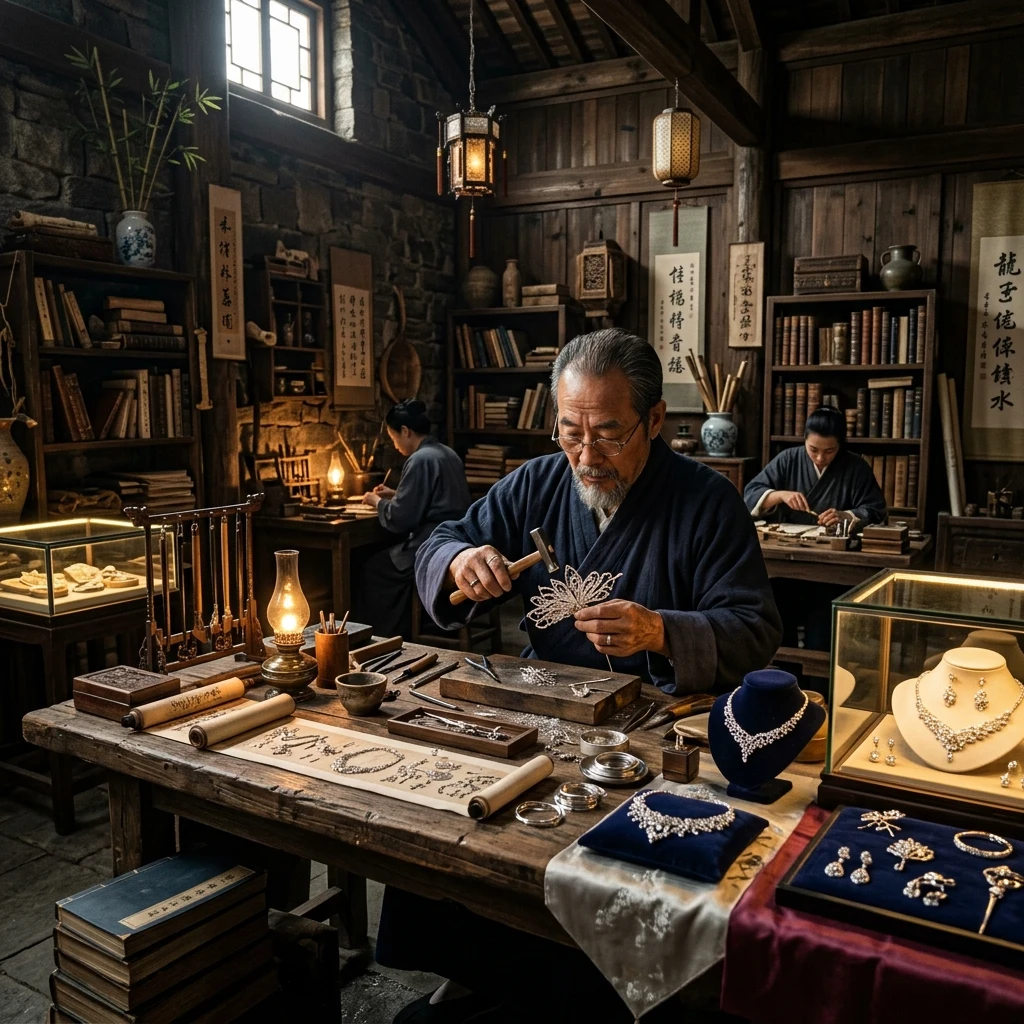
Wealth follows structural alignment. Prosperity requires timely cycles. Individuals carrying the Tân Tỵ (辛巳) pillar command a dual competitive advantage derived from their primary seated Ten God Direct Officer (Chính Quan) (正官) inside Branch Tỵ and the classical imagery of White Wax Metal (Molten precious metal, pewter-silver, and nascent gold coalescing in the mold), excelling in Metal industries (Banking & finance, precision engineering, semiconductors, bullion & capital markets, legal compliance, auditing, luxury jewelry) as well as Metal vocations (Banking & finance, precision engineering, semiconductors, bullion & capital markets, legal compliance, auditing, luxury jewelry).
Guard treasury discipline. Reject reckless speculation. Empowered by seated Direct Officer (Chính Quan) (Principled, honorable, civic-minded, upholding institutional order and status), Tân Tỵ natives possess keen long-horizon valuation instincts; however, because White Wax Metal is sensitive to Đại Hải Thủy (Great Ocean Water — sinking nascent metal), Thiên Thượng Hỏa (Heavenly Fire — over-melting), they should avoid high-leverage gambles during direct branch-clash years (Hợi (Hai)) or Stem-Clash Branch-Opposition (Đinh Hợi (Ding Hai), Ất Hợi (Yi Hai)) transits.
7 Marriage, Compatibility, Shen Sha Stars & Harmony–Clash–Punishment Map
Human affinity follows energetic law. Synastry demands whole-chart synthesis. When evaluating marital compatibility or strategic partnerships for Tân Tỵ (辛巳), authentic Ziping Bazi examines Heavenly Stems, Earthly Branches, Nayin resonance, and Shen Sha auxiliary stars simultaneously:
| Interaction Tier / Shen Sha | Stem–Branch / Palace Coordinate | Auspiciousness & Practical Synastry Application |
|---|---|---|
| Heaven & Earth Twin Harmony | Pillar Bính Thân (Bing Shen) | Stem Tân unites with Bính / Bing (Transforms to Water), Branch Tỵ unites with Thân / Shen (Transforms to Water); supreme marital and executive synergy that dissolves obstacles. |
| Three Harmonies, Six Harmonies & Directional | Trine: Tỵ – Dậu – Sửu (Si–You–Chou Metal Bureau) Six Harmony: Thân / Shen (Transforms to Water) • Directional: Tỵ – Ngọ – Mùi (Si–Wu–Wei Southern Fire) | Consolidates elemental momentum into a unified alliance, stabilizing the Spouse Palace and long-term partnerships. |
| Stem-Clash Branch-Opposition | Dual Clashes: Đinh Hợi (Ding Hai), Ất Hợi (Yi Hai) Same-Stem Clash: Tân Hợi (Xin Hai) | Heavenly Stem clashes/competes while Earthly Branch opposes (Tỵ vs. Hợi (Hai)); requires a bridging Useful God and proactive patience. |
| Clash – Punishment – Harm – Break | Clash: Hợi (Hai) • Harm: Dần (Yin) Punishment: Dần, Thân / Yin, Shen (Ungrateful Punishment) • Break: Thân (Shen) | Can trigger friction, unspoken misunderstandings, or relational fatigue unless buffered by conscious empathy and Six-Harmony remedies. |
| Nobleman, Lu, Horse & Peach Blossom | Nobleman: Dần, Ngọ (Yin, Wu) • Academic: Tý (Zi) Lu: Dậu (You) • Horse: Hợi (Hai) • Blossom: Ngọ (Wu) | Heavenly Nobleman turns crisis into grace; Academic Star elevates scholarship; Lu & Sky Horse fuel global wealth; Canopy (Sửu (Chou)) & Ten-Great-Reversals Day (Thập Ác Đại Bại — Requires Strict Treasury Discipline) shape charisma. |
8 Feng Shui Colors, Directions, Numbers & Dual-Layer Useful God Strategy

Remedies must address the root. Reject superficial formulas. In classical Feng Shui and Bazi luck enhancement for Tân Tỵ (辛巳), rigorous practitioners distinguish Layer 1: Annual Nayin Destiny (White Wax Metal — Metal Element) for daily social resonance from Layer 2: Natal Day Master Useful God (Tân Metal) for high-stakes career, investment, and spatial decisions:
| Enhancement Dimension | Layer 1: By Nayin Destiny White Wax Metal (Metal Element) | Layer 2: By Day Master Tân (Metal) Useful God |
|---|---|---|
| Auspicious Colors | • Same Element (Metal): Metallic white, silver, platinum gray, pearl white (Pure Metal) • Generating Mother: Ochre yellow, earthen brown, cream gold, amber (Earth generates Metal) | • Weak Chart (needs Resource Earth, Peer Metal): Earth & Metal palettes • Strong Chart (needs Output Water, Wealth Wood): Water & Wood palettes |
| Colors to Moderate | Blazing crimson, deep rose, fiery orange, magenta (Fire controls Metal) | Avoid overusing colors belonging to the chart's Unfavorable Element (Ji Shen) that disrupt seasonal climate balance. |
| Directions & Artifacts | • Sectors: Due West (Dui) and Northwest (Qian) / Northeast (Gen) and Southwest (Kun) • Numbers: Numbers 6, 7 (Later Heaven) and 4, 9 (He Tu Metal) • Items: Mechanical metal timepiece, white jade seal, clear quartz, rutilated quartz, golden tiger-eye | Prioritize the compass sector of your Natal Useful God, Heavenly Nobleman (Dần, Ngọ (Yin, Wu)), and Thriving Lu / Sky Horse (Dậu (You), Hợi (Hai)). |
9 Strategic Destiny Cultivation & 3 Forensic Bazi Case Studies by Master Ung Khiem
To know destiny is to master destiny. Aligning with cosmic timing ensures triumph. The classical sages taught that “The noble person understands destiny and remains free from anxiety” — a native carrying the Tân Tỵ (辛巳) pillar who grasps the interplay between White Wax Metal and the Self-Disciplined Authority (Quan Sát Chế Thân) axis can proactively ally with Lư Trung Hỏa (with Water balance), Giản Hạ Thủy (Ravine Water), Tuyền Trung Thủy (Spring Water), Thành Đầu Thổ (City-Wall Earth) partners, cultivate seated Direct Officer (Chính Quan) virtues, and activate Sky Horse (Hợi (Hai)) and Nobleman (Dần, Ngọ (Yin, Wu)) mobility to neutralize Stem-Clash Branch-Opposition (Đinh Hợi (Ding Hai), Ất Hợi (Yi Hai)) years.
9.1. Three Forensic Bazi Chart Case Studies Featuring Tân Tỵ (From Master Ung Khiem's Research Archives)
📂 Case Study #1: Tân Tỵ in the Year Pillar — White Wax Metal Achieving Noble Resonance
Forensic Diagnosis & Timing: Deep foundation. Limpid structural flow. Born in the Tân Tỵ (2001) year, this chart's Year Pillar White Wax Metal forms an auspicious Heaven-and-Earth Twin Harmony with the Month Pillar Bính Thân (Bing Shen), while the Hour Pillar anchors the Thriving Lu and regulates climate; entering Favorable Useful God Decade Luck (Water – Wood) after age 32, the native built a premier enterprise in banking & finance.
📂 Case Study #2: Tân Tỵ Day Pillar Born in Mid-Winter — Supreme Climate Rescue via Bing Fire
Forensic Diagnosis & Timing: Extreme cold births returning warmth. A single Bing Fire redeems the entire chart. With the Tân Tỵ Day Pillar (Tử (Stillness) stage, seated on Direct Officer (Chính Quan)) born in the glacial Gui Chou winter month, the Hour Pillar Bing Wu (丙午) emerges like the meridian sun to thaw the frozen natal field in exact accordance with Qiong Tong Bao Jian, propelling the native from early-life hardship to executive leadership during the Ding Si – Wu Wu Decade Luck after age 35.
📂 Case Study #3: Tân Tỵ Encountering a Đinh Hợi Stem-Clash Branch-Opposition Transit & Classical Resolution
Forensic Diagnosis & Remedy: Meet fierce clash with tactical yielding. Use affinity to dissolve opposition. When the annual transit pillar Đinh Hợi (Ding Hai) struck the natal Month Pillar Tân Tỵ in a direct Stem-Clash Branch-Opposition (Fan Yin), the native proactively applied the classical protocol of “Resolving Clash via Six Harmony & Sky Horse Mobility”—restructuring operations, relocating the executive office toward the Nobleman sector (Yin, Wu), and partnering with a Shen (Water) ally to preserve capital and capture a new regional market.
10 Classical Canon & Scholarly Bibliography
Scholarship demands canonical roots. Every doctrine rests on primary texts. This monograph on the Tân Tỵ (辛巳 — Xin Si) pillar and its White Wax Metal (Bạch Lạp Kim) Nayin destiny was compiled by Master Ung Khiem directly from the foundational classics of Ziping Bazi and Nayin metaphysics:
- San Ming Tong Hui (三命通會 — Wan Min-ying, Ming Dynasty): Volumes 1–3 Treatise on the Sixty Jiazi Nayin, examining the origin of White Wax Metal (白鑞金) and the structural divergence between Tân Tỵ and Canh Thìn.
- Lan Tai Miao Xuan (蘭臺妙選 — Song Dynasty): Poetic imagery and Nayin resonance conditions for White Wax Metal.
- Di Tian Sui Chan Wei (滴天髓闡微 — Liu Bo-wen & Ren Tie-qiao): Canonical verses on Heavenly Stem Tân (“辛金軟弱,溫潤而清,畏土之疊,樂水之盈”) and Earthly Branch Tỵ.
- Qiong Tong Bao Jian (窮通寶鑑 — Yu Chun-tai): Twelve-month Climate-Regulating Useful God (Tiao Hou Yong Shen) selection for Stem Tân.
- Zi Ping Zhen Quan (子平真詮) & Yuan Hai Zi Ping (淵海子平): Doctrines of the Twelve Stages of Growth (Tử (Stillness)), Hidden Stems & Seated Ten Gods (Direct Officer (Chính Quan)), and Xun Void (Thân, Dậu (Shen, You)).
Core Methodological Principle: One pillar never defines an entire life. All eight characters must be weighed together. Any analysis of the birth-year Nayin (White Wax Metal) or the standalone Tân Tỵ pillar represents only one-quarter of the natal blueprint; accurate destiny forecasting requires plotting the complete Four Pillars Bazi Chart (Year – Month – Day – Hour) alongside 10-Year Decade Luck and Annual Transits.

Compiled from primary classical treatises—including San Ming Tong Hui, Di Tian Sui, Qiong Tong Bao Jian, and Zi Ping Zhen Quan—combined with empirical chart verification across thousands of consultations, this Sixty Jiazi series empowers readers to understand both their birth-year Nayin and the structural dynamics of their Four Pillars Bazi chart.
Plot your Four Pillars Bazi chart with Master Ung Khiem →11 Frequently Asked Questions About Tân Tỵ (辛巳 — Xin Si)
Rank #18 of 60. Belongs to the Giáp Tuất (Jia Xu) Xun. In classical Chinese and Vietnamese sexagenary horology, Tân Tỵ (辛巳 — Xīn Sì) unites Heavenly Stem Tân (Yin Metal) with Earthly Branch Tỵ (Yin Fire, Zodiac Snake), placing its Xun Void at Thân, Dậu (Shen, You) and carrying the Nayin destiny of White Wax Metal (Bạch Lạp Kim — Molten precious metal, pewter-silver, and nascent gold coalescing in the mold).
Metal Element destiny. Nayin White Wax Metal (Bạch Lạp Kim). Individuals born in the Tân Tỵ year correspond to Gregorian solar years 1941, 2001, 2061 (measured strictly from the Start of Spring / Lichun solar term); according to the Ming-dynasty compendium San Ming Tong Hui, they embody 白鑞金 (Molten precious metal, pewter-silver, and nascent gold coalescing in the mold) with unmistakable inner resilience.
Seated on Direct Officer (Chính Quan). Occupies the Tử (Stillness) stage. Beneath Earthly Branch Tỵ of the Tân Tỵ pillar lie the hidden stems Bính (Main Qi — Direct Officer (Chính Quan)), Mậu (Middle Qi — Direct Resource (Chính Ấn)), Canh (Residual Qi — Rob Wealth (Kiếp Tài)); when referenced against Heavenly Stem Tân, the primary seated qi is Direct Officer (Chính Quan) (正官), establishing a Self-Disciplined Authority (Quan Sát Chế Thân) structural dynamic.
Distinct character. Deep marital loyalty. When Tân Tỵ occupies the Day Pillar, Day Master Tân (Metal) sits directly upon the Spouse Palace Tỵ (Fire) housing Direct Officer (Chính Quan), making the native exquisitely discerning, articulate, aesthetically gifted, dignified, and committed to high standards while requiring conscious mindfulness to temper tendencies of being proud, perfectionistic, sensitive to粗 (coarse) criticism, and easily wounded in self-esteem so domestic harmony endures.
Thrives with Bính Thân. Clashes with Đinh Hợi. The Tân Tỵ pillar achieves supreme synergy when meeting its Twin Harmony partner Bính Thân (Bing Shen) (Heaven-and-Earth Union), the Three-Harmony trine (Tỵ – Dậu – Sửu (Si–You–Chou Metal Bureau)), and Six-Harmony partner (Thân / Shen (Transforms to Water)); conversely, caution is required during Đinh Hợi (Ding Hai) or Ất Hợi (Yi Hai) (Stem-Clash Branch-Opposition) and direct Hợi (Hai) clashes.
Palace shifts meaning. Timing alters destiny. In the Year Pillar it governs ancestral heritage and White Wax Metal innate qi; in the Month Pillar it sets the career structure around Direct Officer (Chính Quan); in the Day Pillar it defines core psychology and spouse dynamics; in the Hour Pillar it shapes late-life wealth and children after age 49.
Climate comes first. Strength follows second. According to Qiong Tong Bao Jian (Exhaustive Treasury of Seasonal Harmonization), Stem Tân (Metal) of the Tân Tỵ pillar born in Spring requires warming residual chill, Summer demands Water to relieve scorching heat, Autumn needs balanced Metal-Fire tempering, and Winter urgently requires Bing Fire to thaw the frozen chart.
Favors Metal phase. Nobleman at Yin, Wu. By Nayin destiny White Wax Metal, Tân Tỵ natives harmonize with Metallic white, silver, platinum gray, pearl white (Pure Metal), directions Due West (Dui) and Northwest (Qian), and enjoy Heavenly Nobleman protection at Dần, Ngọ (Yin, Wu), Academic Star at Tý (Zi), Thriving Lu at Dậu (You), and Sky Horse mobility at Hợi (Hai).