
⚡ Executive Bazi & Nayin Summary: The Gui Wei (癸未 · Gui Wei) Pillar
Deep qi lies hidden. Look beyond the surface zodiac. Within classical Ziping Four Pillars metaphysics and the ancient Nayin doctrine of San Ming Tong Hui, the Gui Wei (癸未 · Guǐ Wèi / Gui Wei) pillar represents a profound structural convergence between Heavenly Stem Gui (Yin Water) above and Earthly Branch Wei (Yin Earth) below, forging the distinctive Self-Disciplined Authority (Official and Seven Killings Disciplining the Self (Guan Sha Zhi Shen)) formation across the Year, Month, Day, and Hour Palaces.
- Sexagenary Rank & Xun Void: Ranks #20/60 in the Sixty Jiazi cycle, belonging to the Jia Xu Xun (Emptiness / Void at Shen, You (Shen, You)), symbolized by the Goat (未).
- Stem-Branch Axis & 12 Life Stage: Branch Controls Stem (Officer/Killings Below) · Gui seated on Wei occupies the Mộ (Vault / Tomb) stage (The treasury that gathers and stores; signifies exceptional skill in capital accumulation, concealing one's true trump cards, and flourishing in later life.).
- Hidden Stems & Seated Ten Gods: Branch Wei conceals Ji (己, Main Qi 60%, Seven Killings (Seven Killings (Qi Sha))), Ding (丁, Middle Qi 30%, Indirect Wealth (Indirect Wealth (Pian Cai))), Yi (乙, Residual Qi 10%, Eating God (Eating God (Shi Shen))); the primary seated Ten God is Seven Killings (Seven Killings (Qi Sha)) (七殺).
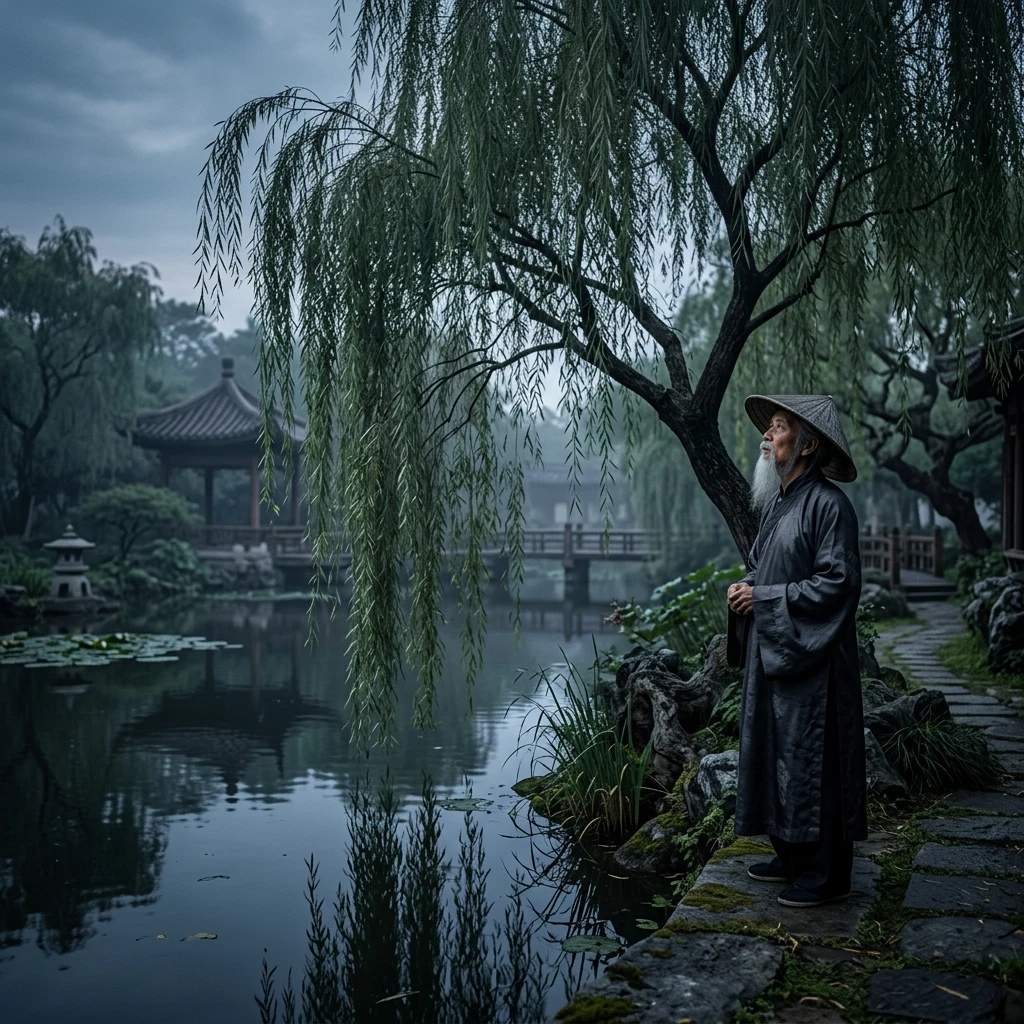
- Classical Nayin Destiny (San Ming Tong Hui): Willow Wood (Willow Wood (Yang Liu Mu) · 楊柳木) · Wood Element (Graceful weeping willow swaying in the breeze beside summer waters).
- Harmony & Clash Matrix: Heaven-and-Earth Twin Harmony with Wu Wu; Stem-Clash Branch-Opposition with Ji Chou, Ding Chou; Same-Stem Clash with Gui Chou; Three-Harmony Trine Hai · Mao · Wei (Hai-Mao-Wei Wood Bureau); Six Harmony Wu / Wu (Transforms to Fire/Earth).
- Shen Sha & Nobleman Stars: Heavenly Nobleman at Mao, Si (Mao, Si); Academic Star at Mao; Thriving Lu at Zi; Sky Horse at Si; Peach Blossom at Zi; Elegant Canopy at Wei; Formation: Ten-Spirit Day (Ten Spirit Day (Shi Ling Ri) · Penetrating Intuition & Erudition).
1 What Is Gui Wei? Stem-Branch Anatomy & Ziping Qi Mechanics
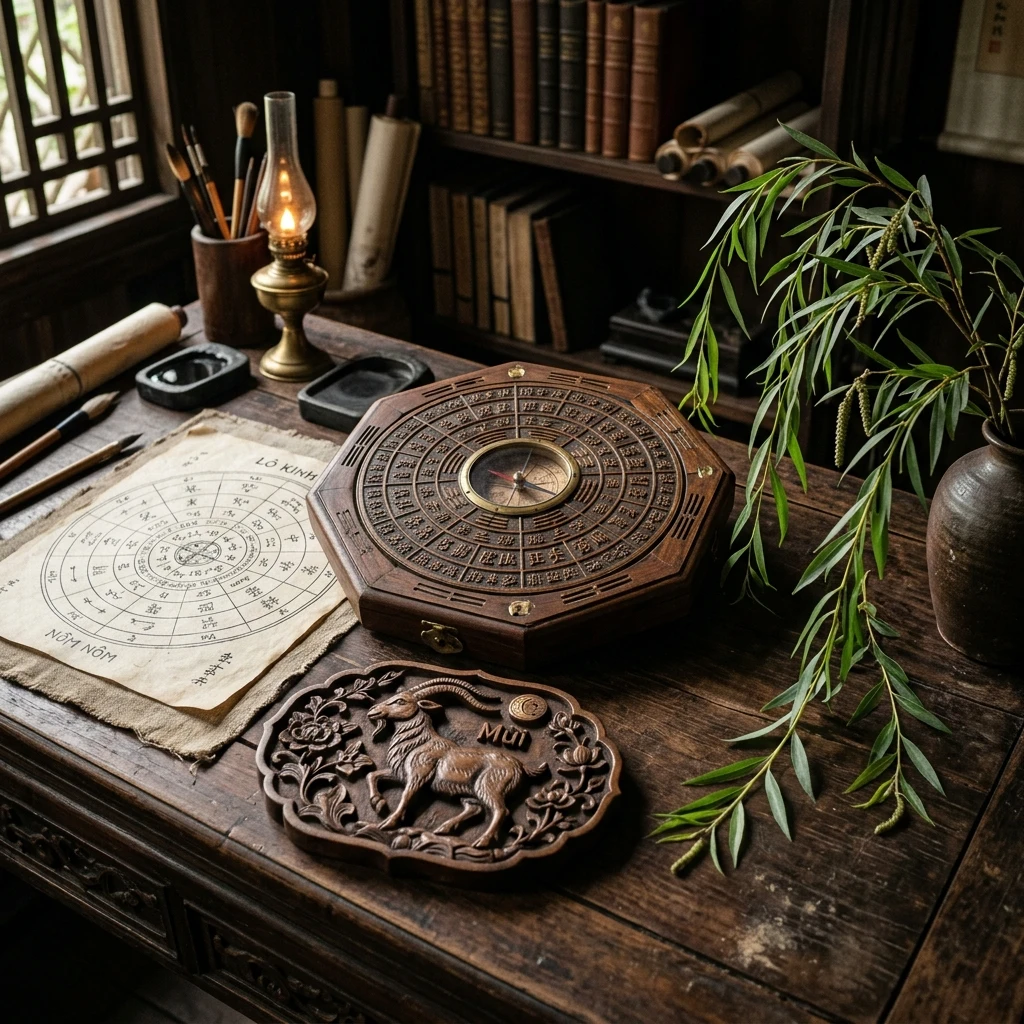
Qi demands a root. Destiny follows its source. In classical sexagenary horology and Ziping Four Pillars Bazi, Gui Wei (癸未 · Guǐ Wèi / Gui Wei) stands as Pillar #20/60 of the Sixty Jiazi cycle, forged by the vertical union of Heavenly Stem Gui (癸) representing manifest heavenly timing and Earthly Branch Wei (未) representing the terrestrial foundation that anchors the entire chart from below.
Examine the upper canopy first. At the Heavenly Stem level, Gui embodies Yin Water (Due North, thriving in Winter), evoking the classical image of Morning dew and gentle rain, subterranean spring veins, mist rising from quiet valleys; the canonical treatise Di Tian Sui (滴天髓) captures its essence in the immortal verse “癸水至弱,達於天津,得龍而運,功化斯神” (Guǐ shuǐ zhì ruò, dá yú tiān jīn, dé lóng ér yùn, gōng huà sī shén); Di Tian Sui (滴天髓) states that although Gui Water is the most delicate of Yin waters, its source reaches all the way to the Milky Way (Tian Jin); when it encounters the Dragon of Chen (Wu Chen, Bing Chen) in the chart or Luck Pillars, it undergoes miraculous transformation into life-saving rain for the entire world.
The terrestrial root decides endurance. Never overlook the lower branch. At the Earthly Branch foundation, Wei belongs to Yin Earth, corresponds to the Goat zodiac, governs the solar month of 6th Lunar Month (Late Summer · Dry Earth / Wood Vault), aligns with South-Southwest (202.5°-217.5°), and rules the double-hour 13:00 to 15:00; what gives Branch Wei its profound multidimensionality in Bazi analysis is its internal reservoir of Hidden Stems (Ren Yuan Yong Shi) containing Ji (己, Main Qi 60%, Seven Killings (Seven Killings (Qi Sha))), Ding (丁, Middle Qi 30%, Indirect Wealth (Indirect Wealth (Pian Cai))), Yi (乙, Residual Qi 10%, Eating God (Eating God (Shi Shen))), while clearly distinguishing the Classical Nayin layer (Willow Wood · Wood) from the Five-Element Stem-Branch axis (Gui Water seated on Wei Earth).
2 Nayin Willow Wood (Willow Wood (Yang Liu Mu)) · Exegesis from San Ming Tong Hui & Lan Tai Miao Xuan
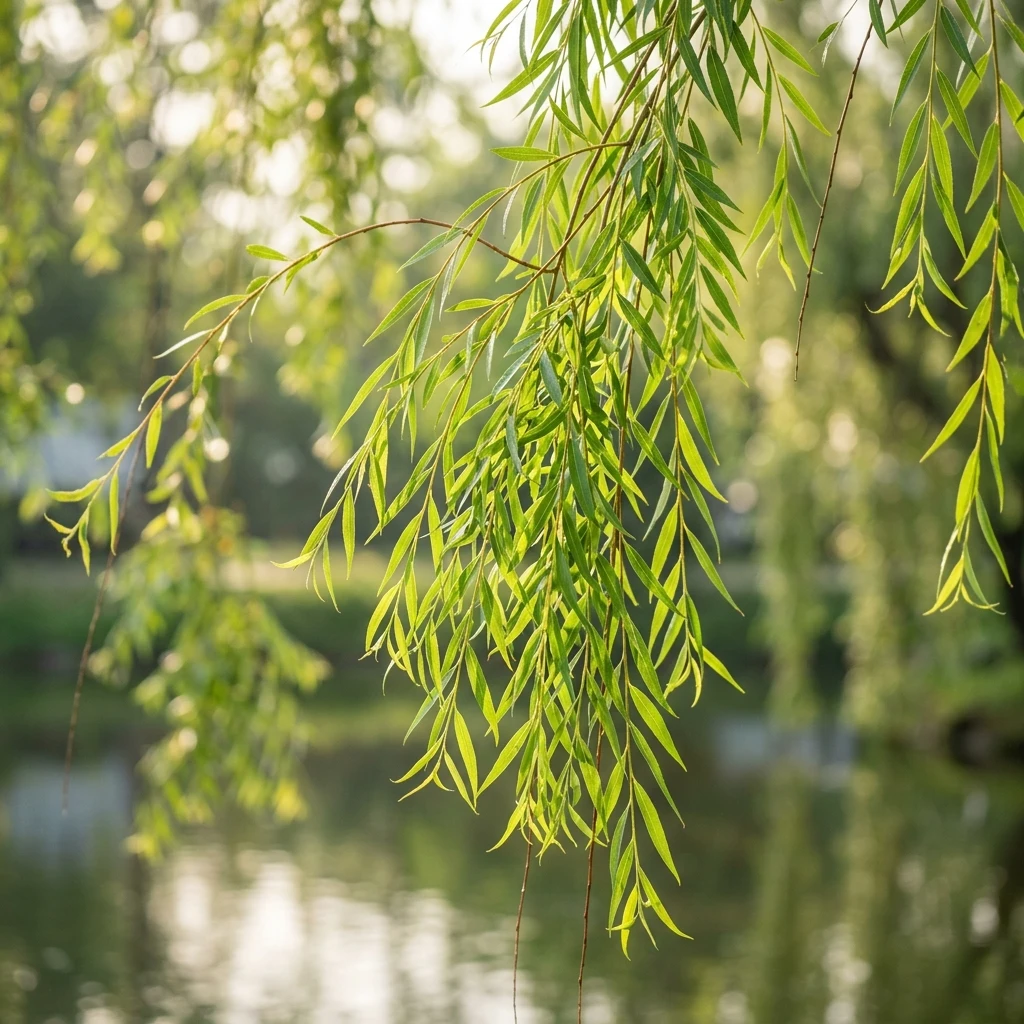
Nayin is acoustic resonance. Its metaphysical law is subtle. Unlike the raw Five Elements of individual stems and branches, Nayin Five Elements (納音五行) derive from the ancient harmonic pairing of the Sixty Jiazi with the Five Musical Tones and Twelve Pitch Pipes, wherein Gui Wei (癸未) and its twin pillar Ren Wu share the Nayin identity of Willow Wood (Willow Wood (Yang Liu Mu), 楊柳木, Graceful weeping willow swaying in the breeze beside summer waters) under the Wood Element.
Here lies the subtlest distinction. Never conflate the two twins. Although both carry the banner of Willow Wood, because Gui Wei occupies the Mộ (Vault / Tomb) life stage within the Jia Xu Xun (Void at Shen, You (Shen, You)), it rejoices when encountering complementary Nayin pillars such as Spring Water (Quan Zhong Shui) (Spring Water), Long-Flowing Water (Chang Liu Shui) (Long-Flowing Water), Sand Earth (Sha Zhong Tu) (Sand Earth), Roadside Earth (Lu Pang Tu) (Roadside Earth) to achieve noble stature, while requiring vigilance against incompatible Nayin forces like Sword-Edge Metal (Jian Feng Jin) (Sword-Edge Metal · hacking willow boughs), Furnace Fire (Lu Zhong Huo) (Furnace Fire).
📜 Classical Exegesis from San Ming Tong Hui & Lan Tai Miao Xuan on Willow Wood (楊柳木)
Canonical Record in San Ming Tong Hui (Ming Dynasty): The classical text states the principle with crystalline precision. Its metaphysical reasoning runs deep. San Ming Tong Hui (三命通會) records: 'Yang Liu Mu (Willow Wood) drifts with the wind and rises or dips with the current, supple yet never snapping, casting cool shade over the summer ponds of Wu and Wei.'.
Canonical Poetic Imagery in Lan Tai Miao Xuan (Song Dynasty): The pairing of symbolic forms follows strict laws. Only true structural resonance yields high nobility. Lan Tai Miao Xuan (蘭臺妙選) explains: 'Born in the blazing summer months of Wu and Wei, the willow tree thirsts for Long-Flowing Water (Chang Liu Shui) or Spring Water to nourish its roots, and Sand Earth or Roadside Earth to bank its shore.'.
Differentiating Gui Wei from Ren Wu: Shared Nayin, divergent polarity. Yang and Yin paths unfold differently. Within the Gui Wei (Yin) pillar: Gui Wei is 'Self-Vault Wood' (Wei is the Wood Vault); its willow roots reach deep into the Wood treasury while Gui Water morning dew nourishes the leaves above, giving it extraordinary stamina. Conversely, within its twin pillar Ren Wu: Ren Wu has Ren Water above moistening the crown and Ding-Ji Wealth-Officer co-residing in Wu below ('Lộc Mã Đồng Hương'); gentle in demeanor yet unyielding in core strategy.
3 Gui Wei Birth Years, Lichun Solar Term Boundary & Eight Mansions Gua
Sixty years complete one great cycle. Astronomical law admits no ambiguity. Every 60 years the Gui Wei (癸未) pillar returns, yet natives born in different 60-year epochs or of different genders carry distinct Eight Mansions (Ba Zhai) Ming Gua; above all, the transition of the Year Pillar in Bazi and Feng Shui is governed strictly by the astronomical Start of Spring (Lichun / Start of Spring (Lichun) around February 3 to 5), NOT Lunar New Year's Day (Tết) (those born before Lichun of 2003 belong to the preceding Ren Wu year, whereas those born after Lichun of the following year belong to Jia Shen):
| Gregorian Solar Year | Sexagenary Year Pillar | Nayin Destiny | Zodiac Animal | Eight Mansions Ming Gua (Male / Female) |
|---|---|---|---|---|
| 1943 (After Lichun / Start of Spring) | Gui Wei (癸未 · Gui Wei) | Willow Wood (Willow Wood (Yang Liu Mu) · Wood) | Goat (未) | Male: Zhen (Wood · East Group) Female: Zhen (Wood · East Group) |
| 2003 (After Lichun / Start of Spring) | Gui Wei (癸未 · Gui Wei) | Willow Wood (Willow Wood (Yang Liu Mu) · Wood) | Goat (未) | Male: Kun (Earth · West Group) Female: Kan (Water · East Group) |
| 2063 (After Lichun / Start of Spring) | Gui Wei (癸未 · Gui Wei) | Willow Wood (Willow Wood (Yang Liu Mu) · Wood) | Goat (未) | Male: Gen (Earth · West Group) Female: Dui (Metal · West Group) |
4 Psychological Profile, Behavioral Architecture & Male/Female Temperament of Gui Wei
Character shapes destiny. Inner qi directs outer action. The psychological architecture of an individual carrying the Gui Wei (癸未) pillar synthesizes the outward disposition of Heavenly Stem Gui (Morning dew and gentle rain, subterranean spring veins, mist rising from quiet valleys), the subterranean drive of Earthly Branch Wei (concealing Seven Killings (Seven Killings (Qi Sha))) at the Mộ (Vault / Tomb) stage, and the symbolic resonance of Willow Wood; Earthly Branch Wei (Earth) counters Heavenly Stem Gui (Water) from below ('Jie Jiao'), forging ironclad self-discipline, resilience under high-stakes pressure, and institutional authority.
Male & Female Expressions of Gui Wei: Men uphold honor and strategic resolve. Women embody resilient grace and discernment. A male chart anchored by Gui Wei blends the introspective, psychologically astute, empathetic, patiently pervasive, and discreetly strategic ethos of Gui with the pragmatic execution of seated Seven Killings (Seven Killings (Qi Sha)) to build enduring enterprises; meanwhile, a female chart with Gui Wei radiates self-reliant intelligence infused with Seven Killings (Seven Killings (Qi Sha)) (Commanding, courageous, decisive under crisis, pioneering executive authority), though under the influence of Ten-Spirit Day (Ten Spirit Day (Shi Ling Ri) · Penetrating Intuition & Erudition) she benefits from releasing perfectionism and nurturing open emotional dialogue.
Psychological Shadow to Transmute: Excessive rigidity invites fracture. Over-brooding drains vital spirit. The primary vulnerability of Gui seated on Wei is a tendency to become susceptible to melancholic rumination when obstructed, concealing inner turmoil behind a calm exterior, particularly during transit years triggering Stem-Clash Branch-Opposition (Ji Chou, Ding Chou) or activating the Xun Void branches (Shen, You (Shen, You)), when cognitive rigidity or emotional isolation must be consciously tempered.
5 The Gui Wei Pillar in a Bazi Chart: 4 Natal Palaces & 4-Season Climate Regulation
Bazi centers upon the Day Master. Four pillars govern four life realms. Taking Heavenly Stem Gui (Yin Water) as the reference point, the internal hidden-stem matrix beneath Earthly Branch Wei and the functional role of Gui Wei across the Year, Month, Day, and Hour Palaces unfold as follows:
5.1. Hidden Stems, Seated Ten Gods & 12 Life Stage Matrix of Gui Wei
| Hidden Stem Layer / System | Heavenly Stem / Coordinate | Seated Ten God / State | Metaphysical Function & Real-World Manifestation |
|---|---|---|---|
| Main Qi (60%) | Ji (己) · Yin Earth | Seven Killings (Seven Killings (Qi Sha)) (七殺) | Commanding, courageous, decisive under crisis, pioneering executive authority |
| Middle Qi (30%) | Ding (丁) · Yin Fire | Indirect Wealth (Indirect Wealth (Pian Cai)) (偏財) | Commercially agile, generous, skilled at macro capital allocation and windfalls |
| Residual Qi (10%) | Yi (乙) · Yin Wood | Eating God (Eating God (Shi Shen)) (食神) | Refined, magnanimous, artistically gifted, blessed with natural affluence |
| 12 Stages of Growth | Gui seated on Wei | Mộ (Vault / Tomb) Stage | The treasury that gathers and stores; signifies exceptional skill in capital accumulation, concealing one's true trump cards, and flourishing in later life. |
| Xun Void (Void (Kong Wang)) | Jia Xu Xun | Void: Shen, You (Shen, You) | Whichever natal palace houses Shen, You (Shen, You) experiences lightened material attachment or sublimes toward research, strategy, and spiritual philosophy. |
5.2. Diagnostic Differentiation of Gui Wei Across the 4 Palaces (Year, Month, Day, Hour)
🏛 1. Gui Wei in the Year Pillar (Ages 01 to 16)
Ancestral root of the chart. Foundation of early upbringing. Placed in the Year Pillar, Gui Wei establishes the native's Willow Wood Nayin destiny; Stem Gui reveals a family tradition that is introspective, psychologically astute, empathetic, patiently pervasive, and discreetly strategic, while Branch Wei concealing Seven Killings (Seven Killings (Qi Sha)) indicates early self-reliance or leaving the ancestral hometown if clashed by the Month Branch (Chou).
🧭 2. Gui Wei in the Month Pillar (Ages 17 to 32)
The Month Decree commands authority. Six-tenths of destiny hinges here. Occupying the Month Pillar (solar season of 6th Lunar Month (Late Summer · Dry Earth / Wood Vault)), the Earth qi of Branch Wei and its hidden stems (Ji, Ding, Yi) define the primary Structural Pattern, while Stem Gui projecting above empowers Water executive leadership throughout young adulthood.
👑 3. Gui Wei in the Day Pillar (Ages 33 to 48)
Sovereign axis of the self. Inner chamber of marriage. As the Day Pillar, Gui Wei forms the Self-Disciplined Authority (Official and Seven Killings Disciplining the Self (Guan Sha Zhi Shen)) configuration at the Mộ (Vault / Tomb) stage; the Spouse Palace Wei housing Seven Killings (Seven Killings (Qi Sha)) (七殺) and Ten-Spirit Day (Ten Spirit Day (Shi Ling Ri) · Penetrating Intuition & Erudition) portrays a spouse endowed with Commanding, courageous, decisive under crisis, pioneering executive authority, ensuring resilient matrimony when Chou clashes are harmonized.
🌳 4. Gui Wei in the Hour Pillar (Age 49 Onward)
Harvest of the golden years. Sanctuary of children and legacy. Seated in the Hour Pillar (13:00 to 15:00), the Willow Wood qi and Self-Disciplined Authority (Official and Seven Killings Disciplining the Self (Guan Sha Zhi Shen)) structure crystallize in late life; when Gui Water and Wei Earth serve as Favorable Useful Gods, the native enjoys affluent longevity and accomplished offspring.
5.3. Four-Season Climate Regulation Matrix (Tiao Hou Yong Shen) from Qiong Tong Bao Jian
Climate governs nobility. Seasonal balance takes precedence. According to Qiong Tong Bao Jian (窮通寶鑑), for the Gui Wei pillar to achieve upper-tier prosperity, the chart must first secure its Climate-Regulating Useful God (Climatic Balancing Useful God (Tiao Hou Yong Shen)) to balance Cold, Heat, Dryness, and Dampness across the four birth seasons:
| Birth Season (Month Decree) | Qi State of Gui (Water) | Climatic Imbalance | Climate-Regulating & Balancing Useful Gods (Qiong Tong Bao Jian) |
|---|---|---|---|
| Spring (Yin, Mao, Chen) | Spring Water under Wood decree | Residual chill / exuberant Wood | In the spring months when gentle rain nourishes budding flora, Jia and Yi Wood drink up Gui Water's strength; Xin or Geng Metal is needed to replenish the spring source, paired with Bing Fire sunlight to arch a rainbow across the sky. |
| Summer (Si, Wu, Wei) | Summer Fire blazes, Earth parched | Scorching heat & drought | In the summer months when mist evaporates under scorching sun, rootless Gui Water risks drying up; Xin and Geng Metal must be rooted to generate Water continuously, supported by Ren Water Peer stars. |
| Autumn (Shen, You, Xu) | Autumn Metal holds crisp authority | Dry atmosphere & sharp Metal | In the autumn months when the Metal mother flourishes and generates abundant Water, excessive autumn rain can turn chilly and overcast; Bing Fire is favored to warm the air while moderate Earth channels the stream. |
| Winter (Hai, Zi, Chou) | Winter Water freezes heaven & earth | Severe frost & glacial lock | In the winter months when frost and snow freeze the springs, Gui Water reaches extreme coldness; Bing Fire-the solar orb-is the paramount Climate-Regulating Useful God to thaw the ice into warm spring rain. |
6 Career Trajectory, Executive Vocations & Wealth Architecture of Gui Wei
Wealth follows structural alignment. Prosperity requires timely cycles. Individuals carrying the Gui Wei (癸未) pillar command a dual competitive advantage derived from their primary seated Ten God Seven Killings (Seven Killings (Qi Sha)) (七殺) inside Branch Wei and the classical imagery of Willow Wood (Graceful weeping willow swaying in the breeze beside summer waters), excelling in Wood industries (Education & academia, pharmaceuticals & herbal medicine, forestry & agribusiness, publishing & media, sustainable architecture, cultural arts) as well as Water vocations (International trade, maritime logistics, aviation & travel, diplomacy, data analytics, macro-strategy, aquaculture & beverages).
Guard treasury discipline. Reject reckless speculation. Empowered by seated Seven Killings (Seven Killings (Qi Sha)) (Commanding, courageous, decisive under crisis, pioneering executive authority), Gui Wei natives possess keen long-horizon valuation instincts; however, because Willow Wood is sensitive to Sword-Edge Metal (Jian Feng Jin) (Sword-Edge Metal · hacking willow boughs), Furnace Fire (Lu Zhong Huo) (Furnace Fire), they should avoid high-leverage gambles during direct branch-clash years (Chou) or Stem-Clash Branch-Opposition (Ji Chou, Ding Chou) transits.
7 Marriage, Compatibility, Shen Sha Stars & Harmony-Clash-Punishment Map
Human affinity follows energetic law. Synastry demands whole-chart synthesis. When evaluating marital compatibility or strategic partnerships for Gui Wei (癸未), authentic Ziping Bazi examines Heavenly Stems, Earthly Branches, Nayin resonance, and Shen Sha auxiliary stars simultaneously:
| Interaction Tier / Shen Sha | Stem-Branch / Palace Coordinate | Auspiciousness & Practical Synastry Application |
|---|---|---|
| Heaven & Earth Twin Harmony | Pillar Wu Wu | Stem Gui unites with Wu / Wu (Transforms to Fire), Branch Wei unites with Wu / Wu (Transforms to Fire/Earth); supreme marital and executive synergy that dissolves obstacles. |
| Three Harmonies, Six Harmonies & Directional | Trine: Hai · Mao · Wei (Hai-Mao-Wei Wood Bureau) Six Harmony: Wu / Wu (Transforms to Fire/Earth) • Directional: Si · Wu · Wei (Si-Wu-Wei Southern Fire) | Consolidates elemental momentum into a unified alliance, stabilizing the Spouse Palace and long-term partnerships. |
| Stem-Clash Branch-Opposition | Dual Clashes: Ji Chou, Ding Chou Same-Stem Clash: Gui Chou | Heavenly Stem clashes/competes while Earthly Branch opposes (Wei vs. Chou); requires a bridging Useful God and proactive patience. |
| Clash · Punishment · Harm · Break | Clash: Chou • Harm: Zi Punishment: Chou, Xu / Chou, Xu (Bullying Punishment) • Break: Xu | Can trigger friction, unspoken misunderstandings, or relational fatigue unless buffered by conscious empathy and Six-Harmony remedies. |
| Nobleman, Lu, Horse & Peach Blossom | Nobleman: Mao, Si (Mao, Si) • Academic: Mao Lu: Zi • Horse: Si • Blossom: Zi | Heavenly Nobleman turns crisis into grace; Academic Star elevates scholarship; Lu & Sky Horse fuel global wealth; Canopy (Wei) & Ten-Spirit Day (Ten Spirit Day (Shi Ling Ri) · Penetrating Intuition & Erudition) shape charisma. |
8 Feng Shui Colors, Directions, Numbers & Dual-Layer Useful God Strategy

Remedies must address the root. Reject superficial formulas. In classical Feng Shui and Bazi luck enhancement for Gui Wei (癸未), rigorous practitioners distinguish Layer 1: Annual Nayin Destiny (Willow Wood · Wood Element) for daily social resonance from Layer 2: Natal Day Master Useful God (Gui Water) for high-stakes career, investment, and spatial decisions:
| Enhancement Dimension | Layer 1: By Nayin Destiny Willow Wood (Wood Element) | Layer 2: By Day Master Gui (Water) Useful God |
|---|---|---|
| Auspicious Colors | • Same Element (Wood): Emerald green, jade green, forest green, moss green (Pure Wood) • Generating Mother: Obsidian black, deep navy blue, sapphire blue (Water generates Wood) | • Weak Chart (needs Resource Metal, Peer Water): Metal & Water palettes • Strong Chart (needs Output Wood, Wealth Fire): Wood & Fire palettes |
| Colors to Moderate | Cold metallic white, silver-gray, chrome (Metal controls Wood) | Avoid overusing colors belonging to the chart's Unfavorable Element (Ji Shen) that disrupt seasonal climate balance. |
| Directions & Artifacts | • Sectors: Due East (Zhen) and Southeast (Xun) / Due North (Kan · Water nourishes Wood) • Numbers: Numbers 3, 4 (Later Heaven) and 3, 8 (He Tu Wood) • Items: Agarwood beads, red sandalwood, imperial jadeite, green aventurine, living botanicals, planted aquascape | Prioritize the compass sector of your Natal Useful God, Heavenly Nobleman (Mao, Si (Mao, Si)), and Thriving Lu / Sky Horse (Zi, Si). |
9 Strategic Destiny Cultivation & 3 Forensic Bazi Case Studies by Master Ung Khiem
To know destiny is to master destiny. Aligning with cosmic timing ensures triumph. The classical sages taught that “The noble person understands destiny and remains free from anxiety” · a native carrying the Gui Wei (癸未) pillar who grasps the interplay between Willow Wood and the Self-Disciplined Authority (Official and Seven Killings Disciplining the Self (Guan Sha Zhi Shen)) axis can proactively ally with Spring Water (Quan Zhong Shui) (Spring Water), Long-Flowing Water (Chang Liu Shui) (Long-Flowing Water), Sand Earth (Sha Zhong Tu) (Sand Earth), Roadside Earth (Lu Pang Tu) (Roadside Earth) partners, cultivate seated Seven Killings (Seven Killings (Qi Sha)) virtues, and activate Sky Horse (Si) and Nobleman (Mao, Si (Mao, Si)) mobility to neutralize Stem-Clash Branch-Opposition (Ji Chou, Ding Chou) years.
9.1. Three Forensic Bazi Chart Case Studies Featuring Gui Wei (From Master Ung Khiem's Research Archives)
📂 Case Study #1: Gui Wei in the Year Pillar · Willow Wood Achieving Noble Resonance
Forensic Diagnosis & Timing: Deep foundation. Limpid structural flow. Born in the Gui Wei (2003) year, this chart's Year Pillar Willow Wood forms an auspicious Heaven-and-Earth Twin Harmony with the Month Pillar Wu Wu, while the Hour Pillar anchors the Thriving Lu and regulates climate; entering Favorable Useful God Decade Luck (Wood, Fire) after age 32, the native built a premier enterprise in education & academia.
📂 Case Study #2: Gui Wei Day Pillar Born in Mid-Winter, Supreme Climate Rescue via Bing Fire
Forensic Diagnosis & Timing: Extreme cold births returning warmth. A single Bing Fire redeems the entire chart. With the Gui Wei Day Pillar (Mộ (Vault / Tomb) stage, seated on Seven Killings (Seven Killings (Qi Sha))) born in the glacial Gui Chou winter month, the Hour Pillar Bing Wu (丙午) emerges like the meridian sun to thaw the frozen natal field in exact accordance with Qiong Tong Bao Jian, propelling the native from early-life hardship to executive leadership during the Ding Si, Wu Wu Decade Luck after age 35.
📂 Case Study #3: Gui Wei Encountering a Ji Chou Stem-Clash Branch-Opposition Transit & Classical Resolution
Forensic Diagnosis & Remedy: Meet fierce clash with tactical yielding. Use affinity to dissolve opposition. When the annual transit pillar Ji Chou struck the natal Month Pillar Gui Wei in a direct Stem-Clash Branch-Opposition (Fan Yin), the native proactively applied the classical protocol of “Resolving Clash via Six Harmony & Sky Horse Mobility”-restructuring operations, relocating the executive office toward the Nobleman sector (Mao, Si), and partnering with a Wu (Fire/Earth) ally to preserve capital and capture a new regional market.
10 Classical Canon & Scholarly Bibliography
Scholarship demands canonical roots. Every doctrine rests on primary texts. This monograph on the Gui Wei (癸未 · Gui Wei) pillar and its Willow Wood (Willow Wood (Yang Liu Mu)) Nayin destiny was compiled by Master Ung Khiem directly from the foundational classics of Ziping Bazi and Nayin metaphysics:
- San Ming Tong Hui (三命通會 · Wan Min-ying, Ming Dynasty): Volumes 1 to 3 Treatise on the Sixty Jiazi Nayin, examining the origin of Willow Wood (楊柳木) and the structural divergence between Gui Wei and Ren Wu.
- Lan Tai Miao Xuan (蘭臺妙選 · Song Dynasty): Poetic imagery and Nayin resonance conditions for Willow Wood.
- Di Tian Sui Chan Wei (滴天髓闡微 · Liu Bo-wen & Ren Tie-qiao): Canonical verses on Heavenly Stem Gui (“癸水至弱,達於天津,得龍而運,功化斯神”) and Earthly Branch Wei.
- Qiong Tong Bao Jian (窮通寶鑑 · Yu Chun-tai): Twelve-month Climate-Regulating Useful God (Tiao Hou Yong Shen) selection for Stem Gui.
- Zi Ping Zhen Quan (子平真詮) & Yuan Hai Zi Ping (淵海子平): Doctrines of the Twelve Stages of Growth (Mộ (Vault / Tomb)), Hidden Stems & Seated Ten Gods (Seven Killings (Seven Killings (Qi Sha))), and Xun Void (Shen, You (Shen, You)).
Core Methodological Principle: One pillar never defines an entire life. All eight characters must be weighed together. Any analysis of the birth-year Nayin (Willow Wood) or the standalone Gui Wei pillar represents only one-quarter of the natal blueprint; accurate destiny forecasting requires plotting the complete Four Pillars Bazi Chart (Year · Month · Day · Hour) alongside 10-Year Decade Luck and Annual Transits.

Compiled from primary classical treatises-including San Ming Tong Hui, Di Tian Sui, Qiong Tong Bao Jian, and Zi Ping Zhen Quan-combined with empirical chart verification across thousands of consultations, this Sixty Jiazi series empowers readers to understand both their birth-year Nayin and the structural dynamics of their Four Pillars Bazi chart.
Plot your Four Pillars Bazi chart with Master Ung Khiem11 Frequently Asked Questions About Gui Wei (癸未 · Gui Wei)
Rank #20 of 60. Belongs to the Jia Xu Xun. In classical Chinese and Vietnamese sexagenary horology, Gui Wei (癸未, Guǐ Wèi) unites Heavenly Stem Gui (Yin Water) with Earthly Branch Wei (Yin Earth, Zodiac Goat), placing its Xun Void at Shen, You (Shen, You) and carrying the Nayin destiny of Willow Wood (Willow Wood (Yang Liu Mu), Graceful weeping willow swaying in the breeze beside summer waters).
Wood Element destiny. Nayin Willow Wood (Willow Wood (Yang Liu Mu)). Individuals born in the Gui Wei year correspond to Gregorian solar years 1943, 2003, 2063 (measured strictly from the Start of Spring / Lichun solar term); according to the Ming-dynasty compendium San Ming Tong Hui, they embody 楊柳木 (Graceful weeping willow swaying in the breeze beside summer waters) with unmistakable inner resilience.
Seated on Seven Killings (Seven Killings (Qi Sha)). Occupies the Mộ (Vault / Tomb) stage. Beneath Earthly Branch Wei of the Gui Wei pillar lie the hidden stems Ji (Main Qi, Seven Killings (Seven Killings (Qi Sha))), Ding (Middle Qi, Indirect Wealth (Indirect Wealth (Pian Cai))), Yi (Residual Qi, Eating God (Eating God (Shi Shen))); when referenced against Heavenly Stem Gui, the primary seated qi is Seven Killings (Seven Killings (Qi Sha)) (七殺), establishing a Self-Disciplined Authority (Official and Seven Killings Disciplining the Self (Guan Sha Zhi Shen)) structural dynamic.
Distinct character. Deep marital loyalty. When Gui Wei occupies the Day Pillar, Day Master Gui (Water) sits directly upon the Spouse Palace Wei (Earth) housing Seven Killings (Seven Killings (Qi Sha)), making the native introspective, psychologically astute, empathetic, patiently pervasive, and discreetly strategic while requiring conscious mindfulness to temper tendencies of being susceptible to melancholic rumination when obstructed, concealing inner turmoil behind a calm exterior so domestic harmony endures.
Thrives with Wu Wu. Clashes with Ji Chou. The Gui Wei pillar achieves supreme synergy when meeting its Twin Harmony partner Wu Wu (Heaven-and-Earth Union), the Three-Harmony trine (Hai, Mao, Wei (Hai-Mao-Wei Wood Bureau)), and Six-Harmony partner (Wu / Wu (Transforms to Fire/Earth)); conversely, caution is required during Ji Chou or Ding Chou (Stem-Clash Branch-Opposition) and direct Chou clashes.
Palace shifts meaning. Timing alters destiny. In the Year Pillar it governs ancestral heritage and Willow Wood innate qi; in the Month Pillar it sets the career structure around Seven Killings (Seven Killings (Qi Sha)); in the Day Pillar it defines core psychology and spouse dynamics; in the Hour Pillar it shapes late-life wealth and children after age 49.
Climate comes first. Strength follows second. According to Qiong Tong Bao Jian (Exhaustive Treasury of Seasonal Harmonization), Stem Gui (Water) of the Gui Wei pillar born in Spring requires warming residual chill, Summer demands Water to relieve scorching heat, Autumn needs balanced Metal-Fire tempering, and Winter urgently requires Bing Fire to thaw the frozen chart.
Favors Wood phase. Nobleman at Mao, Si. By Nayin destiny Willow Wood, Gui Wei natives harmonize with Emerald green, jade green, forest green, moss green (Pure Wood), directions Due East (Zhen) and Southeast (Xun), and enjoy Heavenly Nobleman protection at Mao, Si (Mao, Si), Academic Star at Mao, Thriving Lu at Zi, and Sky Horse mobility at Si.