IOverview
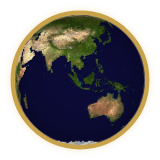
Worship of the Hùng Kings is the widest level of ancestor worship in Vietnam. Those honored are the Hùng Kings, legendary rulers of the ancient state of Văn Lang, regarded as the common ancestors of the Vietnamese people. The anniversary falls on the tenth day of the third lunar month, centered on the Hùng Temples on Nghĩa Lĩnh mountain in Phú Thọ province.
What sets this apart from founder cults in many countries is the manner of worship. The Hùng Kings are not treated as distant gods but as one's own forebears, honored exactly like a family death anniversary: a fixed date, a tray of offerings, descendants gathering together. The signature offerings are bánh chưng and bánh giầy, the same rice cakes placed on family altars at Tết.
On 6 December 2012, UNESCO inscribed Worship of Hùng Kings in Phú Thọ on the Representative List of the Intangible Cultural Heritage of Humanity.
IILegend and History
In the legend, the dragon lord Lạc Long Quân married the fairy Âu Cơ, who bore a sac of one hundred eggs that hatched into one hundred children. Fifty followed their father to the sea and fifty followed their mother to the mountains. The eldest son became king, founded Văn Lang and took the title Hùng Vương, and the line lasted eighteen reigns. This is why Vietnamese call one another đồng bào, those born of the same sac.
Historians treat the Hùng era as a real cultural period, linked to archaeological layers from Phùng Nguyên to Đông Sơn in the Red River basin, while details such as eighteen reigns or precise dates belong to legend. The elevation of Hùng King worship into a national rite was built up over centuries by both the monarchy and the modern state.
- 1470The Jade GenealogyUnder Lê Thánh Tông the genealogy of the Hùng Kings was compiled, lifting their worship from a regional cult to veneration of the nation's founders.
- 1917The date is fixedThe governor of Phú Thọ proposed the tenth day of the third lunar month as the anniversary, and it has been held regularly on that date ever since.
- 1962National monumentThe Hùng Temples complex was listed as a national monument, according to the Phú Thọ Department of Culture, Sports and Tourism.
- 2007Public holidayThe Hùng Kings' anniversary became an official public holiday with full pay.
- 2009Special national monumentThe Hùng Temples complex was raised to the rank of special national monument.
- 2012UNESCO inscriptionOn 6 December, Worship of Hùng Kings in Phú Thọ was added to the Representative List of the Intangible Cultural Heritage of Humanity.
IIIBeliefs and Distinctive Features
The national level keeps the core of household worship and simply widens its scope. At home, descendants remember grandparents. At the Hùng Temples, a whole people remembers a shared founder. The most quoted folk verse says it plainly: wherever you go, upstream or down, remember the anniversary on the tenth of the third month.
A second feature is the idea of đồng bào. If all Vietnamese were born from one sac of eggs, then all Vietnamese are siblings. The idea is widely invoked in culture and in public life as a call for unity.
The tale of Prince Lang Liêu tells how a poor prince offered his father a square cake for the earth and a round cake for the sky, both made from glutinous rice, the most precious thing a farmer has, and was chosen as heir. Bánh chưng and bánh giầy are thus both offerings to the Hùng Kings and a lesson in filial devotion.
IVThe Anniversary and the Hùng Temple Festival
The main rites take place at the Hùng Temples on the tenth day of the third lunar month. They include incense offerings by state leaders and delegations, palanquin processions from the villages around Nghĩa Lĩnh mountain up to the temples, and folk performances. Xoan singing, the ritual song of Phú Thọ associated with the Hùng Kings, is usually part of the occasion.
Not everyone can travel to Phú Thọ. Many communal houses and temples to the Hùng Kings around the country hold rites on the same day, and families far away may simply light a stick of incense at home.
| Element | Content |
|---|---|
| Incense offering | State and provincial delegations offer incense at the Upper Temple. |
| Palanquin procession | Villages around the site carry palanquins and offerings to the temples. |
| Offerings | Bánh chưng, bánh giầy, fruit, incense and candles. |
| Performance | Xoan singing and folk games of the ancestral land. |
No. The Hùng Temples are the center, but according to the Government News portal in 2022 there are 1,417 sites across Vietnam honoring the Hùng Kings and figures of their era, and many of them also hold rites on the tenth of the third month.
VOrganization and Distribution
Unlike the household and clan levels, the national level is organized by the state. The ceremony at the Hùng Temples is hosted by Phú Thọ province in coordination with the Ministry of Culture, Sports and Tourism, and the site itself is managed by the Hùng Temples Historical Site authority.
At village level, temples to the Hùng Kings are cared for by local ritual committees or heritage boards. According to the Government News portal in 2022, Phú Thọ has 345 sites connected with Hùng King worship. The core area lies around Nghĩa Lĩnh mountain and extends across the Red River delta, then into central and southern Vietnam along the routes of migration.
VIToday
The Hùng Kings' anniversary is now one of Vietnam's major national holidays. Large crowds travel to the Hùng Temples in the days around the tenth of the third month, and the incense ceremony is covered as a national event.
Since the UNESCO inscription, according to the Government News portal in 2022, Phú Thọ has listed 25 additional sites and restored around 60 temples over ten years. Vietnamese communities abroad also mark the anniversary at pagodas, community halls or dedicated shrines.
This tradition has no religious organization of its own and no members in any administrative sense. Buddhists, Catholics and people with no religion all attend, since it is widely understood as remembering one's ancestors rather than joining a faith.
VIISymbol of the Branch

Bánh chưng and bánh giầy
VIIIOther Branches of Ancestor Veneration
 Household Ancestor WorshipThờ cúng gia tiênThe most common level, performed at the home altar on the new and full moon, death anniversaries and festivals, by family members themselves.
 Clan Ancestor WorshipTừ đường 祠堂, nhà thờ họWorship at clan level, with an ancestral hall, a genealogy book and a clan head who presides over rites.Worship of the Hùng KingsTín ngưỡng thờ cúng Hùng VươngNational level worship of the Hung Kings as common ancestors, on the tenth day of the third lunar month at the Hung Temples.
 Catholic Veneration of AncestorsHướng dẫn việc tôn kính tổ tiênVietnamese Catholic families may keep an ancestor altar, burn incense and hold death anniversaries, as guided by the Bishops' Conference, most recently in 2019.Uses the common symbol of the pathAncestor Altars in the Southern Vietnamese Religions九玄七祖 Cửu Huyền Thất TổSouthern Vietnamese religions keep an ancestor altar in the home.Uses the common symbol of the pathWorship of Village FoundersTiền hiền, hậu hiền, khai canh 開耕, khai khẩn 開墾Village-level worship of the founding settlers as common ancestors of the community, usually in the communal house.Uses the common symbol of the path
IXSources
The library cross-checks the sources below. Where they disagree, the page gives both.
- UNESCO, Worship of Hùng Kings in Phú Thọ
- Báo Chính phủ 2022, Kỷ niệm 10 năm UNESCO công nhận Tín ngưỡng thờ cúng Hùng Vương
- Sở Văn hóa, Thể thao và Du lịch Phú Thọ, Giỗ Tổ Hùng Vương hành trình từ tín ngưỡng dân gian thành quốc lễ
- Du lịch Phú Thọ, Tín ngưỡng thờ cúng Hùng Vương tại Phú Thọ
- Quân đội nhân dân, Ngày này năm xưa 6 tháng 12 năm 2012
- Wikisource, Sự tích bánh chưng bánh giầy
?Quick Questions
When is the Hùng Kings' anniversary?
The tenth day of the third lunar month every year. The date was set in 1917 on the proposal of the governor of Phú Thọ, and since 2007 it has been an official public holiday with full pay.
Did the Hùng Kings really exist?
Historians regard the Hùng era as a real cultural period corresponding to archaeological layers from Phùng Nguyên to Đông Sơn. Details such as eighteen reigns or the hundred eggs belong to legend. The worship holds both layers without asking people to choose.
When did UNESCO recognize Hùng King worship?
On 6 December 2012, at the seventh session of the Intergovernmental Committee of the 2003 Convention. The element is titled Worship of Hùng Kings in Phú Thọ and is on the Representative List of the Intangible Cultural Heritage of Humanity.
Why are bánh chưng and bánh giầy offered?
In the tale of Lang Liêu, the square cake stands for the earth and the round cake for the sky, both made of glutinous rice. Lang Liêu offered them to his father and was chosen as heir. Since then they have been offerings to the Hùng Kings and a fixture of family altars at Tết.