HALL OF MYRIAD PATHSVẠN ĐẠO ĐƯỜNGTiếng ViệtVIMaster Ưng Khiêm's site
HALL OF MYRIAD PATHS

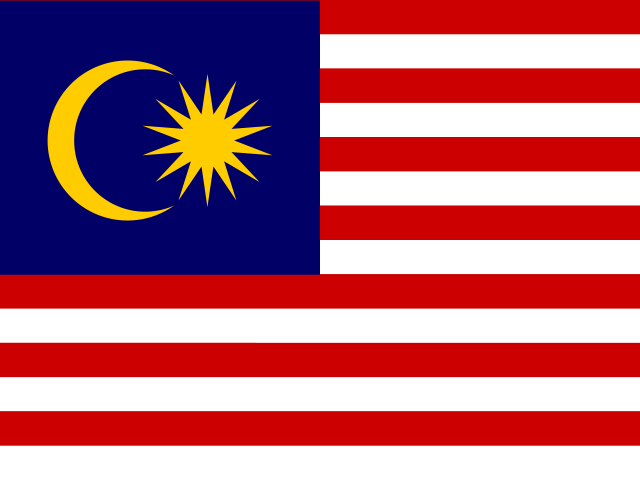
Malaysia

Traditions present: Islam, Buddhism, Taoism, Hinduism, Protestantism, Ancestor Veneration, Catholicism

Twenty places written in Malaysia. Each carries its history, architecture, site and orientation, festivals, and the way to get there.

Places
20
written
Traditions
7
present
Regions
16
regions, cities
English
20
pages translated

IPlaces Written

All 20 pages now have an English version.

By tradition
By region
Hinduism · Gombak, bang Selangor · 1891Batu CavesBatu Caves, பத்து மலை, Gua Batu, Batu Malai, Sri Subramaniar Swamy Devasthanam, Đền Sri Subramaniar Swamy, Temple Cave

A limestone cave complex north of Kuala Lumpur in Gombak, Selangor, where K. Thamboosamy Pillay established the Sri Subramaniar Swamy Temple dedicated to Lord Murugan inside Temple Cave in 1891, reached by 272 rainbow-painted steps. Guarded at the base by a 42.7-meter golden statue of Lord Murugan unveiled in 2006, it hosts the largest Thaipusam pilgrimage outside India, drawing around one million people each year.

Batu Caves, 68100 Batu Caves, Gombak, Selangor (cách Kuala Lumpur khoảng 13 km về phía bắc)

Photo: KQuhen, CC BY-SA 4.0, Wikimedia Commons

Buddhism · Penang · 1890Kek Lok SiKek Lok Si, Cực Lạc Tự, Hạc Sơn Cực Lạc Tự, Temple of Supreme Bliss

The largest Buddhist temple complex in Malaysia, perched on Crane Hill (Hạc Sơn) in Air Itam, Penang, founded in 1890 by Venerable Beow Lean (Miaolian) from Yongquan Monastery on Mount Gushan in Fuzhou and completed in its first phase in 1905 with imperial plaques and a Tripitaka canon bestowed by the Guangxu Emperor of the Qing Dynasty. It is renowned for its seven-story Pagoda of Ten Thousand Buddhas (Rama VI Pagoda, completed in 1930), blending Chinese octagonal base, Thai white mid-section, and Burmese gilded crown, alongside a 30.2-meter bronze statue of Guanyin (completed in 2002) sheltered beneath a 60.9-meter sixteen-column octagonal pavilion.

Largest Buddhist monastery complex in MalaysiaJln Balik Pulau, 11500 Ayer Itam, Pulau Pinang, Malaysia

Photo: HundenvonPenang, CC BY-SA 4.0, Wikimedia Commons

Islam · Kuala Lumpur · 1963National Mosque of MalaysiaMasjid Negara, مسجد نڬارا, Masjid Negara Malaysia, National Mosque of Malaysia

The flagship post-independence modernist Islamic monument of Malaysia in Kuala Lumpur, begun in 1963 and inaugurated on August 27, 1965 with a capacity of 15,000 worshippers, designed by British architect Howard Ashley and Malaysian architects Hisham Albakri and Baharuddin Kassim across a 5.3-hectare parkland site. It is celebrated for its pleated reinforced-concrete main roof shaped like a 16-pointed open royal umbrella adapted to the tropical climate, its 73-meter minaret capped like a folded umbrella, and the adjoining Heroes' Mausoleum (Makam Pahlawan).

National Heritage Site of Malaysia (Warisan Kebangsaan, 2007)Jalan Perdana, Tasik Perdana, 50480 Kuala Lumpur, Wilayah Persekutuan Kuala Lumpur, Malaysia

Photo: Santaria Fi, CC BY 4.0, Wikimedia Commons

Taoism · Kuala Lumpur · 1981Thean Hou TempleThean Hou Temple, Lạc Thánh Lĩnh Thiên Hậu Cung, Tokong Thean Hou

One of the largest Mazu temples in Southeast Asia, perched atop Robson Heights (Lạc Thánh Lĩnh) overlooking Kuala Lumpur, begun in 1981 by the Selangor and Federal Territory Hainan Association, completed in 1987, and officially inaugurated on September 3, 1989. The six-tiered syncretic complex blends Taoist, Buddhist, and Confucian architectural traditions with sweeping glazed tile roofs, dragon-carved crimson pillars, and octagonal caisson ceilings, enshrining three principal goddesses in its fourth-level prayer hall: Mazu (Thean Hou) at the center, Shui Wei Sheng Niang (patron goddess of the Hainanese diaspora) on the right, and Guanyin on the left.

One of the largest Mazu (Thean Hou) temples in Southeast Asia65, Persiaran Endah, Taman Persiaran Desa, 50460 Kuala Lumpur, Wilayah Persekutuan Kuala Lumpur, Malaysia (Robson Heights )

Photo: Alexey Komarov, CC BY-SA 4.0, Wikimedia Commons

Protestantism · Melaka · 1741Christ Church MelakaChrist Church Melaka, Christ Church Malacca, Gereja Christ Melaka, Bovenkerk

The oldest functioning Protestant church in Malaysia, standing on Dutch Square beside the Stadthuys in the historic heart of Melaka, begun in 1741 to mark the centenary of the Dutch capture of Melaka from the Portuguese and completed in 1753 as a Dutch Reformed church before passing to the Anglican Church after the Anglo-Dutch Treaty of 1824 and being consecrated in 1838. Famed for its Dutch brick facade painted salmon-red in 1911, 15-meter jointless single-trunk timber ceiling beams, a glazed-tile Last Supper reredos above the altar, and floor tombstones from the Portuguese and Dutch eras, it is a core monument of the Melaka UNESCO World Heritage Site (2008).

UNESCO World Heritage Site (Melaka and George Town, Historic Cities of the Straits of Malacca, 2008)Jalan Gereja, Bandar Hilir, 75000 Melaka, Malaysia (Dutch Square / Red Square)

Photo: T0lk, Public domain, Wikimedia Commons

Islam · Putrajaya · 1997 tới 1999Putra Mosque, PutrajayaMasjid Putra, Putra Mosque Putrajaya, Pink Mosque of Putrajaya, Pink Mosque Malaysia, Thanh duong Putra, Thanh duong Hong Putrajaya

The principal federal mosque of Malaysia's administrative capital Putrajaya, constructed between 1997 and September 1999 on a lakeside promontory beside the Prime Minister's Office (Perdana Putra) in honor of Malaysia's first Prime Minister, Tunku Abdul Rahman Putra Al-Haj. Designed by architect Nik Mohamed Mahmood (Kumpulan Senireka Sdn Bhd) in rose-tinted granite with a capacity of 15,000 worshippers, the complex blends Persian Safavid iwan portals and nine pink arabesque-tiled domes (rising 50 meters over a twelve-column prayer hall) with a five-tiered 116-meter minaret inspired by Baghdad's Sheikh Omar Mosque and traditional Kelantan-Terengganu cengal woodcarving.

Principal Federal Mosque of the Federal Territory of Putrajaya (JAKIM)Persiaran Persekutuan, Presint 1, 62502 Putrajaya, Malaysia

Photo: CEphoto, Uwe Aranas, CC BY-SA 3.0, Wikimedia Commons

Islam · Shah Alam, Selangor · 1982 tới 1988Sultan Salahuddin Abdul Aziz Mosque, Shah AlamMasjid Sultan Salahuddin Abdul Aziz Shah, Sultan Salahuddin Abdul Aziz Mosque, Blue Mosque of Shah Alam, Selangor State Mosque, Thanh duong Xanh Shah Alam

The State Mosque of Selangor and the largest mosque in Malaysia (second-largest in Southeast Asia), inaugurated on March 11, 1988 in Shah Alam with a capacity of 24,000 worshippers. Commissioned by Sultan Salahuddin Abdul Aziz Shah and designed by Malaysian architect Dato' Baharuddin Abu Kassim (Jurubena Bertiga International), it is renowned for its monumental tubular aluminum space-frame dome clad in blue-and-silver vitreous enamel steel panels (measuring 51.2 meters in diameter and rising 106.7 meters above ground), framed by four 142.3-meter corner minarets and surrounded by the 14-hectare Selangor Islamic Arts Garden overlooking Shah Alam Lake.

State Mosque of Selangor; Largest Mosque in Malaysia and Second-Largest in Southeast AsiaPersiaran Masjid, Seksyen 14, 40000 Shah Alam, Selangor, Malaysia

Photo: Lerdsuwa, CC BY-SA 3.0, Wikimedia Commons

Islam · Kuala Lumpur · 1908 tới 1909Jamek Mosque, Kuala LumpurMasjid Jamek Sultan Abdul Samad, Masjid Jamek Kuala Lumpur, Jamek Mosque Kuala Lumpur, Friday Mosque of Kuala Lumpur, Thanh duong Jamek

The oldest major mosque in Kuala Lumpur, standing right at the historic triangular confluence of the Klang and Gombak rivers where Kuala Lumpur (meaning Muddy Confluence) was born in 1857. Designed by British colonial architect Arthur Benison Hubback in the Indo-Saracenic (Mughal and Moorish) style and inaugurated by Sultan Alaeddin Sulaiman Shah of Selangor on December 23, 1909, the sanctuary is celebrated for its red-brick and white-plaster striped masonry, three white Mughal onion domes (rising 21.3 meters), two 26.8-meter minarets, and palm-shaded courtyard beside the River of Life.

National Heritage Monument of Malaysia (Warisan Kebangsaan); Oldest Congregational Mosque in Kuala LumpurJalan Tun Perak, City Centre, 50050 Kuala Lumpur, Malaysia

Photo: Marcin Konsek, CC BY-SA 4.0, Wikimedia Commons

Islam · Kuala Terengganu, Terengganu · 2006 tới 2008Crystal Mosque, Kuala TerengganuMasjid Kristal, Crystal Mosque Kuala Terengganu, Crystal Mosque Terengganu, Taman Tamadun Islam Mosque, Thanh duong Pha Le

A contemporary steel, smoke-tinted reflective glass, and crystal mosque perched on the river island of Pulau Wan Man in Kuala Terengganu, Terengganu, Malaysia. Built between 2006 and 2008 as the centerpiece of the 22-hectare Islamic Civilization Park (Taman Tamadun Islam) and inaugurated on February 8, 2008 by Yang di-Pertuan Agong Tuanku Mizan Zainal Abidin, the 1,500-capacity sanctuary features eight shimmering glass domes and four corner minarets that mirror the Terengganu River by day and glow with color-changing LED illumination by night.

Contemporary Islamic Architectural Landmark of Malaysia's East Coast (Taman Tamadun Islam)Pulau Wan Man, Losong, 21000 Kuala Terengganu, Terengganu, Malaysia

Photo: Yun Huang Yong from Harbord, Australia, CC BY 2.0, Wikimedia Commons

Taoism · Melaka UNESCO World Heritage Site · 1645 (bia ký xác nhận năm 1673)Cheng Hoon Teng Temple, MelakaCheng Hoon Teng Temple, Qingyun Ting Melaka, Temple of the Green Cloud, Temple of the Azure Cloud, Chua Thanh Van Dinh, Den Thanh Van Dinh Melaka

The oldest functioning traditional Chinese temple in Malaysia, founded in 1645 on Harmony Street (Jalan Tokong) in historic Melaka by the first Chinese Kapitan Lee Wei King (verified by a 1673 stone stele), expanded in 1704 by second Kapitan Chan Lak Kua, and restored in 1801 by Kapitan Chua Su Cheong. Dedicated primarily to Guanyin (Avalokitesvara Bodhisattva) alongside Mazu, Guandi, Baosheng Dadi, Confucius, and the ancestral tablets of the Melaka Kapitans, the 4,600-square-meter Southern Fujian (Minnan) sanctuary served for nearly two centuries as the administrative court of Melaka's Chinese community and received the 2002 UNESCO Asia-Pacific Heritage Award for Cultural Heritage Conservation.

UNESCO World Heritage Site (Melaka, 2008) and UNESCO Asia-Pacific Heritage Conservation Award Winner (2002)25 Jalan Tokong (Harmony Street), 75200 Melaka, Malaysia

Photo: Marcin Konsek, CC BY-SA 4.0, Wikimedia Commons

Islam · Melaka UNESCO World Heritage Site · 1748 (xây lại bằng gạch năm 1872)Kampung Kling Mosque, MelakaMasjid Kampung Kling, Kampung Kling Mosque Melaka, Kampong Kling Mosque, Harmony Street Mosque Melaka, Thanh duong Kampung Kling

One of the oldest traditional mosques in Malaysia, founded in 1748 (1161 AH) as a timber sanctuary by Indian Muslim merchants on Harmony Street (Jalan Tukang Emas) in historic Melaka and rebuilt in brick between 1872 and 1908. Inscribed as part of the Melaka UNESCO World Heritage Site in 2008 right beside the Sri Poyatha Hindu Temple and Cheng Hoon Teng Chinese Temple, it is celebrated for its three-tiered Sumatran-Javanese pyramidal green-tiled roof, a five-story pagoda-shaped minaret, six classical Corinthian columns, and Victorian English and Portuguese glazed ceramic tiles.

UNESCO World Heritage Site (Melaka, 2008) and National Heritage Monument of MalaysiaJalan Tukang Emas (Harmony Street), 75200 Melaka, Malaysia

Photo: Marcin Konsek, CC BY-SA 4.0, Wikimedia Commons

Ancestor Veneration · George Town UNESCO Heritage Zone, Penang · Khởi lập 1851; tòa từ đường Long Sơn Đường hoàn thành 1906Khoo Kongsi Clanhouse, PenangLeong San Tong Khoo Kongsi, Long Son Duong Khuu Cong Tu, Khau Cong So Penang, Khoo Clan Ancestral Temple

A grand Hokkien clan ancestral complex located at 18 Cannon Square in the UNESCO World Heritage core of George Town, Penang, Malaysia. Founded in 1851 by immigrants of the Khoo (Qiu) clan from Sin Kang village in Haicheng, Zhangzhou, Fujian, and rebuilt to its present architectural splendor between 1902 and 1906 after a 1901 fire, the walled compound centers on the gilded Leong San Tong pavilion enshrining clan ancestors and Tua Pek Kong opposite a traditional opera stage.

UNESCO World Heritage Site Monument (George Town, 2008)18 Cannon Square, 10450 George Town, Pulau Pinang, Malaysia

Photo: This Photo was taken by Supanut Arunoprayote . Feel free to use any of my images, but please mention me as the author an, CC BY 4.0, Wikimedia Commons

Taoism · George Town UNESCO Heritage Zone, Penang · 1728 tới 1800Goddess of Mercy Temple, PenangKuan Yin Teng Penang, Kong Hock Keong, Quang Phuc Cung Quan Am Dinh Penang, Goddess of Mercy Temple George Town

The oldest Chinese temple in Penang, standing at 30 Jalan Masjid Kapitan Keling (Pitt Street, the Street of Harmony) in the UNESCO World Heritage core of George Town. Originating as a modest seafarers' shrine around 1728 and built on a grand scale in 1800 jointly by the Cantonese (Kwong) and Hokkien (Hock) communities under the formal title Kong Hock Keong, the sanctuary enshrines Avalokitesvara Bodhisattva (Guanyin), Mazu, and Tua Pek Kong behind a sweeping granite forecourt.

UNESCO World Heritage Site Monument (George Town, 2008) and Oldest Chinese Temple in Penang30 Jalan Masjid Kapitan Keling (Pitt Street), 10200 George Town, Pulau Pinang, Malaysia

Photo: Christophe95, CC BY-SA 4.0, Wikimedia Commons

Hinduism · Chinatown, Kuala Lumpur · 1873 (chuyển tới vị trí hiện tại năm 1885; tháp cổng Gopuram dựng năm 1968)Sri Mahamariamman Temple, Kuala LumpurSri Mahamariamman Kovil Kuala Lumpur, Sri Maha Mariamman Temple Dhevasthanam, Den Mau Mariamman Kuala Lumpur

The oldest functioning Hindu temple in Kuala Lumpur, founded in 1873 by Tamil community leader K. Thamboosamy Pillai and relocated in 1885 to 163 Jalan Tun H.S. Lee on the edge of historic Chinatown. Renowned for its 1968 five-tiered, 22.9-meter South Indian Raja Gopuram sculpted with 228 polychrome Hindu deities, the sanctuary enshrines the Mother Goddess Sri Mahamariamman alongside Ganesha and Murugan, and serves as the home and starting point of the sacred Silver Chariot procession to Batu Caves every Thaipusam.

Oldest Hindu Temple in Kuala Lumpur and Seat of the Sri Maha Mariamman Temple Dhevasthanam163 Jalan Tun H S Lee, City Centre, 50000 Kuala Lumpur, Malaysia

Photo: *angys*, CC BY-SA 4.0, Wikimedia Commons

Islam · Kuala Kangsar, Perak · 1913 tới 1917Ubudiah Mosque, Kuala KangsarMasjid Ubudiah Kuala Kangsar, Royal Mosque of Perak, Bukit Chandan Royal Mosque, Thanh duong Hoang gia Ubudiah

The royal mosque of Perak State, crowning Bukit Chandan hill beside the Perak River in the royal town of Kuala Kangsar, Malaysia. Commissioned in 1913 by the 28th Sultan of Perak, Sultan Idris Murshidul Azzam Shah I, in fulfillment of a thanksgiving vow upon recovering from illness and inaugurated in 1917 by Sultan Abdul Jalil, the Indo-Saracenic masterpiece designed by Arthur Benison Hubback features an octagonal prayer hall, a gleaming golden onion dome, four 38.4-meter minarets, and Italian red-and-white marble famously delayed by a duel between two royal elephants.

Royal Mosque of the Perak Sultanate and National Architectural Heritage Monument of MalaysiaJalan Istana, Bukit Chandan, 33000 Kuala Kangsar, Perak, Malaysia

Photo: Mszf 92, CC BY-SA 4.0, Wikimedia Commons

Buddhism · Brickfields, Kuala Lumpur · 1894Buddhist Maha Vihara, Brickfields, Kuala LumpurBrickfields Buddhist Temple, Sri Lankan Buddhist Temple Kuala Lumpur, Chua Phat Giao Maha Vihara Brickfields

The oldest and most influential Theravada Buddhist monastery in Kuala Lumpur, founded in 1894 by Sinhalese Buddhists from Sri Lanka at 123 Jalan Berhala in Brickfields. Guided for over half a century by the renowned scholar-monk Most Venerable Dr. K. Sri Dhammananda (1919 to 2006), the sanctuary houses the 1894 heritage shrine hall, a century-old Bodhi tree sapling from Anuradhapura, the white relic stupa, and serves as the starting point of Malaysia's grandest Wesak Day candlelight float procession as well as a cherished spiritual home for Vietnamese Buddhists in Kuala Lumpur.

Oldest Theravada Buddhist Monastery in Kuala Lumpur and Seat of the Buddhist Missionary Society Malaysia123 Jalan Berhala, Brickfields, 50470 Kuala Lumpur, Malaysia

Photo: Philip Nalangan, CC BY 4.0, Wikimedia Commons

Buddhism · Jenjarom, Selangor · 1994Fo Guang Shan Dong Zen Temple, SelangorFo Guang Shan Malaysia Headquarters, Dong Zen Monastery Jenjarom, Chua Phat Quang Son Dong Thien Tu Selangor

The 16-hectare Malaysian national headquarters of the Fo Guang Shan Buddhist order and Buddhist institute located in Jenjarom, Kuala Langat District, Selangor. Founded in 1994 by Venerable Master Hsing Yun (1927 to 2023) on land donated by philanthropist Lau Kuo-Chu and guided by Chief Abbess Venerable Jue Cheng, the garden monastery champions Humanistic Buddhism and hosts Malaysia's famous Chinese New Year Lantern and Floral Festival, drawing hundreds of thousands of visitors including a large Vietnamese diaspora community.

Malaysian National Headquarters of Fo Guang Shan and the Dong Zen Institute of Buddhist StudiesPT 2297, Jalan Sungai Buaya, 42600 Jenjarom, Kuala Langat, Selangor, Malaysia

Photo: Zh9567, CC BY-SA 4.0, Wikimedia Commons

Buddhism · Pulau Tikus, Penang · 1845 (Đại tượng Phật Nằm hoàn thành năm 1958)Wat Chaiya Mangalaram, PenangWat Chaiya Mangalaram, Wat Chayamangkalaram, Reclining Buddha Temple Penang, Wat Buppharam Pulau Tikus, Chua Phat Nam Penang

The oldest royal Thai Theravada Buddhist monastery on Penang Island, founded in 1845 by the revered Thai monk Phorthan Kuat on a five-acre plot in Pulau Tikus granted by Queen Victoria through the British East India Company to Penang's Siamese community, and visited in 1962 by King Bhumibol Adulyadej (Rama IX) of Thailand. Standing directly opposite Dhammikarama Burmese Temple on Lorong Burma, its grand Vihara enshrines the 33-meter (108-foot) gold-leaf Reclining Buddha image Phra Chai Mongkol completed in 1958.

Oldest Royal Thai Theravada Buddhist Monastery on Penang Island (Founded 1845)17 Lorong Burma, Pulau Tikus, 10250 George Town, Pulau Pinang, Malaysia

Photo: CEphoto, Uwe Aranas, CC BY-SA 3.0, Wikimedia Commons

Catholicism · Bukit Mertajam, Penang · 1846 (nhà thờ cổ năm 1888; nhà thờ lớn năm 2002; phong Vương cung thánh đường năm 2019)Minor Basilica of St. Anne, Bukit MertajamMinor Basilica of St. Anne Bukit Mertajam, St. Anne's Church Bukit Mertajam, Sanctuary of St. Anne Penang, Gereja St. Anne Bukit Mertajam, Vuong cung thanh duong Thanh Anna Penang

Malaysia's foremost Catholic pilgrimage sanctuary and first Minor Basilica, nestled at the foot of Bukit Mertajam Hill in mainland Penang (Seberang Perai). Founded in 1846 by missionaries of the Paris Foreign Missions Society (MEP) and elevated to a Minor Basilica by Pope Francis in 2019, its 65-acre grounds unite the whitewashed 1888 French Gothic hillside shrine with the grand 2002 Minangkabau-roofed Basilica church, drawing hundreds of thousands of multi-ethnic Malaysian and overseas pilgrims (including a vibrant Vietnamese Catholic community) every July for the ten-day Feast of St. Anne.

First Minor Basilica in Malaysia (Conferred by Pope Francis in 2019)Jalan Kulim, 14000 Bukit Mertajam, Pulau Pinang, Malaysia

Photo: Basil Chew, CC BY-SA 4.0, Wikimedia Commons

Buddhism · Bidong Island, Terengganu · 1978 tới 1991 (Đài tưởng niệm dựng năm 2005 tới 2006)Pulau Bidong Hainan Temple and Vietnamese Boat People MemorialPulau Bidong Hainan Temple and Vietnamese Boat People Memorial, Tu Bi Pagoda Religion Hill Pulau Bidong, Chua Tu Bi Dao Bidong, Mieu Thien Hau Pulau Bidong, Bukit Agama Bidong Island

A poignant maritime spiritual and humanitarian heritage site along Pantai Pasir Pengkalan bay and Religion Hill on Pulau Bidong (Bidong Island) off Kuala Terengganu, Malaysia. Between August 1978 and October 1991, Pulau Bidong served as Southeast Asia's largest UNHCR and Malaysian Red Crescent refugee transit camp, sheltering nearly 254,000 Vietnamese boat people. Today the island preserves the beachfront Hainan Tian Hou (Mazu) Temple, the forest-draped ruins and Buddha statues of Tu Bi Pagoda atop Religion Hill, and the sail-shaped 2005-2006 Memorial honoring humanitarian solidarity and those lost at sea.

UNHCR Humanitarian Heritage Site (1978 to 1991) and Terengganu State Historical SanctuaryPantai Pasir Pengkalan, southwestern coast of Bidong Island (Pulau Bidong), Kuala Terengganu, Terengganu, Malaysia

Photo: HENG FU MING, CC BY 2.0, Wikimedia Commons

IIHelp Us Build This

This library is open and free, and it records its own progress in public. Three things you can help with today:

  1. Name a place we missedA founding temple, a church, a mosque, a shrine the table above does not have. Send the name, the province, and one line on why it belongs.
  2. Send a photograph with an open licenceNothing is published without both the photographer and the licence. Your own photograph with your permission, or an openly licensed one, are both welcome.
  3. Report an errorA wrong date, a wrong original name, a wrong lineage, a wrong address. A library that is wrong once is not trusted again, so corrections are very welcome.

Write to thayungkhiem@gmail.com

IIILog

  • 31/10/2026Consolidated summary of three major roadmap milestones completed and independently audited on this day: (1) Completed 100% of Stage E (Scriptures and Mantras Pillar): authored and published all 31 remaining Round-2 and Round-3 bilingual scripture sets (13 in Round 2 and 18 in Round 3), bringing the library to all 57 of 57 planned scripture sets across 65 four-column bilingual pages (130 HTML pages and 12 openly licensed human audio recordings), ensuring every one of the 19 traditions features 3 core scriptures linked directly from its dedicated section on each religion pillar page. (2) Advanced Stage B (Openly Licensed Real Photographs): sourced, visually verified and added 5 new Wikimedia Commons photographs for previously pending sites (Wat Lokanukroh in Bangkok, Mosque 104 Van Lam in Ninh Thuan, Masjid Sunnah Da Phuoc in An Giang, Ly Long Tuong Loyalty and Filial Piety Hall in Bonghwa, South Korea, and St. Christopher's Church in Taipei) together with 100% real photographs for all 60 new places, raising verified real photographs to 1,098 of 1,214 sacred places (90.4%). (3) Completed Batch 3 of the Maritime Southeast Asia and Myanmar Wave-2 Cluster in Stage C: authored 60 new Step B and Step C bilingual monographs with geomantic site readings and verified Wikimedia Commons photographs, clearing 100% of the queues for Myanmar (+15 places across Bagan, Mandalay, Mingun, Inle Lake, Pindaya, Mrauk U, Mount Popa and the historic Vipassana and Samatha forest monasteries of Yangon and Mawlamyine, reaching 20 places), Indonesia (+15 places across Magelang, Klaten, Bali, Banda Aceh, Demak, Kudus, Jakarta, Yogyakarta, Semarang and Kim Son Pagoda on Galang Island, reaching 20 places), Malaysia (+15 places across Putrajaya, Shah Alam, Kuala Lumpur, Kuala Terengganu, Melaka, Penang, Kuala Kangsar, Selangor and the Pulau Bidong heritage site, reaching 20 places) and the Philippines (+15 places across Ilocos Norte, Ilocos Sur, Manila, Pangasinan, Batangas, Batanes, Tawi-Tawi, Cebu, Antipolo, Viet Ville in Palawan and the Bataan memorial sanctuary, reaching 20 places), bringing the library to 1,214 sacred places worldwide (21 countries and territories 100% complete, with 889 places remaining across 181 countries).
  • 24/10/2026Completed three major initiatives on the same day: (1) Verified primary international sources and published the remaining 199 full English editions across 192 countries and territories, officially completing Stage D with 100% bilingual Vietnamese and English coverage across the entire library. (2) Visually verified and published 35 openly licensed Wikimedia Commons photographs for 22 sites in Vietnam and 13 international sanctuaries. (3) Authored 100 new bilingual sacred place monographs with real photographs for Stage C across 25 countries and territories (South Korea, China, Taiwan, Thailand, Cambodia, Myanmar, Laos, Indonesia, Malaysia, the Philippines, Sri Lanka, Nepal, Bhutan, Bangladesh, Mongolia, Italy, Spain, Portugal, Greece, Russia, Turkey, Egypt, Israel, Canada and Mexico), expanding each from 1 to 5 places and bringing the library to 761 sacred places.
  • 25/09/2026Launched the complete Scriptures and Mantras section for all 19 faiths, presenting one daily liturgical text per tradition in four columns (original script, transliteration, Vietnamese and English) with a read-along player and human recordings for 7 texts. On the same day, visually verified and published 29 openly licensed Wikimedia Commons photographs for the first Stage A batch across 29 countries in Asia, the Middle East, Africa, Europe and the Americas.
  • 24/09/2026In the Main Hall, completed 3D ritual offerings for all 19 faiths with authentic gestures, offerings and proportions, alongside the milestone counter toward one billion heartfelt offerings. In the Places section, completed articles and openly licensed photographs for 30 second-batch sites across the 10 priority countries (bringing each to 5 places, including the Portuguese Synagogue in Amsterdam as the library's first Jewish site) and authored the first 30 Stage A articles across 30 additional countries in Asia, Europe, Africa and the Americas (including Bulguksa, the Temple of Confucius in Qufu, Angkor Wat, Borobudur, Masjid al-Haram, St Peter's Basilica and Guadalupe).

?Quick Questions

Why are there no opening hours or ticket prices

Because they change constantly. A library that is wrong once about a practical detail loses its standing on everything else. Check with the place itself before you travel.

Where do the images come from

From Wikimedia Commons under open licences, each credited to its photographer, or photographed by UK MASTER ACADEMY. No image is published without both its author and its licence.

How were these places chosen

Four tests: it is officially listed as a heritage site, it belongs to a tradition this library covers, its site and orientation can be read in feng shui terms, and an openly licensed photograph exists.

Why is my country still grey

The library opens one country at a time, beginning with the countries that have the most readers, and within each country with its most significant places. A grey country is simply one whose turn has not come. Suggestions are welcome through the page of Master Ưng Khiêm.

›Read Next