HALL OF MYRIAD PATHSVẠN ĐẠO ĐƯỜNGTiếng ViệtVIMaster Ưng Khiêm's site
HALL OF MYRIAD PATHS

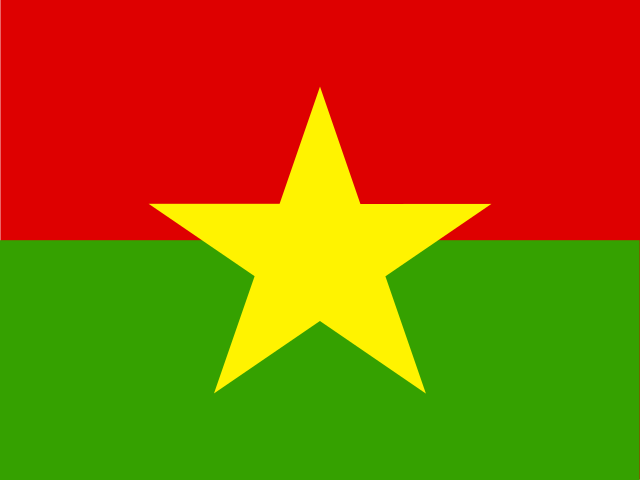
Burkina Faso

Traditions present: Islam, Catholicism

Five places written in Burkina Faso. Each carries its history, architecture, site and orientation, festivals, and the way to get there.

Places
5
written
Traditions
2
present
Regions
3
regions, cities
English
5
pages translated

IPlaces Written

All 5 pages now have an English version.

By tradition
By region
Islam · Guiriko (trước gọi Hauts-Bassins) · khoảng 1880 (nguồn khác ghi 1882, 1883 hay 1893)Grand Mosque of Bobo-DioulassoGrande Mosquée de Bobo-Dioulasso, Mosquée de Dioulasso-bâ, Vieille mosquée de Dioulassoba, Grand Mosque of Bobo-Dioulasso

The historic mud-brick mosque of the Dioulassoba quarter, the ancient core of Bobo-Dioulasso, built around 1880 in the Sudano-Sahelian style as the second-largest earthen building in the region after the Great Mosque of Djenné. Its ochre earthen walls bristle with rows of projecting wooden stakes, its two conical minarets are topped with ostrich eggs, and residents gather each year to apply a fresh coat of mud plaster, a tradition kept for over a century. In 2026, it was placed on the UNESCO World Heritage Tentative List among the Sudanese-style mosques of Burkina Faso.

UNESCO World Heritage Tentative List (Sudanese-style mosques in Burkina Faso, 2026)Khu phố cổ Dioulassoba, Bobo-Dioulasso, Burkina Faso

Photo: qiv, CC BY-SA 2.0, Wikimedia Commons

Catholicism · Kadiogo Province, Centre Region · Khởi công năm 1934 và hoàn thành năm 1936 dưới sự chỉ đạo trực tiếp của Giám mục Đại diện Tông tòa Joanny Thevenoud thuộc Hội Truyền giáo Châu Phi (Các Cha Trắng / Peres Blancs); thánh hiến trọng thể ngày 19 tháng 1 năm 1936 và nâng lên hàng nhà thờ chính tòa tổng giáo phận ngày 14 tháng 9 năm 1955Cathedral of the Immaculate Conception, OuagadougouCathedrale de l'Immaculee-Conception de Ouagadougou, Grande Cathedrale de Ouagadougou, Red Mud-Brick Cathedral of Ouagadougou

The metropolitan cathedral of the Roman Catholic Archdiocese of Ouagadougou, constructed between 1934 and 1936 under Apostolic Vicar Joanny Thevenoud of the Missionaries of Africa (White Fathers) using local red mud brick and laterite stone in a synthesis of European Romanesque basilica form and West African Sudano-Sahelian masonry, distinguished by its deliberately asymmetrical twin western bell towers.

Metropolitan Cathedral of the Roman Catholic Archdiocese of Ouagadougou and Historic Architectural Landmark of Burkina FasoAvenue de la Cathedrale, Koulouba Quarter, Central Ouagadougou, Kadiogo Province, Burkina Faso

Photo: Sputniktilt, CC BY-SA 3.0, Wikimedia Commons

Islam · Kadiogo Province, Centre Region · Hình thành cùng sự thành lập Cộng đồng Hồi giáo Ouagadougou năm 1962; xây dựng tổ hợp đại thánh đường bê tông hiện đại quy mô lớn vào thập niên 1970 tới đầu thập niên 1980 ngay cạnh chợ trung tâm Rood-Woko và trùng tu mở rộng nhiều giai đoạn trong thế kỷ 21Grand Mosque of OuagadougouGrande Mosquee de Ouagadougou, Grande Mosquee Sunnite de Ouagadougou, Central Friday Mosque of Rood-Woko

The central Friday congregational mosque of Burkina Faso's capital situated immediately beside the historic Rood-Woko Central Market in downtown Ouagadougou, serving as the flagship sanctuary of the Muslim Community of Burkina Faso (CMBF) with its twin towering minarets, expansive multi-aisled prayer hall, and surrounding arcaded courtyards that gather tens of thousands of worshippers every Friday and during the feasts of Eid al-Fitr and Tabaski.

Central Friday Congregational Mosque of Ouagadougou and Historic Headquarters of the Muslim Community of Burkina Faso (Communaute Musulmane du Burkina Faso - CMBF)Avenue de la Grande Mosquee, adjacent to Rood-Woko Central Market, Arrondissement 1, Central Ouagadougou, Kadiogo Province, Burkina Faso

Photo: Fotograaf / photographer: H.W. (Henk) van Rinsum (Waingapoe 1932), CC BY-SA 3.0, Wikimedia Commons

Catholicism · Kadiogo Province, Centre Region · Khởi nguyên năm 1966 tới ngày 25 tháng 3 năm 1967 khi linh mục truyền giáo dòng Cha Trắng Louis-Marie Bezodis cùng giáo dân giáo xứ Pabre dựng hang đá Đức Mẹ trên đồi Yagma; cuộc hành hương đầu tiên ngày 11 tháng 2 năm 1968 thời Hồng y Paul Zoungrana; nâng lên Đền thánh Quốc gia năm 1988 và thánh hiến Nhà thờ lớn hình mũ lá Mossi ngày 2 tháng 2 năm 2013Sanctuary of Our Lady of YagmaSanctuaire Notre-Dame de Yagma, National Marian Shrine of Yagma, Basilica of Our Lady of Mercy at Yagma

The National Marian Pilgrimage Sanctuary of Burkina Faso set upon the laterite hill of Yagma northwest of Ouagadougou, established in 1967 to 1968 under Cardinal Paul Zoungrana and Father Louis-Marie Bezodis around a Lourdes-inspired Marian grotto, visited by Pope John Paul II on January 29, 1990, and crowned in 2013 by a monumental sanctuary church whose conical roof evokes the traditional woven hat of the Mossi people.

National Pilgrimage Sanctuary of the Catholic Church in Burkina Faso (proclaimed by the Episcopal Conference in 1988) and Papal Pilgrimage Site of Pope John Paul II (January 29, 1990)Yagma Hill, Arrondissement 9, Northwestern Outskirts of Ouagadougou, Kadiogo Province, Burkina Faso

Photo: Augustekinda, CC BY-SA 4.0, Wikimedia Commons

Islam · Yatenga Province, Nord Region · Thành lập làng thánh và thánh đường đầu tiên khoảng năm 1916 tới năm 1920 bởi bậc đạo sư Sufi Cheick Aboubacar Maiga II (1856 tới 1946, môn đệ của Cheick Hamahoullah xứ Nioro du Sahel); mở rộng và tái thiết thành đại thánh đường hành hương dưới thời các vị Khalife kế vị là Cheick Sidi Mohamed Maiga (1913 tới 1986) và Cheick Aboubacar Maiga IIIMosque of RamatoulayeMosquee de Ramatoulaye, Thánh địa hành hương Hồi giáo Sufi Tijaniyyah Hamawiyyah tại làng Ramatoulaye

Thánh địa hành hương Hồi giáo Sufi lớn nhất Burkina Faso nằm tại làng thánh Ramatoulaye thuộc tỉnh Yatenga, được bậc đạo sư Cheick Aboubacar Maiga II sáng lập đầu thế kỷ 20 như trung tâm của dòng tu Tijaniyyah Hamawiyyah vùng Thượng Volta, nơi mỗi dịp đại lễ Mawlid kỷ niệm ngày sinh Tiên tri Muhammad lại quy tụ hàng trăm nghìn tín hữu từ khắp Tây Phi.

Trung tâm Hành hương Hồi giáo Sufi lớn nhất Burkina Faso thuộc dòng Tijaniyyah nhánh Mười Một Hạt (Hamawiyyah / Tijaniyyah Onze Grains) và Di sản Văn hóa Tôn giáo Quốc giaRamatoulaye Village (25 km southeast of Ouahigouya), Oula Department, Yatenga Province, Nord Region, Burkina Faso

Photo: qiv, CC BY-SA 2.0, Wikimedia Commons

IIHelp Us Build This

This library is open and free, and it records its own progress in public. Three things you can help with today:

  1. Name a place we missedA founding temple, a church, a mosque, a shrine the table above does not have. Send the name, the province, and one line on why it belongs.
  2. Send a photograph with an open licenceNothing is published without both the photographer and the licence. Your own photograph with your permission, or an openly licensed one, are both welcome.
  3. Report an errorA wrong date, a wrong original name, a wrong lineage, a wrong address. A library that is wrong once is not trusted again, so corrections are very welcome.

Write to thayungkhiem@gmail.com

IIILog

  • 24/10/2026Completed three major initiatives on the same day: (1) Verified primary international sources and published the remaining 199 full English editions across 192 countries and territories, officially completing Stage D with 100% bilingual Vietnamese and English coverage across the entire library. (2) Visually verified and published 35 openly licensed Wikimedia Commons photographs for 22 sites in Vietnam and 13 international sanctuaries. (3) Authored 100 new bilingual sacred place monographs with real photographs for Stage C across 25 countries and territories (South Korea, China, Taiwan, Thailand, Cambodia, Myanmar, Laos, Indonesia, Malaysia, the Philippines, Sri Lanka, Nepal, Bhutan, Bangladesh, Mongolia, Italy, Spain, Portugal, Greece, Russia, Turkey, Egypt, Israel, Canada and Mexico), expanding each from 1 to 5 places and bringing the library to 761 sacred places.
  • 30/09/2026Sourced, visually verified and published 24 openly licensed Wikimedia Commons photographs for the fourth batch of Stage A across the Gulf, maritime Southeast Asia, Central Asia, Europe, Africa, Latin America and Oceania, from the Malé Friday Mosque, Sulayman-Too and Old Orhei to the Temple in the Sea, Ambohimanga and the Grand Mosque of Agadez.
  • 29/09/2026Officially opened the doors of Hall of Myriad Paths to readers worldwide as a living spiritual library that grows every day. On the same day, authored 60 new Stage A sacred place monographs across 60 countries in the Nordic and Baltic regions, the Balkans, the Gulf, Central Asia, European microstates, Africa, Oceania, Latin America and the Caribbean (including Roskilde Cathedral, Hallgrímskirkja, the Gate of Dawn in Vilnius, Ostrog Monastery, Malé Friday Mosque, Sulayman-Too, Old Orhei, the Temple in the Sea and Ambohimanga), while verifying and publishing 59 openly licensed photographs for the second and third batches.

?Quick Questions

Why are there no opening hours or ticket prices

Because they change constantly. A library that is wrong once about a practical detail loses its standing on everything else. Check with the place itself before you travel.

Where do the images come from

From Wikimedia Commons under open licences, each credited to its photographer, or photographed by UK MASTER ACADEMY. No image is published without both its author and its licence.

How were these places chosen

Four tests: it is officially listed as a heritage site, it belongs to a tradition this library covers, its site and orientation can be read in feng shui terms, and an openly licensed photograph exists.

Why is my country still grey

The library opens one country at a time, beginning with the countries that have the most readers, and within each country with its most significant places. A grey country is simply one whose turn has not come. Suggestions are welcome through the page of Master Ưng Khiêm.

›Read Next