HALL OF MYRIAD PATHSVẠN ĐẠO ĐƯỜNGTiếng ViệtVIMaster Ưng Khiêm's site
HALL OF MYRIAD PATHS

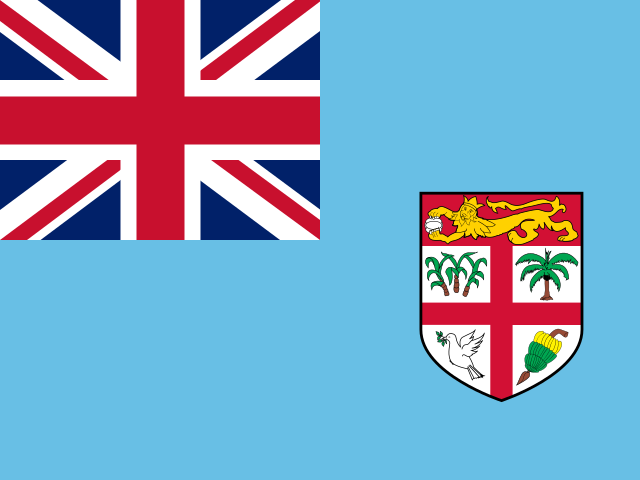
Fiji

Traditions present: Catholicism, Hinduism, Protestantism, Islam

Five places written in Fiji. Each carries its history, architecture, site and orientation, festivals, and the way to get there.

Places
5
written
Traditions
4
present
Regions
4
regions, cities
English
5
pages translated

IPlaces Written

All 5 pages now have an English version.

By tradition
By region
Hinduism · Miền Tây (Western Division) · 1913 (đền đầu tiên), đặt móng đền hiện nay năm 1976, khánh thành ngày 15 tháng 7 năm 1994Sri Siva Subramaniya TempleSri Siva Subramaniya Swami Temple, Sri Siva Subramaniya Temple Nadi, Nadi Murugan Temple

A Hindu temple dedicated to Lord Murugan at the southern end of Nadi's main street beside the Nadi River, widely introduced as the largest Hindu temple in the Southern Hemisphere. Standing on the site of the first South Indian community temple in Fiji (1913), the current complex had its foundation stone laid in 1976 and was consecrated in 1994, crafted in the Dravidian style with a brightly painted multi-tiered gopuram gateway tower by eight artisans invited from India. The complex comprises three sanctums dedicated to Murugan, Ganesh, and Shiva with Meenakshi, housing a main Murugan image carved in India.

Queens Road, Nadi, đảo Viti Levu, Fiji

Photo: Mark Heard from Canada, CC BY 2.0, Wikimedia Commons

Protestantism · Central Division, Capital City of Suva, Viti Levu Island · Khởi xướng nhân dịp Kỷ niệm 100 năm Giáo hội Giám lý hiện diện tại Fiji (1835 tới 1935); gián đoạn bởi Thế chiến II và chính thức xây dựng hoàn thành, cung hiến trọng thể vào năm 1954 bên cạnh Trụ sở Tổng hội Epworth House tại trung tâm thủ đô Suva; nơi Giáo hội Giám lý tại Fiji và Rotuma tuyên bố tự trị độc lập năm 1964Centenary Methodist Church, SuvaSuva Centenary Methodist Church, Wesley Division Centenary Church, Mother Sanctuary of the Methodist Church in Fiji and Rotuma

The flagship sanctuary and ceremonial heart of the Methodist Church in Fiji and Rotuma (the largest Christian denomination among indigenous iTaukei Fijians), standing at the corner of Stewart and Epeli Streets in central Suva alongside Epworth House, conceived for the 1935 centenary of Methodist mission work in Fiji (begun at Lakeba on October 12, 1835) and completed in 1954.

Mother Church and National Conference Sanctuary of the Methodist Church in Fiji and Rotuma (Lotu Wesele, the largest Protestant denomination in Fiji)Corner of Stewart Street and Epeli Street, Central Suva, Viti Levu Island, Fiji

Photo: Cecouchman, CC BY-SA 3.0, Wikimedia Commons

Catholicism · Central Division, Capital City of Suva, Viti Levu Island · Khởi công đặt đá móng năm 1894 và xây dựng giai đoạn chính năm 1902 dưới thời Giám mục Đại diện Tông tòa đầu tiên của Fiji là Đức cha Julien Vidal SM (1846 tới 1922) bằng những khối đá sa thạch khai thác từ mỏ đá Pyrmont gần cảng Sydney (Úc) chở bằng tàu biển vượt Thái Bình Dương; hoàn thiện toàn bộ mặt tiền hai tháp năm 1939; nâng lên hàng Nhà thờ chính tòa Tổng giáo phận ngày 21 tháng 6 năm 1966 bởi Đức Giáo hoàng Phaolô VISacred Heart Cathedral, SuvaMetropolitan Cathedral of the Sacred Heart of Jesus in Suva, Roman Catholic Cathedral of the Archdiocese of Suva

The Metropolitan Cathedral of the Roman Catholic Archdiocese of Suva on Pratt Street in Fiji's capital, initiated in 1894 and built in its main phase in 1902 (completed in 1939) under Bishop Julien Vidal SM and the Marist Fathers using Pyrmont sandstone blocks shipped across the Pacific from quarries near Sydney, Australia, elevated to metropolitan cathedral status by Pope Paul VI on June 21, 1966.

Metropolitan Cathedral of the Roman Catholic Archdiocese of Suva (Head of the Ecclesiastical Province of Suva in the Pacific) and Historic Architectural Landmark of SuvaPratt Street, Central Suva, Viti Levu Island, Fiji

Photo: Stemoc, CC0, Wikimedia Commons

Catholicism · Eastern Division, Lomaiviti Province, Historic Port Town of Levuka, Ovalau Island · Khởi dựng bởi Cha Jean-Baptiste Bréhéret SM và các tu sĩ Dòng Đức Maria năm 1858 tại cố đô Levuka (thủ đô đầu tiên của Fiji trước khi dời về Suva năm 1882); mở rộng và xây dựng tháp chuông đá cao 19 mét mang đồng hồ bốn mặt cùng đèn hiệu dẫn luồng tàu biển qua rạn san hô dưới thời Cha François-Xavier Nicouleau SM và Giám mục Julien Vidal cuối thế kỷ 19; được UNESCO công nhận Di sản Thế giới năm 2013Sacred Heart Church, LevukaSacred Heart Catholic Church in Levuka, Levuka Clock Tower and Navigation Light Church, Marist Mission of Ovalau

A historic Roman Catholic church on Beach Street in the UNESCO World Heritage port town of Levuka on Ovalau Island, Fiji, founded in 1858 by French Marist missionary Father Jean-Baptiste Breheret SM and famous for its 19-meter stone clock tower that chimes twice every hour and houses a green marine navigation light guiding ships through the Levuka barrier reef passage.

Core Monument of Levuka Historical Port Town (UNESCO World Heritage Site inscribed in 2013, Ref. 1399) and Historic Mother Church of Catholicism in FijiBeach Street, Historic Port Town of Levuka, Ovalau Island, Lomaiviti Province, Fiji

Photo: Anton Leddin, CC BY-SA 3.0, Wikimedia Commons

Islam · Western Division, Ba Province, Lautoka City, Viti Levu Island · Khởi dựng thánh đường đầu tiên bằng gỗ và tôn vào năm 1928 bởi Chi hội Lautoka thuộc Hiệp hội Hồi giáo Fiji (Fiji Muslim League); tái thiết bằng kết cấu bê tông kiên cố năm 1947 và mở rộng thành tổ hợp thánh đường hai tầng vòm xanh và trắng quy mô lớn trong các thập niên cuối thế kỷ 20 và đầu thế kỷ 21Lautoka Jame MasjidLautoka Mosque, Lautoka Jama Masjid, Fiji Muslim League Lautoka Mosque on Vakabale Street

The principal congregational mosque of Western Fiji on Vakabale Street in the Sugar City of Lautoka on Viti Levu Island, founded in 1928 by descendants of Indian Girmitiya sugarcane laborers and the Fiji Muslim League, rebuilt in reinforced concrete in 1947, and expanded into a two-story green-and-white Islamic architectural complex.

Principal Congregational Mosque (Jame Masjid) of Western Fiji under the Fiji Muslim League and Historic Cultural Landmark of LautokaVakabale Street (near Yasawa Street), Central Lautoka City, Western Division, Viti Levu Island, Fiji

Photo: Vickery, Milton, Public domain, Wikimedia Commons

IIHelp Us Build This

This library is open and free, and it records its own progress in public. Three things you can help with today:

  1. Name a place we missedA founding temple, a church, a mosque, a shrine the table above does not have. Send the name, the province, and one line on why it belongs.
  2. Send a photograph with an open licenceNothing is published without both the photographer and the licence. Your own photograph with your permission, or an openly licensed one, are both welcome.
  3. Report an errorA wrong date, a wrong original name, a wrong lineage, a wrong address. A library that is wrong once is not trusted again, so corrections are very welcome.

Write to thayungkhiem@gmail.com

IIILog

  • 24/10/2026Completed three major initiatives on the same day: (1) Verified primary international sources and published the remaining 199 full English editions across 192 countries and territories, officially completing Stage D with 100% bilingual Vietnamese and English coverage across the entire library. (2) Visually verified and published 35 openly licensed Wikimedia Commons photographs for 22 sites in Vietnam and 13 international sanctuaries. (3) Authored 100 new bilingual sacred place monographs with real photographs for Stage C across 25 countries and territories (South Korea, China, Taiwan, Thailand, Cambodia, Myanmar, Laos, Indonesia, Malaysia, the Philippines, Sri Lanka, Nepal, Bhutan, Bangladesh, Mongolia, Italy, Spain, Portugal, Greece, Russia, Turkey, Egypt, Israel, Canada and Mexico), expanding each from 1 to 5 places and bringing the library to 761 sacred places.
  • 30/09/2026Sourced, visually verified and published 24 openly licensed Wikimedia Commons photographs for the fourth batch of Stage A across the Gulf, maritime Southeast Asia, Central Asia, Europe, Africa, Latin America and Oceania, from the Malé Friday Mosque, Sulayman-Too and Old Orhei to the Temple in the Sea, Ambohimanga and the Grand Mosque of Agadez.
  • 29/09/2026Officially opened the doors of Hall of Myriad Paths to readers worldwide as a living spiritual library that grows every day. On the same day, authored 60 new Stage A sacred place monographs across 60 countries in the Nordic and Baltic regions, the Balkans, the Gulf, Central Asia, European microstates, Africa, Oceania, Latin America and the Caribbean (including Roskilde Cathedral, Hallgrímskirkja, the Gate of Dawn in Vilnius, Ostrog Monastery, Malé Friday Mosque, Sulayman-Too, Old Orhei, the Temple in the Sea and Ambohimanga), while verifying and publishing 59 openly licensed photographs for the second and third batches.

?Quick Questions

Why are there no opening hours or ticket prices

Because they change constantly. A library that is wrong once about a practical detail loses its standing on everything else. Check with the place itself before you travel.

Where do the images come from

From Wikimedia Commons under open licences, each credited to its photographer, or photographed by UK MASTER ACADEMY. No image is published without both its author and its licence.

How were these places chosen

Four tests: it is officially listed as a heritage site, it belongs to a tradition this library covers, its site and orientation can be read in feng shui terms, and an openly licensed photograph exists.

Why is my country still grey

The library opens one country at a time, beginning with the countries that have the most readers, and within each country with its most significant places. A grey country is simply one whose turn has not come. Suggestions are welcome through the page of Master Ưng Khiêm.

›Read Next