HALL OF MYRIAD PATHSVẠN ĐẠO ĐƯỜNGTiếng ViệtVIMaster Ưng Khiêm's site
HALL OF MYRIAD PATHS

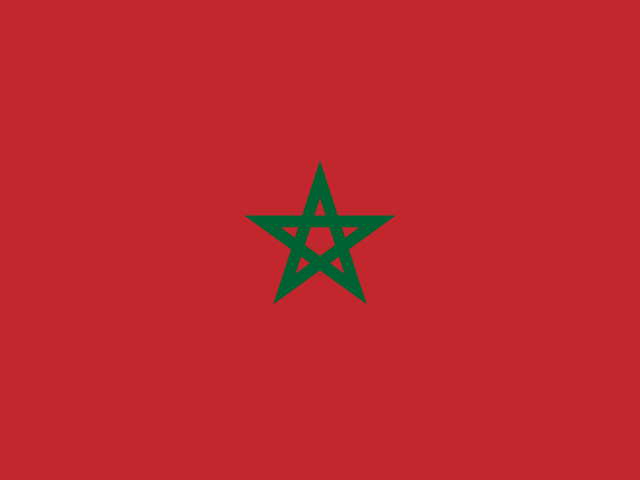
Morocco

Traditions present: Islam, Judaism, Catholicism

Five places written in Morocco. Each carries its history, architecture, site and orientation, festivals, and the way to get there.

Places
5
written
Traditions
3
present
Regions
4
regions, cities
English
5
pages translated

IPlaces Written

All 5 pages now have an English version.

By tradition
By region
Islam · Fès-Meknès · 857 tới 859University of al-Qarawiyyinal-Qarawiyyin, al-Karaouine, جامع القرويين, Jami' al-Qarawiyyin, University of al-Qarawiyyin, Đại học al-Qarawiyyin

A mosque and centre of learning in the heart of the ancient medina of Fès, founded between 857 and 859 by Fatima al-Fihri of Kairouan and recognized by UNESCO and Guinness World Records as the world's oldest continually operating educational institution. Expanded across successive dynasties into one of the largest mosques in Africa with a capacity of around 22,000 worshippers, it stands within the Medina of Fès UNESCO World Heritage Site inscribed in 1981.

UNESCO World Heritage Site (Medina of Fès, 1981)Medina Fès el-Bali, thành phố Fès, vùng Fès-Meknès

Photo: Anderson sady, CC BY-SA 3.0, Wikimedia Commons

Judaism · Marrakesh-Safi Region · Khởi dựng năm 1492 bởi cộng đồng người Do Thái Sephardic lưu đày từ Tây Ban Nha (Megorashim) sau Sắc lệnh Alhambra; tái thiết mở rộng quanh sân trong kiểu Riad vào cuối thế kỷ 19 và đầu thế kỷ 20 dưới sự coi sóc của gia tộc Pinto và bậc hiền triết Rabbi Haim Pinto; trùng tu bảo tồn và mở thêm bảo tàng di sản Do Thái Ma-rốc đầu thế kỷ 21Slat Al Azama Synagogue, MarrakeshSynagogue Slat Al-Azama, Salat al-Azama, Beit Knesset Slat Al-Azama, Synagogue of the Exiles in the Mellah of Marrakesh

The oldest operating synagogue in Marrakesh, founded in 1492 in the heart of the historic Mellah quarter by Sephardic Jewish exiles (Megorashim) expelled from Spain after the Alhambra Decree, celebrated for its blue-and-white Zellige courtyard modeled on a Moroccan riad, its upper-level Talmud Torah school, and its museum wings chronicling centuries of Judeo-Moroccan coexistence.

Foremost Historic Jewish Cultural Monument in Marrakesh and integral monument of the UNESCO World Heritage Site (Medina of Marrakesh, inscribed in 1985, Ref. 331)Derb Talmud Torah, Mellah Quarter (Hay Essalam), Medina of Marrakesh, 40000 Marrakesh, Kingdom of Morocco

Photo: TomiValny, CC BY-SA 4.0, Wikimedia Commons

Catholicism · Rabat-Sale-Kenitra Region · Đặt đá móng năm 1919 theo đồ án phong cách Art Deco giao thoa kiến trúc Moorish (Neo-Moresque) của kiến trúc sư Adrien Laforgue; khánh thành và thánh hiến ngày 17 tháng 11 năm 1921 bởi Thống chế Hubert Lyautey và Giám mục Victor Colombanus Dreyer; xây dựng bổ sung hai ngọn tháp chuông đôi cao vút vào năm 1930; đón Đức Giáo hoàng Phanxicô viếng thăm ngày 31 tháng 3 năm 2019St. Peter's Cathedral, RabatCathedrale Saint-Pierre de Rabat, Katedra'iyat al-Qiddis Butrus, Metropolitan Cathedral of the Roman Catholic Archdiocese of Rabat

The metropolitan cathedral of the Roman Catholic Archdiocese of Rabat standing on Place du Golan in the heart of Morocco's capital, designed in 1919 by architect Adrien Laforgue in a bold synthesis of Art Deco geometry and Neo-Moorish architectural motifs, consecrated on November 17, 1921, completed with twin slender spires in 1930, and visited by Pope Francis during his historic interfaith apostolate in March 2019.

Metropolitan Cathedral of the Roman Catholic Archdiocese of Rabat and constituent monument of the UNESCO World Heritage Site (Rabat, Modern Capital and Historic City: a Shared Heritage, inscribed in 2012, Ref. 1401)Place du Golan (Place Cardinal Lavigerie), Quartier Hassan, 10020 Rabat, Kingdom of Morocco

Photo: Nawalbennani, CC BY-SA 3.0, Wikimedia Commons

Islam · Marrakesh-Safi Region · Khởi dựng thánh đường Koutoubia thứ nhất năm 1147 bởi Quốc vương Almohad Abd al-Mu'min ngay sau khi chinh phục Marrakech; xây dựng thánh đường Koutoubia thứ hai hiệu chỉnh góc hướng lễ Qibla từ khoảng năm 1158 và hoàn thiện ngọn tháp minaret sa thạch cao 77 mét dưới triều Caliph Abu Yusuf Ya'qub al-Mansur khoảng năm 1195; trùng tu bảo tồn sau trận động đất Al Haouz tháng 9 năm 2023Kutubiyya Mosque, MarrakeshJami' al-Kutubiyya, Mosquee Koutoubia, Kutubiya Mosque, Mosque of the Booksellers in Marrakesh

The largest and most celebrated Friday mosque in Marrakesh and the defining monument of twelfth-century Almohad architecture, named after the medieval booksellers' market that once clustered around its base, renowned for its 77-meter red sandstone minaret that served as the direct prototype for the Giralda of Seville and the Hassan Tower of Rabat, and for the masterpiece 1137 Cordoban marquetry minbar.

Premier Historic Friday Mosque of Marrakesh and architectural focal point of the UNESCO World Heritage Site (Medina of Marrakesh, inscribed in 1985, Ref. 331)Avenue Mohammed V, southwest of Jemaa el-Fnaa Square, Medina of Marrakesh, 40000 Marrakesh, Kingdom of Morocco

Photo: Wikimedia Commons, Phạm vi công cộng, Wikimedia Commons

Islam · Casablanca-Settat Region · Khởi công ngày 12 tháng 7 năm 1986 theo sắc dụ của Quốc vương Hassan II với sự đóng góp tự nguyện của hơn 12 triệu người dân Ma-rốc, do kiến trúc sư người Pháp Michel Pinseau thiết kế và hơn 10.000 nghệ nhân bậc thầy (Maalem) chế tác thủ công; khánh thành trọng thể ngày 30 tháng 8 năm 1993 nhân dịp kỷ niệm ngày sinh của Tiên tri MuhammadHassan II Mosque, CasablancaMasjid al-Hasan al-Thani, Grande Mosquee Hassan II de Casablanca, Grand Mosque of King Hassan II on the Atlantic Ocean

Morocco's grandest contemporary Islamic monument rising directly over the Atlantic Ocean waves in Casablanca, built between July 12, 1986 and August 30, 1993 under King Hassan II and architect Michel Pinseau by over 10,000 master Moroccan artisans, featuring a 210-meter minaret that beams a green laser toward Mecca, a retractable cedarwood roof, and a combined capacity of 105,000 worshippers.

Largest Mosque in the Kingdom of Morocco and Second Largest in Africa, National Architectural Monument of Morocco commissioned by King Hassan IIBoulevard de la Corniche, Atlantic Ocean Promontory, Sidi Belyout District, 20000 Casablanca, Kingdom of Morocco

Photo: Ayman.mesa25, CC BY-SA 4.0, Wikimedia Commons

IIHelp Us Build This

This library is open and free, and it records its own progress in public. Three things you can help with today:

  1. Name a place we missedA founding temple, a church, a mosque, a shrine the table above does not have. Send the name, the province, and one line on why it belongs.
  2. Send a photograph with an open licenceNothing is published without both the photographer and the licence. Your own photograph with your permission, or an openly licensed one, are both welcome.
  3. Report an errorA wrong date, a wrong original name, a wrong lineage, a wrong address. A library that is wrong once is not trusted again, so corrections are very welcome.

Write to thayungkhiem@gmail.com

IIILog

  • 24/10/2026Completed three major initiatives on the same day: (1) Verified primary international sources and published the remaining 199 full English editions across 192 countries and territories, officially completing Stage D with 100% bilingual Vietnamese and English coverage across the entire library. (2) Visually verified and published 35 openly licensed Wikimedia Commons photographs for 22 sites in Vietnam and 13 international sanctuaries. (3) Authored 100 new bilingual sacred place monographs with real photographs for Stage C across 25 countries and territories (South Korea, China, Taiwan, Thailand, Cambodia, Myanmar, Laos, Indonesia, Malaysia, the Philippines, Sri Lanka, Nepal, Bhutan, Bangladesh, Mongolia, Italy, Spain, Portugal, Greece, Russia, Turkey, Egypt, Israel, Canada and Mexico), expanding each from 1 to 5 places and bringing the library to 761 sacred places.
  • 29/09/2026Officially opened the doors of Hall of Myriad Paths to readers worldwide as a living spiritual library that grows every day. On the same day, authored 60 new Stage A sacred place monographs across 60 countries in the Nordic and Baltic regions, the Balkans, the Gulf, Central Asia, European microstates, Africa, Oceania, Latin America and the Caribbean (including Roskilde Cathedral, Hallgrímskirkja, the Gate of Dawn in Vilnius, Ostrog Monastery, Malé Friday Mosque, Sulayman-Too, Old Orhei, the Temple in the Sea and Ambohimanga), while verifying and publishing 59 openly licensed photographs for the second and third batches.
  • 28/09/2026In the Main Hall, transformed 174 sacred symbols of faiths and branches into raised 3D forms so visitors can select their own tradition before making an offering, alongside a public record of milestones. In the Places section, authored 30 new Stage A monographs across 30 countries in Europe, Central Asia, the Middle East, Africa and Latin America (including St Stephen's Cathedral in Vienna, Rila Monastery, Svetitskhoveli, Etchmiadzin, al-Qarawiyyin, the Great Mosque of Djenné, Namugongo and the Basilica of Luján).

?Quick Questions

Why are there no opening hours or ticket prices

Because they change constantly. A library that is wrong once about a practical detail loses its standing on everything else. Check with the place itself before you travel.

Where do the images come from

From Wikimedia Commons under open licences, each credited to its photographer, or photographed by UK MASTER ACADEMY. No image is published without both its author and its licence.

How were these places chosen

Four tests: it is officially listed as a heritage site, it belongs to a tradition this library covers, its site and orientation can be read in feng shui terms, and an openly licensed photograph exists.

Why is my country still grey

The library opens one country at a time, beginning with the countries that have the most readers, and within each country with its most significant places. A grey country is simply one whose turn has not come. Suggestions are welcome through the page of Master Ưng Khiêm.

›Read Next