HALL OF MYRIAD PATHSVẠN ĐẠO ĐƯỜNGTiếng ViệtVIMaster Ưng Khiêm's site
HALL OF MYRIAD PATHS

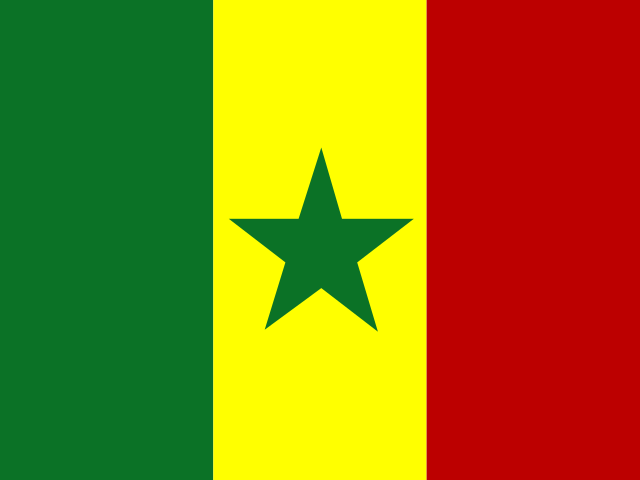
Senegal

Traditions present: Catholicism, Islam

Five places written in Senegal. Each carries its history, architecture, site and orientation, festivals, and the way to get there.

Places
5
written
Traditions
2
present
Regions
3
regions, cities
English
5
pages translated

IPlaces Written

All 5 pages now have an English version.

By tradition
By region
Islam · Diourbel · 1932 tới 1963Great Mosque of ToubaGrande Mosquée de Touba, Great Mosque of Touba, Thánh đường Mouride Touba

The central sanctuary of the Mouride Sufi brotherhood in the holy city of Touba, founded in 1887 by Cheikh Ahmadou Bamba and housing his mausoleum. With its foundation stone laid in March 1932 and its inauguration held on 7 June 1963, the mosque rises around the 86.8-meter Lamp Fall minaret as one of the largest mosques in Africa and welcomes millions of pilgrims every year for the Grand Magal on 18 Safar.

Trung tâm thành Touba, département de Mbacké, région de Diourbel, Sénégal

Photo: Issathiome, CC BY-SA 4.0, Wikimedia Commons

Catholicism · Dakar Region · Khởi xướng dự án năm 1911 tới 1914 bởi Giám mục Hyacinthe Jalabert trên nền nghĩa trang cổ của người Lebou; xây dựng từ năm 1923 tới năm 1929 theo thiết kế phong cách Sudan kết hợp Byzantine của kiến trúc sư Charles-Albert Wulffleff; được Hồng y Jean Verdier thánh hiến trọng thể ngày 2 tháng 2 năm 1936 và đón Giáo hoàng Gioan Phaolô II ngày 19 tháng 2 năm 1992Cathedral of Our Lady of African Remembrance, DakarCathedrale du Souvenir Africain de Dakar, Cathedrale Notre-Dame des Victoires de Dakar, Dakar Cathedral

The metropolitan cathedral of the Roman Catholic Archdiocese of Dakar located in the heart of the Plateau district, constructed between 1923 and 1929 to a Neo-Sudanese and Neo-Byzantine design by French architect Charles-Albert Wulffleff and consecrated by Cardinal Jean Verdier on February 2, 1936 in honor of Our Lady of Victories and in memory of fallen African soldiers and pioneering missionaries in West Africa.

Metropolitan Cathedral of the Roman Catholic Archdiocese of Dakar and Classified National Historical Monument of the Republic of SenegalBoulevard de la Republique, at the intersection with Avenue Pasteur, Plateau District, Dakar, Republic of Senegal

Photo: Photowalk, CC BY-SA 3.0, Wikimedia Commons

Catholicism · Thies Region · Thành lập năm 1887 tới 1888 bởi Đức Giám mục Mathurin Picarda (Dòng Chúa Thánh Thần) và tổ chức cuộc hành hương Lễ Hiện Xuống đầu tiên ngày 22 tháng 5 năm 1888; nâng lên hàng Tiểu Vương cung thánh đường ngày 23 tháng 11 năm 1991 và được Giáo hoàng Gioan Phaolô II viếng thăm ngày 20 tháng 2 năm 1992Sanctuary of Our Lady of Deliverance, PopenguineBasilique Notre-Dame de la Delivrance de Popenguine, Sanctuaire Marial de Poponguine, Basilica of Our Lady of Deliverance at Popenguine

Senegal's national Marian shrine and Minor Basilica overlooking the Atlantic Ocean near the cliffs of Cap de Naze in the Thies Region, founded in 1888 by Bishop Mathurin Picarda around the Black Madonna statue of Our Lady of Deliverance, elevated to basilica rank by Pope John Paul II in 1991, and celebrated for its annual Pentecost Monday foot pilgrimage that exemplifies interfaith harmony between Christian pilgrims and local Muslim host families.

Papal Minor Basilica (proclaimed by Pope John Paul II on November 23, 1991) and National Marian Shrine of the Republic of SenegalCoastal village of Popenguine (Poponguine-Ndayane) near Cap de Naze, Mbour Department, Thies Region, Republic of Senegal

Photo: Passou12, CC BY-SA 4.0, Wikimedia Commons

Islam · Thies Region · Thiết lập tổ đường Zawiya và thánh đường đầu tiên tại Tivaouane năm 1902 bởi học giả Sufi Cheikh El Hadji Malick Sy; xây dựng lăng mộ năm 1922; khởi công xây dựng Đại thánh đường mới năm 1984 dưới thời Đại Khalip Serigne Abdoul Aziz Sy Dabakh và đại trùng tu mở rộng hoàn thiện giai đoạn 2019 tới 2024Grand Mosque of TivaouaneGrande Mosquee de Tivaouane, Grande Mosquee El Hadji Malick Sy, Great Mosque of Tivaouane, Tijaniyyah Grand Mosque of Tivaouane

The supreme spiritual center of the Tijaniyyah Sufi brotherhood in Senegal located in the holy city of Tivaouane in the Thies Region, established in 1902 by the revered Islamic scholar and mystic Cheikh El Hadji Malick Sy (1855 to 1922), expanded into a monumental Hispano-Moorish mosque complex from 1984 to 2024, and famed across West Africa as the heart of the annual Gamou (Mawlid al-Nabi) pilgrimage.

Supreme Spiritual Seat of the Tijaniyyah Sufi Order in Senegal and Major National Religious Heritage Site of the Republic of SenegalKeur Seydi El Hadji Malick Sy Sacred Quarter, Tivaouane City Center, Tivaouane Department, Thies Region, Republic of Senegal

Photo: Fortier, Phot. Dakar, Public domain, Wikimedia Commons

Catholicism · Dakar Region · Nhà nguyện đầu tiên bị đốt cháy đêm 24 tháng 12 năm 1617 và nhà thờ thứ hai bị quân Anh phá hủy năm 1799; ngôi nhà thờ hiện nay được xây dựng và hoàn thành năm 1830 bằng tiền đóng góp của các nữ thương nhân bản địa Signares trên đảo Gorée; đón Giáo hoàng Gioan Phaolô II đến cầu nguyện xin ơn tha thứ lịch sử ngày 22 tháng 2 năm 1992Church of Saint Charles Borromeo, Gorée IslandEglise Saint-Charles-Borromee de Goree, St. Charles Borromeo Church on Goree Island, Historic Catholic Church of Goree Island

The oldest surviving Catholic church in the Dakar region situated at the heart of historic Goree Island (a UNESCO World Heritage Site inscribed in 1978), completed in 1830 in colonial Neoclassical style with an ochre Doric portico through the patronage of the island's Afro-European Signare women, and the site where Pope John Paul II offered a historic prayer of repentance for the transatlantic slave trade on February 22, 1992.

UNESCO World Heritage Site Component (Island of Goree, inscribed in 1978, Ref. 26) and Oldest Surviving Catholic Church in the Dakar RegionRue Saint-Charles, at the corner of Rue du Chevalier de Boufflers, Goree Island, Dakar, Republic of Senegal

Photo: Remi Jouan, CC BY 3.0, Wikimedia Commons

IIHelp Us Build This

This library is open and free, and it records its own progress in public. Three things you can help with today:

  1. Name a place we missedA founding temple, a church, a mosque, a shrine the table above does not have. Send the name, the province, and one line on why it belongs.
  2. Send a photograph with an open licenceNothing is published without both the photographer and the licence. Your own photograph with your permission, or an openly licensed one, are both welcome.
  3. Report an errorA wrong date, a wrong original name, a wrong lineage, a wrong address. A library that is wrong once is not trusted again, so corrections are very welcome.

Write to thayungkhiem@gmail.com

IIILog

  • 24/10/2026Completed three major initiatives on the same day: (1) Verified primary international sources and published the remaining 199 full English editions across 192 countries and territories, officially completing Stage D with 100% bilingual Vietnamese and English coverage across the entire library. (2) Visually verified and published 35 openly licensed Wikimedia Commons photographs for 22 sites in Vietnam and 13 international sanctuaries. (3) Authored 100 new bilingual sacred place monographs with real photographs for Stage C across 25 countries and territories (South Korea, China, Taiwan, Thailand, Cambodia, Myanmar, Laos, Indonesia, Malaysia, the Philippines, Sri Lanka, Nepal, Bhutan, Bangladesh, Mongolia, Italy, Spain, Portugal, Greece, Russia, Turkey, Egypt, Israel, Canada and Mexico), expanding each from 1 to 5 places and bringing the library to 761 sacred places.
  • 29/09/2026Officially opened the doors of Hall of Myriad Paths to readers worldwide as a living spiritual library that grows every day. On the same day, authored 60 new Stage A sacred place monographs across 60 countries in the Nordic and Baltic regions, the Balkans, the Gulf, Central Asia, European microstates, Africa, Oceania, Latin America and the Caribbean (including Roskilde Cathedral, Hallgrímskirkja, the Gate of Dawn in Vilnius, Ostrog Monastery, Malé Friday Mosque, Sulayman-Too, Old Orhei, the Temple in the Sea and Ambohimanga), while verifying and publishing 59 openly licensed photographs for the second and third batches.
  • 28/09/2026In the Main Hall, transformed 174 sacred symbols of faiths and branches into raised 3D forms so visitors can select their own tradition before making an offering, alongside a public record of milestones. In the Places section, authored 30 new Stage A monographs across 30 countries in Europe, Central Asia, the Middle East, Africa and Latin America (including St Stephen's Cathedral in Vienna, Rila Monastery, Svetitskhoveli, Etchmiadzin, al-Qarawiyyin, the Great Mosque of Djenné, Namugongo and the Basilica of Luján).

?Quick Questions

Why are there no opening hours or ticket prices

Because they change constantly. A library that is wrong once about a practical detail loses its standing on everything else. Check with the place itself before you travel.

Where do the images come from

From Wikimedia Commons under open licences, each credited to its photographer, or photographed by UK MASTER ACADEMY. No image is published without both its author and its licence.

How were these places chosen

Four tests: it is officially listed as a heritage site, it belongs to a tradition this library covers, its site and orientation can be read in feng shui terms, and an openly licensed photograph exists.

Why is my country still grey

The library opens one country at a time, beginning with the countries that have the most readers, and within each country with its most significant places. A grey country is simply one whose turn has not come. Suggestions are welcome through the page of Master Ưng Khiêm.

›Read Next