HALL OF MYRIAD PATHSVẠN ĐẠO ĐƯỜNGTiếng ViệtVIMaster Ưng Khiêm's site
HALL OF MYRIAD PATHS

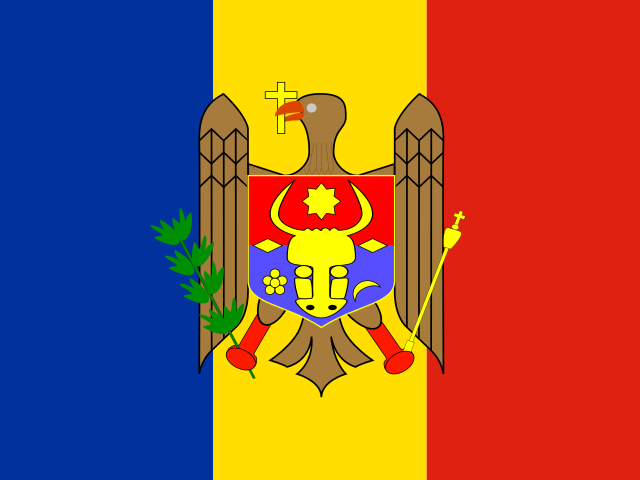
Moldova

Traditions present: Orthodox Christianity, Catholicism, Judaism

Five places written in Moldova. Each carries its history, architecture, site and orientation, festivals, and the way to get there.

Places
5
written
Traditions
3
present
Regions
3
regions, cities
English
5
pages translated

IPlaces Written

All 5 pages now have an English version.

By tradition
By region
Orthodox Christianity · Orhei · thế kỷ 15 (các hang tu đầu tiên), sinh hoạt lại năm 1816, nhà thờ trên đồi Butuceni xong khoảng 1904 tới 1905, cộng đoàn tu sĩ đăng ký lại năm 1996Old OrheiOrheiul Vechi, Old Orhei, Mănăstirea Peștera, Mănăstirea rupestră Butuceni, Rezervația Cultural-Naturală Orheiul Vechi, Старый Орхей

Carved into a sheer limestone cliff above a sharp bend of the Răut River, Orthodox monks from the 15th century onward excavated a cave monastery comprising an underground chapel and monastic cells, crowned on the cliff crest by a stone cross and a small bell tower. Higher up on the Butuceni promontory stands an early 20th-century Orthodox church that serves the monastic community re-established in 1996. The wider valley forms a cultural and natural reserve preserving Geto-Dacian and Golden Horde remains, placed on Moldova's UNESCO Tentative List in 2017.

Orheiul Vechi Cultural and Natural Reserve (Moldova), UNESCO World Heritage Tentative List (2017)Butuceni, xã Trebujeni, huyện Orhei (khoảng 50 km phía bắc Chișinău)

Photo: Guttorm Flatabø from Sogndal, Norway, CC BY 2.0, Wikimedia Commons

Catholicism · Chisinau Municipality · Nhà nguyện Công giáo đầu tiên dựng thập niên 1820; đại thánh đường Tân cổ điển xây dựng từ năm 1840 tới năm 1843 theo thiết kế của kiến trúc sư Joseph Charlemagne; bị đóng cửa năm 1963 thời Xô viết; hoàn trả cho giáo xứ năm 1989 và được Đức Giáo hoàng Gioan Phaolô II nâng lên hàng Nhà thờ chính tòa Giáo phận Chișinău ngày 27 tháng 10 năm 2001Cathedral of Divine Providence, ChisinauCatedrala Providenta Divina din Chisinau, Sobor Bozhestvennogo Provideniya, Roman Catholic Cathedral of Chisinau

The cathedral church of the Roman Catholic Diocese of Chisinau located on Mitropolit Dosoftei Street in the historic center of Moldova's capital, constructed between 1840 and 1843 in Late Neoclassical style after designs by Saint Petersburg architect Joseph Charlemagne with a Corinthian portico and twin western bell towers, reopened in 1989 after decades of Soviet secularization and elevated to cathedral rank by Pope John Paul II on October 27, 2001.

Cathedral of the Roman Catholic Diocese of Chisinau (directly subject to the Holy See) and National Architectural Monument of the Republic of MoldovaMitropolit Dosoftei Street 85, Centru Sector, MD-2012 Chisinau, Republic of Moldova

Photo: Warren's Moldovan, CC BY-SA 4.0, Wikimedia Commons

Judaism · Chisinau Municipality · Khởi dựng năm 1896 và khánh thành năm 1898 bởi phường hội thợ làm kính và thổi thủy tinh Do Thái tại Chișinău; giáo đường duy nhất trong tổng số 77 hội đường của Chișinău duy trì hoạt động thờ phượng suốt nửa sau thế kỷ 20 dưới thời Liên Xô; trở thành trung tâm Chabad Lubavitch của Moldova từ năm 1989 và đại trùng tu giai đoạn 1995 tới 2015Synagogue of the Glassmakers, ChisinauSinagoga Sticlarilor din Chisinau, Glazer Shul, Beit Knesset ha-Zagagim, Chabad Lubavitch Central Synagogue of Chisinau

The sole historic synagogue in Chisinau to maintain continuous Jewish worship from the late nineteenth century to the present day, erected between 1896 and 1898 by the Jewish guild of glaziers and glassmakers (Glazer Shul), surviving early twentieth-century pogroms, the Holocaust in Bessarabia, and Soviet closures to serve today as the central Chabad-Lubavitch synagogue of Moldova complete with a ritual mikveh, historic matzah bakery, and carved wooden Torah Ark.

Central Synagogue of the Chabad-Lubavitch Jewish Community of Moldova and National Historical and Cultural Monument of the Republic of MoldovaHabad Liubavici Street 8, Centru Sector, MD-2001 Chisinau, Republic of Moldova

Photo: Loraine, CC BY-SA 4.0, Wikimedia Commons

Orthodox Christianity · Chisinau Municipality · Khởi xướng bởi Đô trưởng Gavriil Bănulescu-Bodoni, xây dựng từ năm 1830 tới năm 1836 theo thiết kế Tân cổ điển của kiến trúc sư Avraam Melnikov (thánh hiến ngày 13 tháng 10 năm 1836); hư hại năm 1941; tháp chuông bốn tầng bị nổ mìn phá hủy đêm 22 rạng 23 tháng 12 năm 1962 và nhà thờ bị biến thành phòng triển lãm; hoàn trả cho Giáo hội năm 1989, tái thánh hiến ngày 25 tháng 8 năm 1996 và phục dựng Tháp Chuông năm 1997 tới 1998Nativity Cathedral, ChisinauCatedrala Mitropolitana Nasterea Domnului din Chisinau, Sobor Rozhdestva Khristova, Metropolitan Cathedral of Christ's Nativity in Chisinau

The principal metropolitan cathedral of the Orthodox Church of Moldova standing at the center of Cathedral Park in Chisinau, designed in pure Russian Empire Neoclassical style by architect Avraam Melnikov and built between 1830 and 1836 with four symmetrical hexastyle Doric porticoes beneath a grand hemispherical dome, aligned along a ceremonial axis with its reconstructed four-tiered Bell Tower and the 1840 Triumphal Arch (Holy Gates).

Metropolitan Cathedral of the Orthodox Church of Moldova (Metropolis of Chisinau and All Moldova) and National Architectural Monument of the Republic of MoldovaGreat National Assembly Square (Cathedral Park), Centru Sector, MD-2012 Chisinau, Republic of Moldova

Photo: Pudelek, CC BY-SA 4.0, Wikimedia Commons

Orthodox Christianity · Straseni District · Khởi lập cuối thế kỷ 14 và được ghi nhận chính thức lần đầu trong sắc chỉ ngày 25 tháng 4 năm 1420 của Quốc vương Alexandru cel Bun; xây dựng bằng đá dưới triều Thánh Ștefan cel Mare (sắc chỉ năm 1470) và Quốc vương Petru Rareș (1542 tới 1545); tái thiết Nhà thờ Đức Mẹ An Giấc năm 1819 tới 1820 bởi Đô trưởng Gavriil Bănulescu-Bodoni, xây Nhà thờ mùa đông Thánh Georgiô năm 1840 và Nhà thờ Thánh Nicôla năm 1903; đóng cửa năm 1962, mở lại năm 1989 và đại trùng tu năm 2002 tới 2005Capriana MonasteryManastirea Capriana, Manastirea Adormirea Maicii Domnului de la Capriana, Dormition Monastery of Capriana

One of the oldest and most revered Orthodox monastic foundations in Moldova nestled in the forested hills of the Codrii reserve in Straseni District, first documented in a royal charter of Prince Alexander the Good on April 25, 1420 and patronized by Saint Stephen the Great and Prince Petru Rares, uniting three historic churches of the Dormition of the Theotokos, Saint George, and Saint Nicholas and enshrining the relics of Saint Metropolitan Gavriil Banulescu-Bodoni.

Historic Royal Orthodox Monastery of Moldova and National Architectural Monument of Special Significance of the Republic of MoldovaCapriana Village, Codrii Forest Reserve, Straseni District, MD-3713, Republic of Moldova

Photo: Diego Delso, CC BY-SA 4.0, Wikimedia Commons

IIHelp Us Build This

This library is open and free, and it records its own progress in public. Three things you can help with today:

  1. Name a place we missedA founding temple, a church, a mosque, a shrine the table above does not have. Send the name, the province, and one line on why it belongs.
  2. Send a photograph with an open licenceNothing is published without both the photographer and the licence. Your own photograph with your permission, or an openly licensed one, are both welcome.
  3. Report an errorA wrong date, a wrong original name, a wrong lineage, a wrong address. A library that is wrong once is not trusted again, so corrections are very welcome.

Write to thayungkhiem@gmail.com

IIILog

  • 24/10/2026Completed three major initiatives on the same day: (1) Verified primary international sources and published the remaining 199 full English editions across 192 countries and territories, officially completing Stage D with 100% bilingual Vietnamese and English coverage across the entire library. (2) Visually verified and published 35 openly licensed Wikimedia Commons photographs for 22 sites in Vietnam and 13 international sanctuaries. (3) Authored 100 new bilingual sacred place monographs with real photographs for Stage C across 25 countries and territories (South Korea, China, Taiwan, Thailand, Cambodia, Myanmar, Laos, Indonesia, Malaysia, the Philippines, Sri Lanka, Nepal, Bhutan, Bangladesh, Mongolia, Italy, Spain, Portugal, Greece, Russia, Turkey, Egypt, Israel, Canada and Mexico), expanding each from 1 to 5 places and bringing the library to 761 sacred places.
  • 30/09/2026Sourced, visually verified and published 24 openly licensed Wikimedia Commons photographs for the fourth batch of Stage A across the Gulf, maritime Southeast Asia, Central Asia, Europe, Africa, Latin America and Oceania, from the Malé Friday Mosque, Sulayman-Too and Old Orhei to the Temple in the Sea, Ambohimanga and the Grand Mosque of Agadez.
  • 29/09/2026Officially opened the doors of Hall of Myriad Paths to readers worldwide as a living spiritual library that grows every day. On the same day, authored 60 new Stage A sacred place monographs across 60 countries in the Nordic and Baltic regions, the Balkans, the Gulf, Central Asia, European microstates, Africa, Oceania, Latin America and the Caribbean (including Roskilde Cathedral, Hallgrímskirkja, the Gate of Dawn in Vilnius, Ostrog Monastery, Malé Friday Mosque, Sulayman-Too, Old Orhei, the Temple in the Sea and Ambohimanga), while verifying and publishing 59 openly licensed photographs for the second and third batches.

?Quick Questions

Why are there no opening hours or ticket prices

Because they change constantly. A library that is wrong once about a practical detail loses its standing on everything else. Check with the place itself before you travel.

Where do the images come from

From Wikimedia Commons under open licences, each credited to its photographer, or photographed by UK MASTER ACADEMY. No image is published without both its author and its licence.

How were these places chosen

Four tests: it is officially listed as a heritage site, it belongs to a tradition this library covers, its site and orientation can be read in feng shui terms, and an openly licensed photograph exists.

Why is my country still grey

The library opens one country at a time, beginning with the countries that have the most readers, and within each country with its most significant places. A grey country is simply one whose turn has not come. Suggestions are welcome through the page of Master Ưng Khiêm.

›Read Next