HALL OF MYRIAD PATHSVẠN ĐẠO ĐƯỜNGTiếng ViệtVIMaster Ưng Khiêm's site
HALL OF MYRIAD PATHS

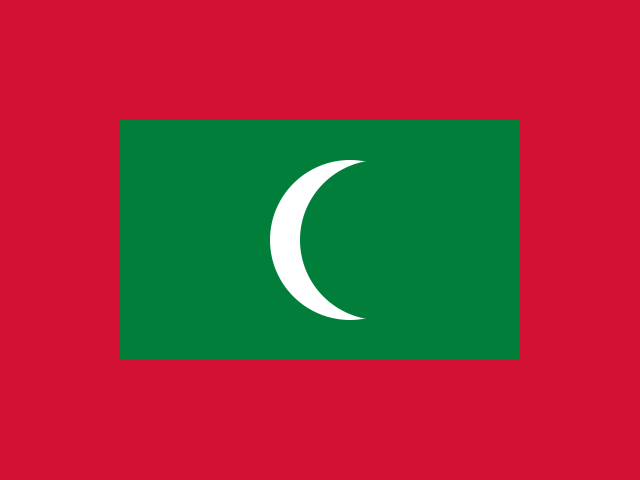
Maldives

Traditions present: Islam, Buddhism

Five places written in Maldives. Each carries its history, architecture, site and orientation, festivals, and the way to get there.

Places
5
written
Traditions
2
present
Regions
3
regions, cities
English
5
pages translated

IPlaces Written

All 5 pages now have an English version.

By tradition
By region
Islam · Malé · 1658Malé Friday MosqueHukuru Miskiy, Hukuru Miskiiy, Malé Friday Mosque, Old Friday Mosque, Male' Friday Mosque, Munnaaru

The oldest and most ornate mosque in Malé, completed in 1658 from interlocking blocks of coral stone whose outer walls are carved with decorative motifs and Qur'anic script. Inside is a treasury of Maldivian woodcarving and lacquerwork across columns, ceilings, and doors. Beside it stand the cylindrical Munnaaru minaret of 1674 or 1675 and a 17th-century cemetery of carved coral headstones, the ensemble has been on the UNESCO World Heritage Tentative List since 2008 (expanded in 2013).

UNESCO World Heritage Tentative List (Coral Stone Mosques of Maldives, 2013)Fareedhee Magu, phường Henveiru, Malé

Photo: David Stanley from Nanaimo, Canada, CC BY 2.0, Wikimedia Commons

Islam · Male Capital City (Kaafu Atoll) · Đặt đá móng tháng 11 năm 1982 và khánh thành trọng thể ngày 11 tháng 11 năm 1984 dưới thời Tổng thống Maumoon Abdul Gayoom theo thiết kế của kiến trúc sư người Malaysia Dato Hajeedar Abdul Majid, với sự đóng góp tài trợ của Ả Rập Xê Út, Brunei, Malaysia, Kuwait, Pakistan và Các Tiểu vương quốc Ả Rập Thống nhấtIslamic Centre and Grand Friday Mosque, MaléMasjid-al-Sultan Muhammad Thakurufaanu Al-Auzam, Islamee Marukazu, Grand Friday Mosque of Male, Golden-Domed Mosque of the Maldives

The defining architectural and spiritual landmark on the skyline of Male, Republic of Maldives, designed by Malaysian architect Dato Hajeedar Abdul Majid, inaugurated on November 11, 1984, and named in honor of sixteenth-century national liberator Sultan Muhammad Thakurufaanu Al-Auzam, celebrated for its gleaming golden dome, sail-finned white minaret facing the northern harbor, and three-story prayer hall for 5,000 worshippers adorned with Maldivian woodcarvings.

National Grand Mosque and Official Seat of the Ministry of Islamic Affairs of the Republic of MaldivesCorner of Medhuziyaaraiy Magu and Ameer Ahmed Magu, opposite Republic Square (Jumhooree Maidhaan), Male 20114, Republic of Maldives

Photo: Zairon, CC BY-SA 4.0, Wikimedia Commons

Islam · Male Capital City (Kaafu Atoll) · Khởi xướng năm 2016 nhân kỷ niệm 50 năm Độc lập của Cộng hòa Maldives; khởi công xây dựng năm 2018 bởi tập đoàn kỹ thuật Turmaks (Thổ Nhĩ Kỳ) dưới sự tài trợ của Vương quốc Ả Rập Xê Út; chính thức mở cửa đón tín hữu hành lễ thứ Sáu và tháng Ramadan từ ngày 1 tháng 4 năm 2022King Salman Mosque, MaléSalman Rasgefaanu Miskiy, Masjid al-Malik Salman, King Salman Grand Mosque on the Eastern Waterfront of Male

The largest contemporary mosque complex in the Republic of Maldives, rising along the eastern oceanfront of Male on Boduthakurufaanu Magu and opened for congregational worship in April 2022, featuring a six-story circular superstructure crowned by a tiered golden dome inspired by Bedouin tents and ocean waves, five slender minarets representing the Five Pillars of Islam, a column-free prayer hall, and a total capacity of nearly 10,000 worshippers.

Largest Congregational Mosque Complex in the Republic of Maldives and National Center for Quranic and Islamic StudiesBoduthakurufaanu Magu, Eastern Waterfront, Henveiru Ward, Male, Republic of Maldives

Photo: LittleT889, CC BY 4.0, Wikimedia Commons

Buddhism · Kaashidhoo Island (Kaafu Atoll Administrative Division) · Hình thành và hưng thịnh liên tục từ thế kỷ 5 tới thế kỷ 12 Công nguyên (giai đoạn xây dựng đỉnh cao vào thế kỷ 7 tới thế kỷ 8 Công nguyên, trước khi Maldives cải đạo sang Hồi giáo năm 1153); được khai quật khảo cổ học hệ thống từ tháng 2 năm 1996 tới năm 1998 bởi Trung tâm Nghiên cứu Ngôn ngữ và Lịch sử Quốc gia Maldives phối hợp với Bảo tàng Kon-Tiki và Đại học Oslo (Na Uy) dưới sự chủ trì của Giáo sư Egil MikkelsenKuruhinna Tharaagandu Buddhist Monastery Ruins, KaashidhooKuruhinna Tharaagadu, Kaashidhoo Buddhist Vihara Ruins, Pre-Islamic Coral-Stone Stupa Complex of Kaashidhoo Island

The largest and most scientifically excavated pre-Islamic Buddhist monastic complex (vihara) in the Maldives, situated on Kaashidhoo Island and dating from the fifth to the twelfth century CE before the archipelago's conversion to Islam in 1153, systematically excavated between 1996 and 1998 by Professor Egil Mikkelsen of the University of Oslo and Maldivian archaeologists to reveal 64 coral-stone stupas, monastic cells, and ritual deposits of over 64,000 cowrie shells.

Protected National Archaeological and Historical Heritage Site of the Republic of Maldives (largest excavated pre-Islamic Buddhist monument in the Maldivian archipelago)Kuruhinna Tharaagandu Archaeological Site, Kaashidhoo Island, 86 km north of Male across the Kaashidhoo Kandu Channel, Kaafu Atoll, Republic of Maldives

Photo: CRC43, CC BY-SA 3.0, Wikimedia Commons

Islam · Male Capital City (Kaafu Atoll) · Lăng Medhu Ziyaaraiy khởi nguyên sau khi học giả Abu al-Barakat Yusuf al-Barbari viên tịch vào thế kỷ 12 (xác lập Hồi giáo tại Maldives tháng Rabi al-Akhir năm 548 Hijri, tức năm 1153 Công nguyên) và trùng tu lớn thời Sultan Ibrahim Iskandar I thế kỷ 17; Thánh đường cổ Eid (Eid Miskiy) xây dựng bằng đá san hô Porites lắp ghép mộng năm 1815 Công nguyên (năm 1230 Hijri) dưới triều Sultan Muhammad Mueenuddeen IEid Mosque and Medhu Ziyaaraiy Shrine, MaléEid Miskiy (Eedhu Miskiiy) and Medhu Ziyaaraiy, Tomb of Abu al-Barakat Yusuf al-Barbari, Historic 1815 Coral-Stone Eid Mosque and Central Shrine of Male

Two revered coral-stone landmarks in Male embodying the spiritual dawn and classical craftsmanship of Maldivian Islam: the Medhu Ziyaaraiy Shrine housing the tomb of North African scholar Abu al-Barakat Yusuf al-Barbari, credited with converting the Maldivian king to Islam in 1153 CE (548 AH), and the 1815 Eid Mosque (Eid Miskiy), a UNESCO Tentative World Heritage coral-stone sanctuary built of interlocking Porites blocks and lacquered timber under Sultan Muhammad Mueenuddeen I.

Protected National Historical Monuments of the Republic of Maldives and Component of the UNESCO World Heritage Tentative List (Coral Stone Mosques of Maldives, submitted 2013, Ref. 5812)Medhu Ziyaaraiy Shrine on Medhuziyaaraiy Magu (adjacent to Muleeaage Palace) and Eid Miskiy on Majeedhee Magu, Male, Republic of Maldives

Photo: Unknown authorUnknown author, Public domain, Wikimedia Commons

IIHelp Us Build This

This library is open and free, and it records its own progress in public. Three things you can help with today:

  1. Name a place we missedA founding temple, a church, a mosque, a shrine the table above does not have. Send the name, the province, and one line on why it belongs.
  2. Send a photograph with an open licenceNothing is published without both the photographer and the licence. Your own photograph with your permission, or an openly licensed one, are both welcome.
  3. Report an errorA wrong date, a wrong original name, a wrong lineage, a wrong address. A library that is wrong once is not trusted again, so corrections are very welcome.

Write to thayungkhiem@gmail.com

IIILog

  • 24/10/2026Completed three major initiatives on the same day: (1) Verified primary international sources and published the remaining 199 full English editions across 192 countries and territories, officially completing Stage D with 100% bilingual Vietnamese and English coverage across the entire library. (2) Visually verified and published 35 openly licensed Wikimedia Commons photographs for 22 sites in Vietnam and 13 international sanctuaries. (3) Authored 100 new bilingual sacred place monographs with real photographs for Stage C across 25 countries and territories (South Korea, China, Taiwan, Thailand, Cambodia, Myanmar, Laos, Indonesia, Malaysia, the Philippines, Sri Lanka, Nepal, Bhutan, Bangladesh, Mongolia, Italy, Spain, Portugal, Greece, Russia, Turkey, Egypt, Israel, Canada and Mexico), expanding each from 1 to 5 places and bringing the library to 761 sacred places.
  • 30/09/2026Sourced, visually verified and published 24 openly licensed Wikimedia Commons photographs for the fourth batch of Stage A across the Gulf, maritime Southeast Asia, Central Asia, Europe, Africa, Latin America and Oceania, from the Malé Friday Mosque, Sulayman-Too and Old Orhei to the Temple in the Sea, Ambohimanga and the Grand Mosque of Agadez.
  • 29/09/2026Officially opened the doors of Hall of Myriad Paths to readers worldwide as a living spiritual library that grows every day. On the same day, authored 60 new Stage A sacred place monographs across 60 countries in the Nordic and Baltic regions, the Balkans, the Gulf, Central Asia, European microstates, Africa, Oceania, Latin America and the Caribbean (including Roskilde Cathedral, Hallgrímskirkja, the Gate of Dawn in Vilnius, Ostrog Monastery, Malé Friday Mosque, Sulayman-Too, Old Orhei, the Temple in the Sea and Ambohimanga), while verifying and publishing 59 openly licensed photographs for the second and third batches.

?Quick Questions

Why are there no opening hours or ticket prices

Because they change constantly. A library that is wrong once about a practical detail loses its standing on everything else. Check with the place itself before you travel.

Where do the images come from

From Wikimedia Commons under open licences, each credited to its photographer, or photographed by UK MASTER ACADEMY. No image is published without both its author and its licence.

How were these places chosen

Four tests: it is officially listed as a heritage site, it belongs to a tradition this library covers, its site and orientation can be read in feng shui terms, and an openly licensed photograph exists.

Why is my country still grey

The library opens one country at a time, beginning with the countries that have the most readers, and within each country with its most significant places. A grey country is simply one whose turn has not come. Suggestions are welcome through the page of Master Ưng Khiêm.

›Read Next