HALL OF MYRIAD PATHSVẠN ĐẠO ĐƯỜNGTiếng ViệtVIMaster Ưng Khiêm's site
HALL OF MYRIAD PATHS

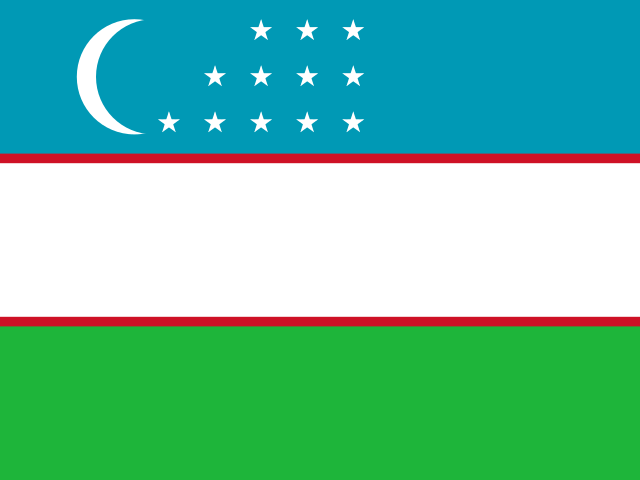
Uzbekistan

Traditions present: Islam, Orthodox Christianity, Judaism

Five places written in Uzbekistan. Each carries its history, architecture, site and orientation, festivals, and the way to get there.

Places
5
written
Traditions
3
present
Regions
4
regions, cities
English
5
pages translated

IPlaces Written

All 5 pages now have an English version.

By tradition
By region
Islam · Samarkand · Thế kỷ 11 tới 19, phần lớn thế kỷ 14 và 15Shah-i-ZindaShah-i-Zinda, Shohizinda, Shakhi-Zinda, شاه زنده, Vua Sống, Shah-i-Zinda Necropolis

An avenue of blue-glazed mausoleums on the slope of Afrasiyab hill in Samarkand, grown around the shrine of Qusam ibn Abbas, cousin of the Prophet Muhammad, whose title Shah-i-Zinda means the Living King. More than twenty mausoleums and mosques line a stepped path roughly 200 meters long, built largely in the 14th and 15th centuries under the Timurids and inscribed as part of the Samarkand UNESCO World Heritage Site in 2001.

UNESCO World Heritage Site (Samarkand: Crossroad of Cultures, 2001)Sườn đồi Afrasiyab, phía đông bắc trung tâm cổ Samarkand, vùng Samarkand

Photo: Vaurien, CC BY-SA 3.0, Wikimedia Commons

Orthodox Christianity · Tashkent City (Mirabad District) · Khởi nguyên là nhà nguyện Thánh Panteleimon tại nghĩa trang Quân y viện Tashkent năm 1871; xây mới bằng gạch đá từ năm 1877 và thánh hiến ngày 31 tháng 1 năm 1879 nhờ sự đóng góp của Toàn quyền Konstantin von Kaufman và thương nhân Nikolai Ivanov; đóng cửa giai đoạn 1933 tới 1945 rồi tái mở cửa làm Nhà thờ Chính tòa tháng 12 năm 1945; mở rộng quy mô lớn năm 1958 tới 1960 dưới thời Giám mục Hermogen (Orekhov) và tôn tạo thập niên 1990 tới 2010Holy Assumption Cathedral Church, TashkentSvyato-Uspenskiy Kafedralnyy Sobor v Tashkente, Cathedral of the Dormition of the Theotokos in Tashkent, Russian Orthodox Cathedral of Tashkent

The principal Russian Orthodox cathedral in Uzbekistan and the seat of the Metropolitan District of Central Asia, located on Nukus Street in Tashkent; originally founded in 1871 and built in stone between 1877 and 1879, it became the diocesan cathedral upon its reopening in December 1945 and was expanded between 1958 and 1960 into a majestic azure-and-white sanctuary crowned by gilded onion domes and a soaring bell tower.

Cathedral Seat of the Diocese of Tashkent and Uzbekistan and the Metropolitan District of Central Asia of the Russian Orthodox Church, and Historic Architectural Landmark of Tashkent (founded 1871 to 1879)91 Nukus Street (formerly Gospitalnaya Street, near Tashkent Central Railway Station), Mirabad District, Tashkent, Uzbekistan

Photo: HELindemann, CC BY 4.0, Wikimedia Commons

Judaism · Bukhara Region (Bukhara City) · Kiến tạo vào đầu thế kỷ 17 (khoảng năm 1620 dưới triều đại Ashtarkhanid của Tiểu vương quốc Bukhara, gắn liền với giai đoạn của tể tướng Nadir Divan-begi và sự định hình khu phố Do Thái cổ Mahallai Kuhna); duy trì sinh hoạt cầu nguyện liên tục qua hơn bốn thế kỷ kể cả thời kỳ Liên Xô và hiện lưu giữ các cuộn Kinh Torah viết trên da hươu có niên đại từ 500 tới 800 nămBukhara SynagogueKenesoyi Kalon Bukhara, Gumbaz Synagogue of Old Bukhara, Mahallai Kuhna Synagogue on Sarrafon Street

An early seventeenth-century synagogue (circa 1620) nestled in the historic Mahallai Kuhna (Old Jewish Quarter) just south of the Lyab-i Hauz ensemble in the UNESCO World Heritage Historic Centre of Bukhara, Uzbekistan, serving for over four hundred years as the spiritual heart of the ancient Bukharan Jewish community along the Silk Road and housing centuries-old deer-skin Torah scrolls.

Oldest Active Synagogue in Central Asia (built circa 1620) and Protected Monument within the Historic Centre of Bukhara (UNESCO World Heritage Site, inscribed 1993)20 Sarrafon Street (Mahallai Kuhna / Old Jewish Quarter, 200 meters south of Lyab-i Hauz), Historic Centre of Bukhara, Uzbekistan

Photo: Ymblanter, CC BY-SA 4.0, Wikimedia Commons

Islam · Samarkand Region (Samarkand City) · Hình thành như quảng trường trung tâm của kinh đô Samarkand thời Đế chế Timur; Học viện Ulugh Beg Madrasah xây dựng ở phía tây từ năm 1417 tới năm 1420 dưới thời nhà bác học thiên văn kiêm quốc vương Ulugh Beg; Học viện Sher-Dor Madrasah xây dựng đối xứng ở phía đông từ năm 1619 tới năm 1636 và Học viện kiêm Đại Thánh đường Tilya-Kori xây dựng ở phía bắc từ năm 1646 tới năm 1660 dưới sự bảo trợ của tổng trấn Yalangtush BakhodurRegistan, SamarkandRegiston Maydoni Samarqand, The Registan Ensemble of Samarkand (Ulugh Beg, Sher-Dor and Tilya-Kori Madrasahs)

The monumental civic and religious heart of historic Samarkand and the centerpiece of the UNESCO World Heritage site 'Samarkand: Crossroads of Cultures' (2001), framed on three sides by the Ulugh Beg Madrasah (1417 to 1420), the Sher-Dor Madrasah (1619 to 1636), and the gold-covered Tilya-Kori Madrasah and Mosque (1646 to 1660) in one of the supreme ensembles of Islamic architecture and glazed tilework.

Centerpiece of the UNESCO World Heritage Site 'Samarkand: Crossroads of Cultures' (inscribed 2001) and Supreme Architectural Ensemble of the Timurid and Ashtarkhanid Eras in Central AsiaRegistan Square, intersection of Registan Street and Tashkent Street, Historic Centre of Samarkand, Samarkand Region, Uzbekistan

Photo: Ziegler175, CC BY-SA 4.0, Wikimedia Commons

Islam · Bukhara Region (Bukhara City) · Tháp Gọi lễ Đại Kalyan (Minorai Kalon) cao 45,6 mét được vua triều Karakhanid là Mohammad Arslan Khan dựng năm 1127 và đứng vững qua cuộc vây thành của Thành Cát Tư Hãn năm 1220; Đại Thánh đường Thứ Sáu Kalyan (Masjidi Kalon) hoàn thành khoảng năm 1514 và Học viện Thần học Mir-i-Arab Madrasah xây dựng đối diện từ năm 1530 tới năm 1536 dưới vương triều ShaybanidPo-i-Kalyan Complex, BukharaPoi Kalon Ensemble Bukhara, Poyi Kalon Complex (Kalyan Minaret, Kalyan Mosque and Mir-i-Arab Madrasah), At the Foot of the Great One

The supreme Islamic architectural ensemble of the UNESCO World Heritage Historic Centre of Bukhara, named Po-i-Kalyan ('At the Foot of the Great One') after the 45.6-meter Karakhanid brick Kalyan Minaret of 1127 that famously awed Genghis Khan in 1220, flanked across a monumental plaza by the 288-domed Kalyan Friday Mosque of 1514 and the twin-domed Mir-i-Arab Madrasah of 1530 to 1536.

Centerpiece of the Historic Centre of Bukhara (UNESCO World Heritage Site, inscribed 1993) and Iconic Masterpiece of Karakhanid and Shaybanid Islamic Architecture in Central AsiaPo-i-Kalyan Square (southeast of the Ark Fortress), Khakikat Street, Historic Centre of Bukhara, Bukhara Region, Uzbekistan

Photo: Petar Milošević, CC BY-SA 4.0, Wikimedia Commons

IIHelp Us Build This

This library is open and free, and it records its own progress in public. Three things you can help with today:

  1. Name a place we missedA founding temple, a church, a mosque, a shrine the table above does not have. Send the name, the province, and one line on why it belongs.
  2. Send a photograph with an open licenceNothing is published without both the photographer and the licence. Your own photograph with your permission, or an openly licensed one, are both welcome.
  3. Report an errorA wrong date, a wrong original name, a wrong lineage, a wrong address. A library that is wrong once is not trusted again, so corrections are very welcome.

Write to thayungkhiem@gmail.com

IIILog

  • 24/10/2026Completed three major initiatives on the same day: (1) Verified primary international sources and published the remaining 199 full English editions across 192 countries and territories, officially completing Stage D with 100% bilingual Vietnamese and English coverage across the entire library. (2) Visually verified and published 35 openly licensed Wikimedia Commons photographs for 22 sites in Vietnam and 13 international sanctuaries. (3) Authored 100 new bilingual sacred place monographs with real photographs for Stage C across 25 countries and territories (South Korea, China, Taiwan, Thailand, Cambodia, Myanmar, Laos, Indonesia, Malaysia, the Philippines, Sri Lanka, Nepal, Bhutan, Bangladesh, Mongolia, Italy, Spain, Portugal, Greece, Russia, Turkey, Egypt, Israel, Canada and Mexico), expanding each from 1 to 5 places and bringing the library to 761 sacred places.
  • 29/09/2026Officially opened the doors of Hall of Myriad Paths to readers worldwide as a living spiritual library that grows every day. On the same day, authored 60 new Stage A sacred place monographs across 60 countries in the Nordic and Baltic regions, the Balkans, the Gulf, Central Asia, European microstates, Africa, Oceania, Latin America and the Caribbean (including Roskilde Cathedral, Hallgrímskirkja, the Gate of Dawn in Vilnius, Ostrog Monastery, Malé Friday Mosque, Sulayman-Too, Old Orhei, the Temple in the Sea and Ambohimanga), while verifying and publishing 59 openly licensed photographs for the second and third batches.
  • 28/09/2026In the Main Hall, transformed 174 sacred symbols of faiths and branches into raised 3D forms so visitors can select their own tradition before making an offering, alongside a public record of milestones. In the Places section, authored 30 new Stage A monographs across 30 countries in Europe, Central Asia, the Middle East, Africa and Latin America (including St Stephen's Cathedral in Vienna, Rila Monastery, Svetitskhoveli, Etchmiadzin, al-Qarawiyyin, the Great Mosque of Djenné, Namugongo and the Basilica of Luján).

?Quick Questions

Why are there no opening hours or ticket prices

Because they change constantly. A library that is wrong once about a practical detail loses its standing on everything else. Check with the place itself before you travel.

Where do the images come from

From Wikimedia Commons under open licences, each credited to its photographer, or photographed by UK MASTER ACADEMY. No image is published without both its author and its licence.

How were these places chosen

Four tests: it is officially listed as a heritage site, it belongs to a tradition this library covers, its site and orientation can be read in feng shui terms, and an openly licensed photograph exists.

Why is my country still grey

The library opens one country at a time, beginning with the countries that have the most readers, and within each country with its most significant places. A grey country is simply one whose turn has not come. Suggestions are welcome through the page of Master Ưng Khiêm.

›Read Next