HALL OF MYRIAD PATHSVẠN ĐẠO ĐƯỜNGTiếng ViệtVIMaster Ưng Khiêm's site
HALL OF MYRIAD PATHS

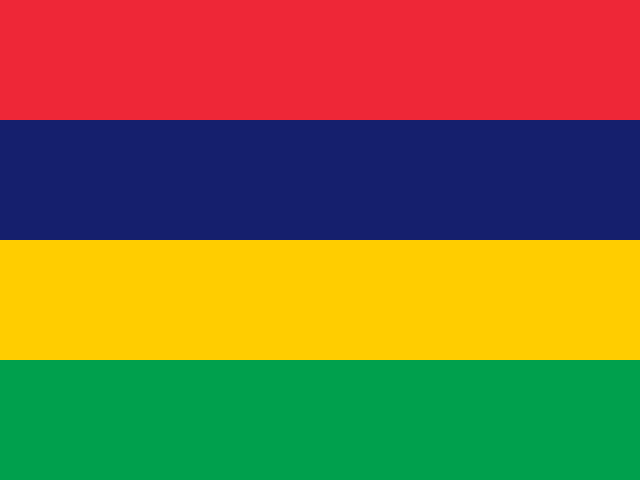
Mauritius

Traditions present: Hinduism, Catholicism, Islam

Five places written in Mauritius. Each carries its history, architecture, site and orientation, festivals, and the way to get there.

Places
5
written
Traditions
3
present
Regions
2
regions, cities
English
5
pages translated

IPlaces Written

All 5 pages now have an English version.

By tradition
By region
Hinduism · Savanne · 1897 (theo truyền thống, một vị pandit thấy hồ trong mộng, nguồn khác ghi 1887), cuộc hành hương đầu tiên năm 1898, hòa nước sông Hằng năm 1972Ganga TalaoGanga Talao, Grand Bassin, Pari Talao, Hồ thiêng Grand Bassin

A volcanic crater lake set about 550 m above sea level in the southwestern highlands of Mauritius, revered by Indo-Mauritian Hindus as spiritually linked to the sacred River Ganges. Since 1898, hundreds of thousands of white-clad pilgrims have walked to the lake each Maha Shivaratri to draw holy water for Lord Shiva, and in 1972 water brought from the Ganges in India was poured into the lake, renaming it Ganga Talao. Declared a national sacred lake in 1998, its shore is ringed by Hindu temples and guarded at the entrance by twin 33 m (108 ft) statues of Lord Shiva (Mangal Mahadev, 2007) and Goddess Durga (Durga Mata Murti, 2017).

Declared Sacred Lake of Mauritius (1998)Grand Bassin (Ganga Talao), Savanne District, Mauritius

Photo: Balou46, CC BY-SA 4.0, Wikimedia Commons

Catholicism · Port Louis District · Nhà thờ đầu tiên xây dựng từ năm 1752 tới năm 1756 bởi kỹ sư Jean-Francois Charpentier de Cossigny thời thuộc Pháp; tái thiết năm 1814 tới năm 1819 thời Thống đốc Anh Sir Robert Farquhar và nâng lên hàng nhà thờ chính tòa năm 1847; xây dựng mới hoàn toàn bằng đá bazan xám theo đồ án của kiến trúc sư Max Boulle từ năm 1930 tới năm 1933 (thánh hiến ngày 20 tháng 8 năm 1933 thời Giám mục James Leen); đại trùng tu năm 2005 tới năm 2007St. Louis Cathedral, Port LouisCathedrale Saint-Louis de Port-Louis, Cathedral of Saint Louis, Mother Church of the Diocese of Port-Louis

The mother church of the Roman Catholic Diocese of Port-Louis standing in the historic heart of Port Louis, Mauritius, originating with the first French colonial church erected in 1752 by Jean-Francois Charpentier de Cossigny, famed as the pastoral base where Blessed Father Jacques-Desire Laval catechized emancipated slaves from 1841, and rebuilt in monumental grey Mauritian basalt stone with twin square bell towers by architect Max Boulle between 1930 and August 20, 1933.

Cathedral of the Roman Catholic Diocese of Port-Louis (elevated to cathedral status on December 7, 1847 by Pope Pius IX) and National Heritage Monument of the Republic of MauritiusPlace de la Cathedrale, 15 Bourbon Street (Rue Bourbon), Port Louis, Republic of Mauritius

Photo: No machine-readable author provided. Sacalavou assumed (based on copyright claim, Public domain, Wikimedia Commons

Islam · Port Louis District · Khởi lập tháng 10 năm 1852 và khánh thành gian cầu nguyện đầu tiên năm 1853 bởi nhóm thương nhân Hồi giáo Cutchi Memon từ vùng Gujarat (Ấn Độ) do Hajee Joonus Allarakia và Hajee Jackaria Janmamode dẫn đầu; mở rộng đại quy mô từ năm 1859 tới năm 1895 bởi các nghệ nhân Ấn Độ dưới sự chỉ huy của Mirza Ahmode RazaJummah Mosque, Port LouisJummah Masjid Port Louis, Mosquee Jummah, Mosquee des Arabes, Grand Friday Mosque of Port Louis

A nineteenth-century architectural jewel blending Indo-Islamic Mughal, Moorish, and Mauritian Creole traditions at the bustling crossroads of Royal Street and Chinatown in Port Louis, founded in October 1852 by Cutchi Memon merchants from Gujarat and expanded between 1859 and 1895 by Indian master artisans under Mirza Ahmode Raza, renowned for its whitewashed arcades, carved Indian teak doors, ancient courtyard almond tree, and the marble mausoleum of Sufi saint Pir Jamal Shah.

Proclaimed National Heritage Monument of the Republic of Mauritius and the foremost historic Sunni congregational mosque of Port LouisRoyal Street (Rue Royale), corner of Queen Street and Jummah Mosque Street, Port Louis, Republic of Mauritius

Photo: Oderuth, CC BY-SA 4.0, Wikimedia Commons

Hinduism · Port Louis District · Khởi công năm 1854 bởi cộng đồng thương nhân và nghệ nhân người Tamil từ Pondicherry, Karaikal và Tamil Nadu (Hội Societe Anonyme Sockalingum Meenatchee Ammen); hoàn thành toàn bộ quần thể năm 1882 bởi các nghệ nhân điêu khắc đền đài truyền thống từ Nam Ấn Độ; đại trùng tu và cử hành lễ tái thánh hiến Maha Kumbhabhishekam định kỳSockalingum Meenatchee Ammen Kovil, Port LouisKaylasson Temple, Kailasson Kovil, Arulmigu Sockalingum Meenatchee Ammen Tirukkovil, Historic Tamil Dravidian Temple of Port Louis

The oldest surviving Dravidian Tamil Hindu temple in Port Louis and a proclaimed National Heritage Site of Mauritius, constructed between 1854 and 1882 on Nicolay Road in Sainte-Croix by Tamil merchants and master sculptors from Pondicherry and Tamil Nadu after the sacred model of Madurai Meenakshi Temple, celebrated for its Agama Shastra layout aligning six sculpted towers with the six chakras of the human body and its central role in the Thaipusam Cavadee pilgrimage.

Proclaimed National Heritage Site of the Republic of Mauritius and the oldest surviving monumental Tamil Dravidian Hindu temple in Port LouisNicolay Road, Sainte-Croix, Northern Port Louis, Republic of Mauritius

Photo: Z thomas, CC BY-SA 4.0, Wikimedia Commons

Catholicism · Port Louis District · Chân phước Jacques-Desire Laval qua đời và an táng tại Sainte-Croix tháng 9 năm 1864; xây dựng lăng mộ đá đầu tiên năm 1870; tái thiết nhà nguyện lăng mộ hiện đại (Le Caveau) và Nhà thờ Sainte-Croix thế kỷ 20; Giáo hoàng Gioan Phaolô II tôn phong Chân phước năm 1979 và thân hành viếng mộ ngày 14 tháng 10 năm 1989; Giáo hoàng Phanxicô hành hương viếng mộ ngày 9 tháng 9 năm 2019Shrine of Père Jacques-Désiré Laval, Sainte-CroixCaveau du Pere Laval, Sanctuaire du Bienheureux Jacques-Desire Laval, Eglise Sainte-Croix Port-Louis, Tomb Shrine of Father Laval

The most beloved interfaith pilgrimage sanctuary in the Republic of Mauritius, located at Sainte-Croix in northeastern Port Louis around the tomb vault (Caveau) of Blessed Father Jacques-Desire Laval, CSSp (1803 to 1864), the French physician turned Spiritan missionary revered as the Apostle of Mauritius for his twenty-three-year ministry among emancipated slaves, drawing over 100,000 pilgrims of all faiths on foot every September 8 to 9.

Premier National Catholic and Interfaith Pilgrimage Sanctuary of the Republic of Mauritius (tomb of the first Blessed beatified by Pope John Paul II on April 29, 1979)Father Laval Street (Rue Pere Laval), Sainte-Croix, Port Louis, Republic of Mauritius

Photo: Unknown authorUnknown author, CC0, Wikimedia Commons

IIHelp Us Build This

This library is open and free, and it records its own progress in public. Three things you can help with today:

  1. Name a place we missedA founding temple, a church, a mosque, a shrine the table above does not have. Send the name, the province, and one line on why it belongs.
  2. Send a photograph with an open licenceNothing is published without both the photographer and the licence. Your own photograph with your permission, or an openly licensed one, are both welcome.
  3. Report an errorA wrong date, a wrong original name, a wrong lineage, a wrong address. A library that is wrong once is not trusted again, so corrections are very welcome.

Write to thayungkhiem@gmail.com

IIILog

  • 24/10/2026Completed three major initiatives on the same day: (1) Verified primary international sources and published the remaining 199 full English editions across 192 countries and territories, officially completing Stage D with 100% bilingual Vietnamese and English coverage across the entire library. (2) Visually verified and published 35 openly licensed Wikimedia Commons photographs for 22 sites in Vietnam and 13 international sanctuaries. (3) Authored 100 new bilingual sacred place monographs with real photographs for Stage C across 25 countries and territories (South Korea, China, Taiwan, Thailand, Cambodia, Myanmar, Laos, Indonesia, Malaysia, the Philippines, Sri Lanka, Nepal, Bhutan, Bangladesh, Mongolia, Italy, Spain, Portugal, Greece, Russia, Turkey, Egypt, Israel, Canada and Mexico), expanding each from 1 to 5 places and bringing the library to 761 sacred places.
  • 30/09/2026Sourced, visually verified and published 24 openly licensed Wikimedia Commons photographs for the fourth batch of Stage A across the Gulf, maritime Southeast Asia, Central Asia, Europe, Africa, Latin America and Oceania, from the Malé Friday Mosque, Sulayman-Too and Old Orhei to the Temple in the Sea, Ambohimanga and the Grand Mosque of Agadez.
  • 29/09/2026Officially opened the doors of Hall of Myriad Paths to readers worldwide as a living spiritual library that grows every day. On the same day, authored 60 new Stage A sacred place monographs across 60 countries in the Nordic and Baltic regions, the Balkans, the Gulf, Central Asia, European microstates, Africa, Oceania, Latin America and the Caribbean (including Roskilde Cathedral, Hallgrímskirkja, the Gate of Dawn in Vilnius, Ostrog Monastery, Malé Friday Mosque, Sulayman-Too, Old Orhei, the Temple in the Sea and Ambohimanga), while verifying and publishing 59 openly licensed photographs for the second and third batches.

?Quick Questions

Why are there no opening hours or ticket prices

Because they change constantly. A library that is wrong once about a practical detail loses its standing on everything else. Check with the place itself before you travel.

Where do the images come from

From Wikimedia Commons under open licences, each credited to its photographer, or photographed by UK MASTER ACADEMY. No image is published without both its author and its licence.

How were these places chosen

Four tests: it is officially listed as a heritage site, it belongs to a tradition this library covers, its site and orientation can be read in feng shui terms, and an openly licensed photograph exists.

Why is my country still grey

The library opens one country at a time, beginning with the countries that have the most readers, and within each country with its most significant places. A grey country is simply one whose turn has not come. Suggestions are welcome through the page of Master Ưng Khiêm.

›Read Next