HALL OF MYRIAD PATHSVẠN ĐẠO ĐƯỜNGTiếng ViệtVIMaster Ưng Khiêm's site
HALL OF MYRIAD PATHS

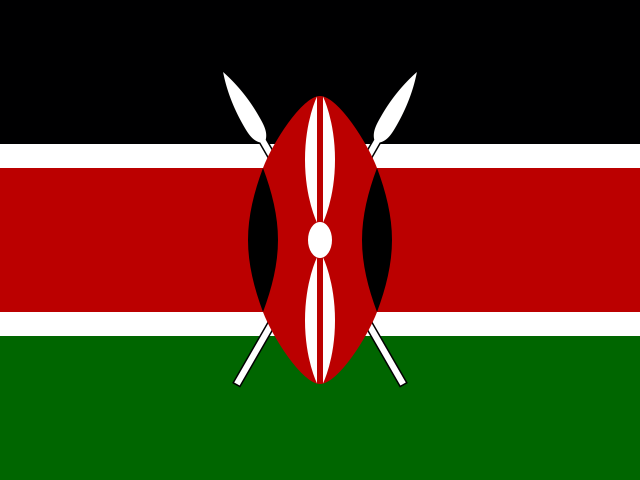
Kenya

Traditions present: Islam, Catholicism, Protestantism, Ancestor Veneration

Five places written in Kenya. Each carries its history, architecture, site and orientation, festivals, and the way to get there.

Places
5
written
Traditions
4
present
Regions
4
regions, cities
English
5
pages translated

IPlaces Written

All 5 pages now have an English version.

By tradition
By region
Islam · Nairobi · 1925 tới 1933 (ý định lập từ năm 1902)Jamia Mosque (Kenya)Jamia Mosque Nairobi, Nairobi Jamia Masjid, Masjid Jamia, Great Mosque of Nairobi

The largest Sunni mosque in Kenya in the heart of Nairobi, with its foundation stone laid in September 1925 and its formal opening on 18 August 1933, designed by Scottish architect William Landels in a Mughal style modeled on the Jama Masjid of Delhi and the Badshahi Mosque of Lahore. Crowned by three silver domes and two minarets and built with stone shipped from India, it serves as the central congregational mosque of the capital for Friday and Eid prayers.

Protected heritage monument under the National Museums and Heritage Act of KenyaBanda Street, giáp Kigali Road, khu trung tâm Nairobi (CBD)

Photo: Benwikilogin, CC0, Wikimedia Commons

Catholicism · Nairobi City County · Khởi nguồn từ giáo xứ đường sắt của các linh mục Dòng Chúa Thánh Thần (Spiritans) năm 1899; xây dựng nhà thờ đá đầu tiên năm 1904; nâng lên hàng nhà thờ chính tòa năm 1953; khởi công đại thánh đường hiện đại năm 1960 và hoàn thành năm 1963 theo thiết kế của kiến trúc sư người Anh gốc Ba Lan Dorothy Hughes; Giáo hoàng Gioan Phaolô II viếng thăm năm 1980, 1985 và 1995Holy Family Minor Basilica, NairobiCathedral Basilica of the Holy Family Nairobi, Metropolitan Cathedral of the Roman Catholic Archdiocese of Nairobi

The metropolitan cathedral of the Roman Catholic Archdiocese of Nairobi standing beside City Hall and Parliament Buildings in the heart of Kenya's capital, tracing its roots to an 1899 railway camp parish founded by the Holy Ghost Fathers and rebuilt between 1960 and 1963 to the modernist design of architect Dorothy Hughes with eight chapels, abstract stained-glass walls, a 4,000-seat nave, and elevation to Papal Minor Basilica status by Pope John Paul II in 1982.

Metropolitan Cathedral of the Roman Catholic Archdiocese of Nairobi and Papal Minor Basilica (proclaimed by Pope John Paul II on February 15, 1982)Parliament Road and City Hall Way, Central Business District (CBD), P.O. Box 40891-00100, Nairobi, Republic of Kenya

Photo: Bahnfrend, CC BY-SA 4.0, Wikimedia Commons

Protestantism · Nairobi City County · Đặt viên đá góc tường ngày 3 tháng 2 năm 1917 và thánh hiến giai đoạn đầu năm 1924 theo đồ án phong cách Gothic Anh quốc của kiến trúc sư Temple Moore (sau do con rể là Leslie Moore tiếp nối); hoàn thành trọn vẹn toàn bộ cấu trúc nhà thờ năm 1952; điểm tựa che chở phong trào đấu tranh dân chủ Saba Saba năm 1990 tới 1992 dưới thời Niên trưởng Peter Njenga và Tổng giám mục David GitariAll Saints' Cathedral, NairobiAll Saints' Cathedral of the Anglican Church of Kenya, Provincial and National Anglican Cathedral on Kenyatta Avenue

The National and Provincial Cathedral of the Anglican Church of Kenya and seat of the Archbishop of Kenya on Kenyatta Avenue opposite Uhuru Park in Nairobi, begun on February 3, 1917 and completed in 1952 in English Gothic Revival style using grey local quarry stone to the design of British ecclesiastical architect Temple Moore, renowned for its twelve historic bells, stained-glass windows by Morris and Co. and Karl Parsons, and its courageous sanctuary role during Kenya's 1990s pro-democracy struggle.

Provincial and National Cathedral of the Anglican Church of Kenya (Seat of the Archbishop of Kenya) and Gazetted National Monument of the Republic of Kenya (2001)Kenyatta Avenue, opposite Uhuru Park, P.O. Box 40539-00100, Nairobi, Republic of Kenya

Photo: Bahnfrend, CC BY-SA 4.0, Wikimedia Commons

Ancestor Veneration · Kilifi County and Kwale County (Coast Region) · Hình thành từ thế kỷ 16 sau cuộc di cư lịch sử từ xứ Singwaya ở phương bắc xuống vùng đồi ven biển Kenya; cư dân dần dời làng ra ngoài rừng từ thập niên 1940 nhưng giữ nguyên khu lõi rừng làm thánh địa thờ tổ tiên dưới sự cai quản của Hội đồng Trưởng lão Ngambi; UNESCO ghi danh Di sản Thế giới năm 2008Sacred Mijikenda Kaya ForestsMakaya ya Watu wa Mijikenda, Ten Fortified Ancestral Forest Sanctuaries of the Nine Mijikenda Peoples (Kaya Giriama, Kaya Jibana, Kaya Kambe, Kaya Kauma, Kaya Ribe, Kaya Rabai, Kaya Chonyi, Kaya Kinondo, Kaya Duruma)

An ensemble of ten fortified forest sanctuaries stretching across 200 kilometers of coastal hills in Kilifi and Kwale Counties along the Indian Ocean (inscribed as a UNESCO World Heritage Site in 2008), established in the sixteenth century by the nine Mijikenda ethnic groups after their migration from Singwaya and preserved today by the Ngambi Council of Elders as sacred ancestral groves housing the protective Fingo talisman, ancestral graves, and carved Vigango memorial posts.

UNESCO World Heritage Site (inscribed in 2008, Reference 1231rev), UNESCO List of Intangible Cultural Heritage in Need of Urgent Safeguarding (2009), and Gazetted National Monuments of the Republic of Kenya200-kilometer coastal ridge spanning Kilifi County and Kwale County (centered on Kaya Fungo in Kaloleni and Kaya Kinondo at Diani Beach), Coast Region, Republic of Kenya

Photo: Victor Ochieng from London, United Kingdom, CC BY-SA 2.0, Wikimedia Commons

Islam · Lamu County (Lamu Archipelago) · Thành lập học đường và thánh đường đầu tiên năm 1892 (tức năm 1310 lịch Hijri) trên khu đất do Sharif Mansab bin Abdallah hiến tặng, hoàn thành thánh đường chính năm 1900 bởi Habib Salih bin Alawi Jamal al-Layl; mở rộng học viện đại học Hồi giáo hiện đại năm 1988 và được xếp hạng Di tích Quốc gia năm 2001Riyadha Mosque, LamuMasjid Riyadha Lamu, Riyadha Mosque and Islamic Centre, Spiritual Heart of the East African Maulidi Festival

The foremost Islamic scholarly institution and spiritual sanctuary on the Swahili Coast of East Africa, situated in the UNESCO World Heritage site of Lamu Old Town on Lamu Island and founded between 1892 and 1900 by the Hadhrami Sayyid scholar Habib Salih bin Alawi Jamal al-Layl (1853 to 1935), renowned for democratizing Islamic education across social classes, preserving rare Arabic-Swahili manuscripts, and hosting East Africa's largest annual Maulidi festival honoring the birth of the Prophet Muhammad.

Gazetted National Monument of the Republic of Kenya (2001) within the UNESCO World Heritage Site of Lamu Old Town (inscribed in 2001, Reference 1055)Langoni Quarter, southern edge of Lamu Old Town, Lamu Island, Lamu County, Republic of Kenya

Photo: Kevin Borland, CC BY-SA 3.0, Wikimedia Commons

IIHelp Us Build This

This library is open and free, and it records its own progress in public. Three things you can help with today:

  1. Name a place we missedA founding temple, a church, a mosque, a shrine the table above does not have. Send the name, the province, and one line on why it belongs.
  2. Send a photograph with an open licenceNothing is published without both the photographer and the licence. Your own photograph with your permission, or an openly licensed one, are both welcome.
  3. Report an errorA wrong date, a wrong original name, a wrong lineage, a wrong address. A library that is wrong once is not trusted again, so corrections are very welcome.

Write to thayungkhiem@gmail.com

IIILog

  • 24/10/2026Completed three major initiatives on the same day: (1) Verified primary international sources and published the remaining 199 full English editions across 192 countries and territories, officially completing Stage D with 100% bilingual Vietnamese and English coverage across the entire library. (2) Visually verified and published 35 openly licensed Wikimedia Commons photographs for 22 sites in Vietnam and 13 international sanctuaries. (3) Authored 100 new bilingual sacred place monographs with real photographs for Stage C across 25 countries and territories (South Korea, China, Taiwan, Thailand, Cambodia, Myanmar, Laos, Indonesia, Malaysia, the Philippines, Sri Lanka, Nepal, Bhutan, Bangladesh, Mongolia, Italy, Spain, Portugal, Greece, Russia, Turkey, Egypt, Israel, Canada and Mexico), expanding each from 1 to 5 places and bringing the library to 761 sacred places.
  • 29/09/2026Officially opened the doors of Hall of Myriad Paths to readers worldwide as a living spiritual library that grows every day. On the same day, authored 60 new Stage A sacred place monographs across 60 countries in the Nordic and Baltic regions, the Balkans, the Gulf, Central Asia, European microstates, Africa, Oceania, Latin America and the Caribbean (including Roskilde Cathedral, Hallgrímskirkja, the Gate of Dawn in Vilnius, Ostrog Monastery, Malé Friday Mosque, Sulayman-Too, Old Orhei, the Temple in the Sea and Ambohimanga), while verifying and publishing 59 openly licensed photographs for the second and third batches.

?Quick Questions

Why are there no opening hours or ticket prices

Because they change constantly. A library that is wrong once about a practical detail loses its standing on everything else. Check with the place itself before you travel.

Where do the images come from

From Wikimedia Commons under open licences, each credited to its photographer, or photographed by UK MASTER ACADEMY. No image is published without both its author and its licence.

How were these places chosen

Four tests: it is officially listed as a heritage site, it belongs to a tradition this library covers, its site and orientation can be read in feng shui terms, and an openly licensed photograph exists.

Why is my country still grey

The library opens one country at a time, beginning with the countries that have the most readers, and within each country with its most significant places. A grey country is simply one whose turn has not come. Suggestions are welcome through the page of Master Ưng Khiêm.

›Read Next