HALL OF MYRIAD PATHSVẠN ĐẠO ĐƯỜNGTiếng ViệtVIMaster Ưng Khiêm's site
HALL OF MYRIAD PATHS

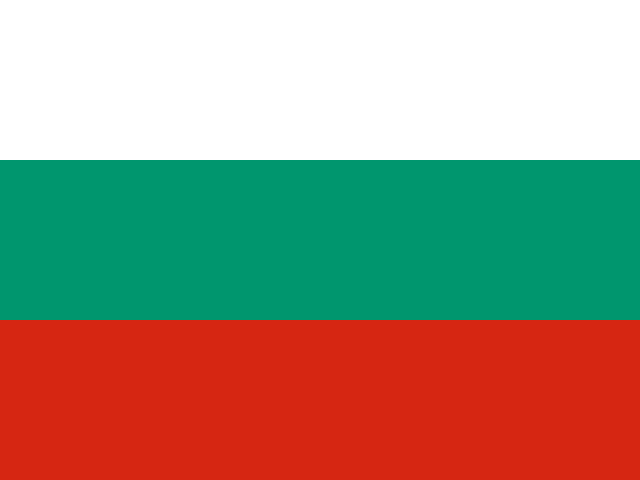
Bulgaria

Traditions present: Orthodox Christianity, Islam

Five places written in Bulgaria. Each carries its history, architecture, site and orientation, festivals, and the way to get there.

Places
5
written
Traditions
2
present
Regions
3
regions, cities
English
5
pages translated

IPlaces Written

All 5 pages now have an English version.

By tradition
By region
Orthodox Christianity · Kyustendil · thế kỷ 10Rila MonasteryРилски манастир, Манастир Свети Иван Рилски, Rilski manastir, Rila Monastery, Tu viện Thánh Gioan thành Rila

Bulgaria's largest Eastern Orthodox monastery, set deep in the Rila Mountains and founded in the 10th century by the hermit Saint John of Rila (Ivan Rilski). From the 11th to the 14th centuries it served as a center of spiritual and artistic influence across the Eastern Orthodox world. Hrelyo's Tower of 1334 to 1335 still stands intact, while the residential wings and five-domed main church rebuilt from 1834 onward exemplify the Bulgarian National Revival, inscribed as a UNESCO World Heritage Site in 1983.

UNESCO World Heritage Site (1983)Rilski manastir, xã Rila, tỉnh Kyustendil (thung lũng sông Rilska, núi Rila, cách Sofia khoảng 111 km)

Photo: Pudelek (Marcin Szala), CC BY-SA 3.0, Wikimedia Commons

Orthodox Christianity · Sofia · Đặt viên đá đầu tiên ngày 19 tháng 2 (tức ngày 3 tháng 3) năm 1882; thi công chính từ năm 1904 tới năm 1912 theo thiết kế phong cách Tân Byzantine của kiến trúc sư Nga Alexander Pomerantsev; đại lễ thánh hiến từ ngày 12 tới ngày 14 tháng 9 năm 1924St. Alexander Nevsky Cathedral, SofiaHram-pametnik Sveti Aleksandar Nevski, Patriarcheska katedrala Sveti Aleksandar Nevski, Patriarchal Cathedral of St. Alexander Nevsky in Sofia

The monumental Neo-Byzantine patriarchal cathedral of the Bulgarian Orthodox Church in central Sofia and one of the largest Eastern Orthodox cathedrals in the Balkans, designed by Russian architect Alexander Pomerantsev and constructed between 1882 and 1912 in memory of the 200,000 Russian, Bulgarian, Romanian, and Finnish soldiers who fell during the Russo-Turkish War of Liberation of 1877 to 1878, renowned for its 45-meter gold-plated central dome, 53-meter belfry housing twelve Moscow-cast bells, and subterranean Museum of Christian Art.

Patriarchal Cathedral of the Bulgarian Orthodox Church (elevated in 1953) and Cultural Monument of National Significance of the Republic of Bulgaria (proclaimed on September 12, 1924 and reaffirmed in 1955)Ploshtad Sveti Aleksandar Nevski, Oborishte District, 1000 Sofia, Republic of Bulgaria

Photo: Plamen Agov ( user:MrPanyGoff ), CC BY-SA 4.0, Wikimedia Commons

Islam · Sofia · Hoàn thành năm 1566 tới 1567 Công nguyên (năm 974 lịch Hồi giáo Hijri) theo thiết kế của đại kiến trúc sư triều đình Ottoman Mimar Sinan dưới sự tài trợ của học giả và thẩm phán Mullah Efendi Kadri (Qadi Seyfullah Efendi)Banya Bashi Mosque, SofiaBanya Bashi Dzhamiya, Banyabasi Camii, Mullah Efendi Kadri Mosque, Qadi Seyfullah Efendi Mosque in Sofia

The sole functioning historic mosque in Sofia and a sixteenth-century Ottoman architectural landmark completed in 1566 to 1567 CE (974 AH) by the imperial chief architect Mimar Sinan through the endowment of Qadi Seyfullah Efendi (Mullah Efendi Kadri) directly beside the ancient thermal mineral springs of Serdika, distinguished by its alternating stone-and-brick masonry, 15-meter lead-sheathed dome, and slender minaret anchoring Sofia's Square of Religious Tolerance.

Sole Active Historic Mosque in the Capital of Bulgaria and Architectural Cultural Monument of National Importance of the Republic of Bulgaria (anchoring the Square of Religious Tolerance in ancient Serdika)Bulevard Knyaginya Maria Luiza 18, Vazrazhdane District, 1000 Sofia, Republic of Bulgaria

Photo: Pudelek (Marcin Szala), CC BY-SA 3.0, Wikimedia Commons

Orthodox Christianity · Sofia · Nhà thờ phía Đông xây dựng cuối thế kỷ 10 tới đầu thế kỷ 11; Nhà thờ hai tầng ở giữa và bộ bích họa kiệt tác hoàn thành năm 1259 dưới sự bảo trợ của Tổng trấn Sebastokrator Kaloyan và phu nhân Desislava thời Sa hoàng Konstantin Tikh Asen; Cánh phía Tây xây thêm năm 1845Boyana ChurchBoyanska Tsarkva, Tsarkva Sveti Nikola i Sveti Panteleimon, Boyana Church of St. Nicholas and St. Panteleimon in Sofia

A jewel of medieval Eastern Orthodox art nestled in the pine forests at the foot of Mount Vitosha on the outskirts of Sofia and inscribed as a UNESCO World Heritage Site in 1979 (Ref. 42), comprising three contiguous church sections from the tenth, thirteenth, and nineteenth centuries and celebrated worldwide for its cycle of 89 fresco scenes with 240 figures painted in 1259 under the patronage of Sebastokrator Kaloyan and his wife Desislava.

UNESCO World Heritage Site (inscribed in 1979, Ref. 42) and Cultural Monument of National Importance administered by the National Museum of History of BulgariaUlitsa Boyansko Ezero 1-3, Boyana Quarter at the foot of Mount Vitosha, Vitosha District, 1616 Sofia, Republic of Bulgaria

Photo: Aleksander Dragnes, CC BY 2.0, Wikimedia Commons

Orthodox Christianity · Ruse Province · Khởi lập vào thập niên 1220 bởi ẩn sĩ Joachim (sau trở thành Thượng phụ Joachim I của Bulgaria) dưới sự bảo trợ của Sa hoàng Ivan Asen II; phát triển rực rỡ nhất vào thế kỷ 14 dưới sự bảo trợ của Sa hoàng Ivan Alexander và Hoàng hậu Theodora với các bích họa trường phái TarnovoRock-Hewn Churches of IvanovoIvanovski Skalni Tsarkvi, Manastir Sveti Arhangel Mihail Ivanovo, Rock-Hewn Monastery of St. Archangel Michael at Ivanovo

A monastic network of rock-cut churches, chapels, and some 300 ascetic cells carved high into the vertical limestone cliffs of the Rusenski Lom river canyon in northern Bulgaria beginning in the 1220s under Saint Joachim I and the Tsars of the Second Bulgarian Empire, inscribed as a UNESCO World Heritage Site in 1979 (Ref. 45) for its fourteenth-century Tarnovo School frescoes in the Church of the Holy Virgin demonstrating the artistic peak of the Palaeologan Renaissance.

UNESCO World Heritage Site (inscribed in 1979, Ref. 45) and National Archaeological and Architectural Reserve of the Republic of BulgariaRusenski Lom River Canyon, Village of Ivanovo (20 km south of Ruse), Ivanovo Municipality, Ruse Province, Republic of Bulgaria

Photo: Alexander.D.Hristov, CC BY-SA 4.0, Wikimedia Commons

IIHelp Us Build This

This library is open and free, and it records its own progress in public. Three things you can help with today:

  1. Name a place we missedA founding temple, a church, a mosque, a shrine the table above does not have. Send the name, the province, and one line on why it belongs.
  2. Send a photograph with an open licenceNothing is published without both the photographer and the licence. Your own photograph with your permission, or an openly licensed one, are both welcome.
  3. Report an errorA wrong date, a wrong original name, a wrong lineage, a wrong address. A library that is wrong once is not trusted again, so corrections are very welcome.

Write to thayungkhiem@gmail.com

IIILog

  • 24/10/2026Completed three major initiatives on the same day: (1) Verified primary international sources and published the remaining 199 full English editions across 192 countries and territories, officially completing Stage D with 100% bilingual Vietnamese and English coverage across the entire library. (2) Visually verified and published 35 openly licensed Wikimedia Commons photographs for 22 sites in Vietnam and 13 international sanctuaries. (3) Authored 100 new bilingual sacred place monographs with real photographs for Stage C across 25 countries and territories (South Korea, China, Taiwan, Thailand, Cambodia, Myanmar, Laos, Indonesia, Malaysia, the Philippines, Sri Lanka, Nepal, Bhutan, Bangladesh, Mongolia, Italy, Spain, Portugal, Greece, Russia, Turkey, Egypt, Israel, Canada and Mexico), expanding each from 1 to 5 places and bringing the library to 761 sacred places.
  • 29/09/2026Officially opened the doors of Hall of Myriad Paths to readers worldwide as a living spiritual library that grows every day. On the same day, authored 60 new Stage A sacred place monographs across 60 countries in the Nordic and Baltic regions, the Balkans, the Gulf, Central Asia, European microstates, Africa, Oceania, Latin America and the Caribbean (including Roskilde Cathedral, Hallgrímskirkja, the Gate of Dawn in Vilnius, Ostrog Monastery, Malé Friday Mosque, Sulayman-Too, Old Orhei, the Temple in the Sea and Ambohimanga), while verifying and publishing 59 openly licensed photographs for the second and third batches.
  • 28/09/2026In the Main Hall, transformed 174 sacred symbols of faiths and branches into raised 3D forms so visitors can select their own tradition before making an offering, alongside a public record of milestones. In the Places section, authored 30 new Stage A monographs across 30 countries in Europe, Central Asia, the Middle East, Africa and Latin America (including St Stephen's Cathedral in Vienna, Rila Monastery, Svetitskhoveli, Etchmiadzin, al-Qarawiyyin, the Great Mosque of Djenné, Namugongo and the Basilica of Luján).

?Quick Questions

Why are there no opening hours or ticket prices

Because they change constantly. A library that is wrong once about a practical detail loses its standing on everything else. Check with the place itself before you travel.

Where do the images come from

From Wikimedia Commons under open licences, each credited to its photographer, or photographed by UK MASTER ACADEMY. No image is published without both its author and its licence.

How were these places chosen

Four tests: it is officially listed as a heritage site, it belongs to a tradition this library covers, its site and orientation can be read in feng shui terms, and an openly licensed photograph exists.

Why is my country still grey

The library opens one country at a time, beginning with the countries that have the most readers, and within each country with its most significant places. A grey country is simply one whose turn has not come. Suggestions are welcome through the page of Master Ưng Khiêm.

›Read Next