HALL OF MYRIAD PATHSVẠN ĐẠO ĐƯỜNGTiếng ViệtVIMaster Ưng Khiêm's site
HALL OF MYRIAD PATHS

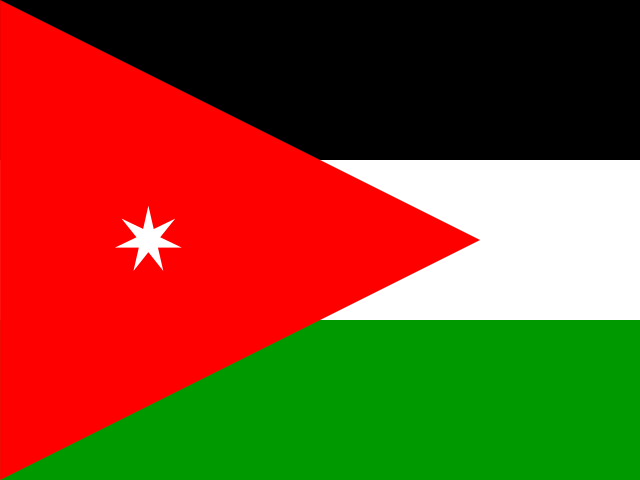
Jordan

Traditions present: Islam, Catholicism, Orthodox Christianity

Five places written in Jordan. Each carries its history, architecture, site and orientation, festivals, and the way to get there.

Places
5
written
Traditions
3
present
Regions
4
regions, cities
English
5
pages translated

IPlaces Written

All 5 pages now have an English version.

By tradition
By region
Orthodox Christianity · Madaba · Khoảng giữa thế kỷ 6 (bản đồ khảm), nhà thờ hiện nay dựng cuối thế kỷ 19 trên nền nhà thờ thời ByzantineMadaba MapMadaba Map, Madaba Mosaic Map, St. George's Church Madaba, Greek Orthodox Basilica of Saint George, Nhà thờ Bản đồ, bản đồ khảm Madaba

A Greek Orthodox church in Madaba built in the late 19th century over the foundations of a Byzantine basilica, preserving in its floor the mid-6th-century Madaba Mosaic Map. Oriented toward the east, it is the oldest surviving map of the Holy Land, featuring around 150 Greek inscriptions and the earliest extant depiction of Byzantine Jerusalem.

Trung tâm thành phố Madaba, tỉnh Madaba, cách Amman khoảng 30 km về phía tây nam

Photo: Carole Raddato from FRANKFURT, Germany, CC BY-SA 2.0, Wikimedia Commons

Islam · Amman Governorate (Al-Asimah) · Khởi công năm 1982 dưới triều đại Quốc vương Hussein bin Talal và khánh thành trọng thể năm 1989 theo đồ án của kiến trúc sư Cộng hòa Séc gốc Đức Jan CejkaKing Abdullah I Mosque, AmmanMasjid al-Malik Abdullah al-Awwal, Blue Dome Mosque of Amman, King Abdullah I Memorial Mosque

The most recognizable modern Islamic architectural landmark in the Al-Abdali district of Amman, commissioned by King Hussein bin Talal and built between 1982 and 1989 to the design of Czech-German architect Jan Cejka in memory of his grandfather, founding monarch King Abdullah I, celebrated for its pillarless 35-meter turquoise-blue mosaic dome, octagonal prayer hall accommodating 3,000 worshippers, twin minarets, and royal Islamic museum.

National Hashemite Memorial Mosque and Iconic Modern Religious Architectural Monument of AmmanSuleiman Al-Nabulsi Street, Al-Abdali District, Amman 11118, Hashemite Kingdom of Jordan

Photo: Berthold Werner, CC BY 3.0, Wikimedia Commons

Catholicism · Balqa Governorate (Jordan Valley) · Truyền thống Thánh Kinh thế kỷ 1 Công nguyên; quần thể nhà thờ và bể rửa tội Byzantine xây dựng từ thế kỷ 4 tới thế kỷ 6 dưới thời Hoàng đế Anastasius I và Justinianus I; khai quật khảo cổ học từ năm 1996 sau Hiệp ước Hòa bình năm 1994; Giáo hoàng Gioan Phaolô II hành hương năm 2000 và thánh hiến Nhà thờ Phép Rửa của Chúa tháng 1 năm 2025Baptism Site 'Bethany Beyond the Jordan' (Al-Maghtas)Al-Maghtas, Bethany Beyond the Jordan, Wadi al-Kharrar, Elijah's Hill (Jabal Mar Elias or Tell al-Kharrar)

One of Christianity's holiest pilgrimage sanctuaries situated on the eastern bank of the Jordan River at Wadi al-Kharrar (inscribed as a UNESCO World Heritage Site in 2015), authenticated by apostolic tradition, Byzantine chronicles, and post-1996 archaeological excavations as the biblical Bethany Beyond the Jordan where Saint John the Baptist baptized Jesus of Nazareth, encompassing Elijah's Hill (Tell al-Kharrar) and the ruins of fifth-century basilicas built over the riverside baptismal steps.

UNESCO World Heritage Site (inscribed in 2015, Reference 1446) and Official Holy Land Pilgrimage Sanctuary designated by the Holy SeeWadi al-Kharrar Archaeological Park, East Bank of the Jordan River, 9 km north of the Dead Sea, Al-Shuna Al-Janubiyah District, Balqa Governorate, Hashemite Kingdom of Jordan

Photo: JeriesBassier, CC BY 4.0, Wikimedia Commons

Catholicism · Madaba Governorate · Nhà thờ ba hậu cung đầu tiên xây dựng vào nửa sau thế kỷ 4 Công nguyên; mở rộng thành Vương cung thánh đường và tu viện Siyagha từ cuối thế kỷ 5 tới năm 597 với sàn tranh khảm Byzantine của nghệ nhân Soelos, Kaium và Elias; Dòng Phanxicô mua lại khu đất năm 1932, khai quật từ năm 1933 và khánh thành công trình mái che bảo tồn mới vào tháng 10 năm 2016Memorial of Moses on Mount NeboJabal Nibu, Siyagha, Basilica of the Memorial of Moses on Mount Pisgah, Sanctuary of Moses at Mount Nebo

The revered 710-meter summit ridge of Siyagha on Mount Nebo overlooking the Dead Sea, the Jordan River Valley, Jericho, and the distant hills of Jerusalem, venerated across the Abrahamic faiths as the place where the Prophet Moses beheld the Promised Land before his death (Deuteronomy 34), preserving a fourth-to-sixth-century monastic basilica with exquisite 530 CE Byzantine mosaic floors cared for since 1932 by the Franciscan Custody of the Holy Land and crowned by Giovanni Fantoni's Brazen Serpent Cross.

International Biblical Pilgrimage Sanctuary of the Franciscan Custody of the Holy Land (Custodia Terrae Sanctae) and Premier Archaeological Monument of JordanSiyagha Peak, Mount Nebo (Jabal Nibu), 10 km northwest of Madaba, Madaba Governorate, Hashemite Kingdom of Jordan

Photo: Osama Shukir Muhammed Amin FRCP(Glasg), CC BY-SA 4.0, Wikimedia Commons

Islam · Amman Governorate (Al-Asimah) · Được Quốc vương Abdullah II bin al-Hussein khởi xướng và khánh thành ngày 11 tháng 4 năm 2006 để tưởng niệm thân phụ là cố Quốc vương Hussein bin Talal; khai trương Bảo tàng Tiên tri Muhammad ngày 15 tháng 5 năm 2012King Hussein bin Talal Mosque, AmmanMasjid al-Malik al-Hussein bin Talal, Grand State Mosque of Jordan in Dabouq, King Hussein Mosque Amman

The largest mosque and official State Mosque of the Hashemite Kingdom of Jordan, standing at an elevation of 1,013 meters within King Hussein Park in western Amman and inaugurated by King Abdullah II on April 11, 2006 in memory of his father King Hussein bin Talal, built in Levantine Umayyad fortress style with four soaring minarets, a handcrafted wooden Muqarnas mihrab designed by Samer Tabbaa, and the Museum of the Prophet Muhammad housing an original prophetic letter to Emperor Heraclius.

Official National State Mosque (Masjid al-Dawlah) and Largest Islamic Sanctuary of the Hashemite Kingdom of JordanKing Abdullah II Street, King Hussein Park, Dabouq and Khalda District, West Amman, Hashemite Kingdom of Jordan

Photo: Petar Milošević, CC BY-SA 4.0, Wikimedia Commons

IIHelp Us Build This

This library is open and free, and it records its own progress in public. Three things you can help with today:

  1. Name a place we missedA founding temple, a church, a mosque, a shrine the table above does not have. Send the name, the province, and one line on why it belongs.
  2. Send a photograph with an open licenceNothing is published without both the photographer and the licence. Your own photograph with your permission, or an openly licensed one, are both welcome.
  3. Report an errorA wrong date, a wrong original name, a wrong lineage, a wrong address. A library that is wrong once is not trusted again, so corrections are very welcome.

Write to thayungkhiem@gmail.com

IIILog

  • 24/10/2026Completed three major initiatives on the same day: (1) Verified primary international sources and published the remaining 199 full English editions across 192 countries and territories, officially completing Stage D with 100% bilingual Vietnamese and English coverage across the entire library. (2) Visually verified and published 35 openly licensed Wikimedia Commons photographs for 22 sites in Vietnam and 13 international sanctuaries. (3) Authored 100 new bilingual sacred place monographs with real photographs for Stage C across 25 countries and territories (South Korea, China, Taiwan, Thailand, Cambodia, Myanmar, Laos, Indonesia, Malaysia, the Philippines, Sri Lanka, Nepal, Bhutan, Bangladesh, Mongolia, Italy, Spain, Portugal, Greece, Russia, Turkey, Egypt, Israel, Canada and Mexico), expanding each from 1 to 5 places and bringing the library to 761 sacred places.
  • 29/09/2026Officially opened the doors of Hall of Myriad Paths to readers worldwide as a living spiritual library that grows every day. On the same day, authored 60 new Stage A sacred place monographs across 60 countries in the Nordic and Baltic regions, the Balkans, the Gulf, Central Asia, European microstates, Africa, Oceania, Latin America and the Caribbean (including Roskilde Cathedral, Hallgrímskirkja, the Gate of Dawn in Vilnius, Ostrog Monastery, Malé Friday Mosque, Sulayman-Too, Old Orhei, the Temple in the Sea and Ambohimanga), while verifying and publishing 59 openly licensed photographs for the second and third batches.
  • 28/09/2026In the Main Hall, transformed 174 sacred symbols of faiths and branches into raised 3D forms so visitors can select their own tradition before making an offering, alongside a public record of milestones. In the Places section, authored 30 new Stage A monographs across 30 countries in Europe, Central Asia, the Middle East, Africa and Latin America (including St Stephen's Cathedral in Vienna, Rila Monastery, Svetitskhoveli, Etchmiadzin, al-Qarawiyyin, the Great Mosque of Djenné, Namugongo and the Basilica of Luján).

?Quick Questions

Why are there no opening hours or ticket prices

Because they change constantly. A library that is wrong once about a practical detail loses its standing on everything else. Check with the place itself before you travel.

Where do the images come from

From Wikimedia Commons under open licences, each credited to its photographer, or photographed by UK MASTER ACADEMY. No image is published without both its author and its licence.

How were these places chosen

Four tests: it is officially listed as a heritage site, it belongs to a tradition this library covers, its site and orientation can be read in feng shui terms, and an openly licensed photograph exists.

Why is my country still grey

The library opens one country at a time, beginning with the countries that have the most readers, and within each country with its most significant places. A grey country is simply one whose turn has not come. Suggestions are welcome through the page of Master Ưng Khiêm.

›Read Next