HALL OF MYRIAD PATHSVẠN ĐẠO ĐƯỜNGTiếng ViệtVIMaster Ưng Khiêm's site
HALL OF MYRIAD PATHS

Sacred images in Protestantism

· No veneration of images, the Word at the centre

Photos of real objects, under open licences, with the photographer named. Every point carries its source. Where the library is not sure, it says so.

Photos
50
photos of real objects, nothing redrawn
Countries
11
from Germany, the Netherlands and Switzerland to South Korea and Vietnam
Sources
65
confessions, church websites, museums, journals

For the most part, Protestantism does not venerate images. This page shows that through the confessions of faith and teaching materials of the churches themselves, tells the story of the debate over images during the sixteenth-century Reformation, and then shows what Protestants place at the centre of a church instead of statues: the pulpit with an open Bible, the Communion table, the font or baptistery, the plain cross and boards of written text. The library uses photos of real churches, books and paintings, with the photographer's name and the licence under each photo. The only image drawn by the library is a diagram. The altarpieces from the Cranach workshop appear here because they stand in Lutheran churches, where pictures are kept to teach, not to be venerated.

IProtestants do not venerate images

In short, Protestants do not bow before statues or pictures, and do not pray before the image of anyone. In a Protestant church, what stands at the centre is not a statue but the pulpit with an open Bible, the Communion table, the font or baptistery and, in many places, a plain cross.

Source: Virtual Museum of Protestantism (Musée protestant, France), Protestant religious architecture. Nguyễn Xuân Hùng, Nghi lễ và lối sống của tín đồ Tin Lành, trường hợp Hội Thánh Tin Lành Việt Nam (Miền Nam) (Rituals and way of life of Protestants: the case of the Evangelical Church of Vietnam (South)), Religious Studies Review (Nghiên cứu Tôn giáo), nos. 11 and 12, 2016. Christian Reformed Church in North America, Heidelberg Catechism (English text), questions 96 to 98.

The reason lies in the second of the Ten Commandments (Exodus 20:4 to 6). A daily Bible lesson of the Evangelical Church of Vietnam (South) draws three points from it: do not make carved images, do not make an image of God, because he is the true God and invisible, and do not bow down before images.

Source: Evangelical Church of Vietnam (South), httlvn.org, daily Bible lesson: Điều Răn Thứ Hai (The second commandment), 29/6/2020.

Even so, Protestantism is not a single block. From the sixteenth century there were two directions. Luther's direction kept pictures and the crucifix as aids to memory and teaching, as long as they were not venerated. The direction of Zwingli and Calvin cleared all images out of places of worship. The Church of England stood somewhere in between and changed its course several times. This page goes through each direction in turn.

Source: Journal of Lutheran Ethics (Evangelical Lutheran Church in America, ELCA), Suzanne E. Hoeferkamp Segovia, Martin Luther and the Visual Arts, 2018. Wikipedia, Aniconism in Christianity. Virtual Museum of Protestantism (Musée protestant, France), Protestant religious architecture.

What the confessions say

TextYear and placeWhat it says about images
Heidelberg Catechism, questions 96 to 98Written in 1562, adopted in 1563 in the Palatinate, GermanyGod may not be portrayed in any way. Creatures may be portrayed, but images may not be made or kept in order to worship them or to serve God through them. Images may not take the place of books for the unlearned, because God wants his people taught by the living preaching of his Word.
Second Helvetic Confession, chapter IVWritten by Heinrich Bullinger in 1562, published in 1566, SwitzerlandGod is invisible Spirit and cannot be expressed by any image. It rejects both the idols of the Gentiles and the images of Christians, including images of Christ and of the saints. The Lord commanded the preaching of the Gospel and instituted the sacraments, not images.
Westminster Larger Catechism, question 109Presented to the English Parliament in 1647Counts among the sins against the second commandment the making of any representation of God, of all or of any of the three Persons, whether inwardly in the mind or outwardly in an image, and any form of worship that God has not instituted.
Thirty-Nine Articles, Article XXIIChurch of England, final text of 1571Calls the worshipping and adoration of images and relics a thing grounded upon no warranty of Scripture. Article XXXV lists the homily Against Peril of Idolatry among the homilies to be read.
Source: Christian Reformed Church in North America, Heidelberg Catechism (English text), questions 96 to 98. Britannica, Heidelberg Catechism. Christian Classics Ethereal Library, Second Helvetic Confession, chapter IV. Britannica, Second Helvetic Confession. Orthodox Presbyterian Church, Westminster Larger Catechism, question 109. Britannica, Westminster Catechism. Anglicans Online, the Thirty-Nine Articles, Articles XXII and XXXV. Britannica, Thirty-nine Articles.
Title page of an edition of the Heidelberg Catechism, 1563.
Title page of an edition of the Heidelberg Catechism, 1563.Photo: Unknown (the file page names no author), Public domain, Wikimedia Commons

The table above summarises the texts and is not an official translation. The Heidelberg Catechism and the Westminster Catechism belong to the Reformed and Presbyterian churches. The Lutheran churches do not use them.

IIThe debate over images in the Reformation

Whether to keep pictures and statues in churches divided the reformers from the very first years. The three names below stand for three answers.

Source: Journal of Lutheran Ethics (Evangelical Lutheran Church in America, ELCA), Suzanne E. Hoeferkamp Segovia, Martin Luther and the Visual Arts, 2018. Wikipedia, Aniconism in Christianity.

Martin Luther

Wittenberg, GermanyHow to recognize: Kept pictures and the crucifix as aids to memory and teaching

On 24 January 1522, while Luther was still hiding at Wartburg Castle, Andreas Karlstadt persuaded the Wittenberg city council to have pictures, statues and altars removed. Townspeople then smashed statues and pictures in the parish church. Luther returned and preached eight sermons in a row from 9 to 16 March 1522, usually called the Invocavit sermons. In 1525 he wrote at greater length in Against the Heavenly Prophets. In his view, images are permitted as long as they are not venerated but kept as memorials. He wrote that when he hears of Christ, the image of a man hanging on a cross forms in his heart, just as his face appears in water when he looks into it.

Predella of the Wittenberg Altarpiece: Luther stands in the pulpit pointing to Christ crucified in the middle, with the congregation seated opposite. 1547 to 1548.
Predella of the Wittenberg Altarpiece: Luther stands in the pulpit pointing to Christ crucified in the middle, with the congregation seated opposite. 1547 to 1548.Photo: Lucas Cranach the Younger and workshop / Lucas Cranach the Elder, Public domain, Wikimedia Commons
Source: Journal of Lutheran Ethics (Evangelical Lutheran Church in America, ELCA), Suzanne E. Hoeferkamp Segovia, Martin Luther and the Visual Arts, 2018.

Huldrych Zwingli

Zürich, SwitzerlandHow to recognize: Cleared images, and even the organ, out of the churches

Zwingli preached at the Grossmünster in Zürich. After the disputations of 1523, in 1524 and 1525 the city had images and organs removed from its churches, dissolved the monasteries and replaced the Mass with a simple Lord's Supper. His successor was Heinrich Bullinger, author of the Second Helvetic Confession.

Statues being taken down and burned in Zürich. The file page gives the year 1524 and no artist. The file page only says the image was taken from the book Panorama de la Renaissance by Margaret Aston, and the original is not identified.
Statues being taken down and burned in Zürich. The file page gives the year 1524 and no artist. The file page only says the image was taken from the book Panorama de la Renaissance by Margaret Aston, and the original is not identified.Photo: Anonymous, Public domain, Wikimedia Commons
Interior of the Grossmünster in Zürich, Switzerland. Photo taken in 2008.
Interior of the Grossmünster in Zürich, Switzerland. Photo taken in 2008.Photo: Roland zh, CC BY-SA 3.0, Wikimedia Commons
Source: Britannica, Huldrych Zwingli. Wikipedia, Grossmünster. Britannica, Second Helvetic Confession.

Jean Calvin

Geneva, SwitzerlandHow to recognize: Painting is a gift of God, but images do not belong in the place of worship

In the Institutes, book 1, chapter 11, Calvin writes that sculpture and painting are gifts of God and must be used rightly. One should paint only what the eye can see, while the majesty of God cannot be painted. He notes that for the first five hundred years Christian churches had no images. In his view, the only images a church should hold are the living symbols that the Lord instituted by his Word, namely Baptism and the Lord's Supper.

The pulpit in St. Pierre Cathedral in Geneva, Switzerland. Photo taken in 2009.
The pulpit in St. Pierre Cathedral in Geneva, Switzerland. Photo taken in 2009.Photo: Yann, CC BY-SA 4.0, Wikimedia Commons
The wooden chair known as Calvin's chair, in St. Pierre Cathedral in Geneva. Photo taken in 2015.
The wooden chair known as Calvin's chair, in St. Pierre Cathedral in Geneva. Photo taken in 2015.Photo: Yair Haklai, CC BY-SA 3.0, Wikimedia Commons
Source: Christian Classics Ethereal Library, John Calvin, Institutes, book 1, chapter 11. Wikipedia, St. Pierre Cathedral.
Two directions, not one

Wikipedia sums up scholarship as saying that for Lutherans the Reformation renewed rather than removed the religious image, and that Lutherans strongly opposed the image breaking of the Reformed side. The Virtual Museum of Protestantism in France also notes that Lutherans were less austere: in Alsace and Montbéliard they did not remove the pictures and statues already in their churches. So the phrase "Protestantism has no images" holds for most Reformed, Presbyterian and Baptist churches, but not entirely for the Lutheran churches.

Source: Wikipedia, Aniconism in Christianity. Virtual Museum of Protestantism (Musée protestant, France), Protestant religious architecture.

IIIThe removal of images in the sixteenth century

Images were removed in two ways. In some places the city government ordered it and it was done in an orderly way, as in Zürich in 1524. In others crowds did it themselves, as in Wittenberg early in 1522 and above all in the Low Countries in 1566.

Source: Journal of Lutheran Ethics (Evangelical Lutheran Church in America, ELCA), Suzanne E. Hoeferkamp Segovia, Martin Luther and the Visual Arts, 2018. Britannica, Huldrych Zwingli. Wikipedia, Beeldenstorm.

The Beeldenstorm, 1566

In Dutch this wave is called the Beeldenstorm, the storm against images. On 10 August 1566, the feast of Saint Lawrence, a crowd broke into the chapel of the Sint-Laurens monastery at Steenvoorde, in the part of Flanders that is now in northern France. From there the movement spread quickly, reaching Antwerp on 20 August and Ghent on 22 August. Before this, open-air sermons (hagepreken) had spread widely, outside the reach of the town authorities.

Source: Wikipedia, Beeldenstorm. Saskia Beranek, Iconoclasm in the Netherlands in the Sixteenth Century, Smarthistory 2015, republished on Pressbooks.

According to Saskia Beranek, statues were torn from their niches, windows were smashed, and altars were taken apart and burned. Where statues were part of the building itself, their heads were hacked off. The theological reason was the second commandment: venerating an object was seen as idolatry. She also points out that 1566 was not only about doctrine but also had political and economic causes, and that the image breaking helped spark the Eighty Years' War.

Source: Saskia Beranek, Iconoclasm in the Netherlands in the Sixteenth Century, Smarthistory 2015, republished on Pressbooks.
The image breaking of 20 August 1566, engraving by Frans Hogenberg: a crowd pulls down statues and smashes altars in a large church. Print Room, University of Antwerp.
The image breaking of 20 August 1566, engraving by Frans Hogenberg: a crowd pulls down statues and smashes altars in a large church. Print Room, University of Antwerp.Photo: Frans Hogenberg, CC0, Wikimedia Commons
Woodcut by Erhard Schön, about 1530, originally printed with the poem Complaint of the Poor Persecuted Idols: people carrying statues out of a church. This copy is without the text.
Woodcut by Erhard Schön, about 1530, originally printed with the poem Complaint of the Poor Persecuted Idols: people carrying statues out of a church. This copy is without the text.Photo: Erhard Schön, Public domain, Wikimedia Commons

England

In England the crown directed the process. Under Elizabeth I, the royal injunctions of 1559 condemned images that were superstitiously abused, and the commissioners who carried out the visitations ordered all pictures and images to be destroyed. Across the country, parishes paid to have roods, images and altar tabernacles taken down.

Source: Wikipedia, Elizabethan religious settlement.

The whitewashed churches

Once the statues and pictures were gone, many medieval churches in the Netherlands were left with white walls, stone pillars and light. The painter Pieter Saenredam (1597 to 1665) became known for painting these spaces. Britannica calls him a pioneer of the church portrait, painting real buildings as they were. Emanuel de Witte, who was younger, added people and the furnishings that remained in Reformed churches, such as a congregation sitting around the pulpit to hear a sermon.

Source: Britannica, Pieter Saenredam. Wikipedia, Pieter Jansz. Saenredam.
Interior of St Bavo's Church in Haarlem, the Netherlands, painted by Pieter Saenredam in 1648: whitewashed walls and pillars, with no statues or altarpieces left. Scottish National Gallery.
Interior of St Bavo's Church in Haarlem, the Netherlands, painted by Pieter Saenredam in 1648: whitewashed walls and pillars, with no statues or altarpieces left. Scottish National Gallery.Photo: Pieter Jansz. Saenredam, Public domain, Wikimedia Commons
Interior of the Church of St Lawrence in Alkmaar, the Netherlands, drawing by Pieter Saenredam, 1661.
Interior of the Church of St Lawrence in Alkmaar, the Netherlands, drawing by Pieter Saenredam, 1661.Photo: Pieter Jansz. Saenredam, Public domain, Wikimedia Commons
Interior of the Oude Kerk in Amsterdam during a sermon, painted by Emanuel de Witte, about 1658 to 1659: the congregation listening to the preacher.
Interior of the Oude Kerk in Amsterdam during a sermon, painted by Emanuel de Witte, about 1658 to 1659: the congregation listening to the preacher.Photo: Emanuel de Witte, Public domain, Wikimedia Commons

IVWhat stands at the centre instead of statues

The Virtual Museum of Protestantism names three lasting features of Protestant churches in France: no religious statues or paintings, an interior rearranged to put the pulpit and the Communion table forward in place of the altar, and many windows that make the building very bright. Nguyễn Xuân Hùng, in an article on Protestantism in Vietnam, writes that for almost all Protestant branches the core of worship is the reading and preaching of the Bible.

Source: Virtual Museum of Protestantism (Musée protestant, France), Protestant religious architecture. Nguyễn Xuân Hùng, Tìm hiểu về giáo thuyết, tín lý, đạo đức và lối sống của tín đồ Tin Lành tại Việt Nam (On the doctrine, beliefs, ethics and way of life of Protestants in Vietnam), Religious Studies Review, no. 12, 2017.
On the wallsWords and the crossBible verses, a board of the Ten Commandments and, in many places, a plain cross. No statues of saints, no fourteen Stations of the Cross.
The highest placeThe pulpit and the open BibleWhere the Word of God is read and preached. In many Reformed churches the pulpit stands in the very centre.
In front of the pulpitThe Communion tableA table, usually of wood, for the bread and the cup. Many churches do not call it an altar.
Near the pulpit or near the doorThe font or baptisteryA small basin for baptism by pouring, or a pool for baptism by immersion in Baptist churches.
All aroundThe congregation's seatsThe congregation sits facing the pulpit, in some places all around it and in galleries.

The diagram above shows a layout common in Reformed and Presbyterian churches. Lutheran and Anglican churches keep the altar at the far end of the main space.

The pulpit and the open Bible

How to recognize: A raised platform with a rail, often with a canopy above, holding a large Bible

Britannica notes that because the preaching of the Word is central to Protestant worship, after the sixteenth century the position of the pulpit became a question both theological and practical. When the Protestant denominations built their own churches, the pulpit was placed centrally on a platform at the end of the church, facing the congregation. The Bible on the pulpit is in the people's own language: Luther's translation printed complete in 1534, the King James Version of 1611, the Dutch Statenbijbel of 1637. The Canons of 1604 of the Church of England required every parish to provide a Bible of the largest volume and a comely pulpit.

The Bible open on the pulpit of the Church of St. John the Baptist in Deinum, the Netherlands. Photo taken in 2017.
The Bible open on the pulpit of the Church of St. John the Baptist in Deinum, the Netherlands. Photo taken in 2017.Photo: RomkeHoekstra, CC BY-SA 4.0, Wikimedia Commons
Title page of Luther's German Bible, printed complete in 1534.
Title page of Luther's German Bible, printed complete in 1534.Photo: Anonymous, Public domain, Wikimedia Commons
Title page of the first edition of the King James Bible, 1611.
Title page of the first edition of the King James Bible, 1611.Photo: Church of England, Public domain, Wikimedia Commons
A Statenbijbel, first edition of 1637, bound in brown leather with metal clasps. According to the Rijksmuseum, this was the ship's Bible of Admiral Maarten Harpertsz. Tromp. Rijksmuseum, Amsterdam.
A Statenbijbel, first edition of 1637, bound in brown leather with metal clasps. According to the Rijksmuseum, this was the ship's Bible of Admiral Maarten Harpertsz. Tromp. Rijksmuseum, Amsterdam.Photo: Rijksmuseum, CC0, Wikimedia Commons
The wooden pulpit in the church on the island of Ulva, Scotland. Photo taken in 2015.
The wooden pulpit in the church on the island of Ulva, Scotland. Photo taken in 2015.Photo: Tom Parnell, CC BY-SA 4.0, Wikimedia Commons
Source: Britannica, Pulpit. Wikipedia, Luther Bible. Wikipedia, King James Version. Wikipedia, Statenvertaling. Anglican.net, Canons of 1604 of the Church of England, canons 80, 82 and 83.

The Communion table

How to recognize: A wooden table, not a stone altar

Many Reformed, Baptist and Methodist churches, and the low church wing of Anglicanism, call it the Communion table or the Lord's table. According to Wikipedia, they avoid the word altar because they do not see Communion as a sacrifice, and they use a wooden table instead of a stone altar for the same reason. In everyday speech the two names are often used interchangeably. The English Canons of 1604 required every church to have a decent table, covered with a fine cloth during services and with a white linen cloth at the celebration. On the table are the bread and the cup.

Communion table in the old choir of the Martinikerk in Groningen, the Netherlands. On the table stands a plain cross. Photo taken in 2019.
Communion table in the old choir of the Martinikerk in Groningen, the Netherlands. On the table stands a plain cross. Photo taken in 2019.Photo: Hardscarf, CC BY-SA 4.0, Wikimedia Commons
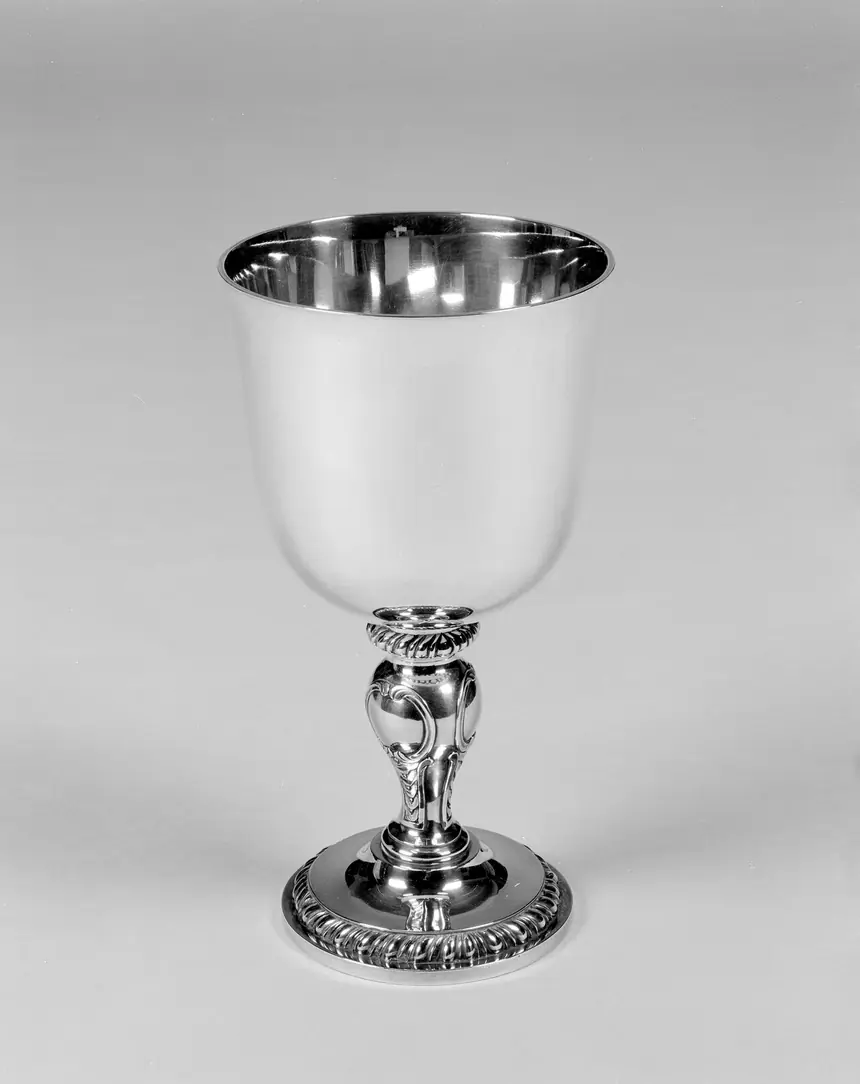
Communion cup on a foot, silver, made by J. Frederik Manikus in Amsterdam, 1781. Museum Catharijneconvent, Utrecht.
Communion cup on a foot, silver, made by J. Frederik Manikus in Amsterdam, 1781. Museum Catharijneconvent, Utrecht.Photo: J. Frederik Manikus (Amsterdam), CC0, Wikimedia Commons
Source: Wikipedia, Communion table. Anglican.net, Canons of 1604 of the Church of England, canons 80, 82 and 83.

The font and the baptistery

How to recognize: A small basin beside the pulpit, or a pool set into the floor

In Dutch Protestant churches, the pulpit is surrounded by an area with a low wooden rail called the dooptuin. The name comes from the fact that baptism was administered there, right below the pulpit, rather than in a separate chapel near the door. Baptist churches baptise only those who have come to faith, and do so by immersion in water, so their meeting houses have a baptistery.

The dooptuin in the Groote Kerk in Maassluis, the Netherlands: the pulpit, a brass stand for the baptismal basin and the wooden rail around it. Photo taken in 2017.
The dooptuin in the Groote Kerk in Maassluis, the Netherlands: the pulpit, a brass stand for the baptismal basin and the wooden rail around it. Photo taken in 2017.Photo: Dosseman, CC BY-SA 4.0, Wikimedia Commons
The baptistery at the front of the worship room of Salisbury Baptist Church, England. Behind it stands a plain cross draped with a white cloth. Photo taken in 2023.
The baptistery at the front of the worship room of Salisbury Baptist Church, England. Behind it stands a plain cross draped with a white cloth. Photo taken in 2023.Photo: User:Hassocks5489, CC0, Wikimedia Commons
Source: Dutch Wikipedia, Dooptuin. Dutch Wikipedia, Groote Kerk (Maassluis). Britannica, Baptist.

The plain cross

How to recognize: Two bars of wood or metal, without the figure of Jesus

Britannica distinguishes two things: the cross is a sign recalling the death and redemption of Jesus, while the crucifix bears his figure. The Lutheran churches keep the crucifix, and many Lutheran churches hang it above the altar. In most other Protestant denominations the crucifix is less common and a plain cross is preferred. The Reformed confessions quoted above do not accept images of Jesus in the place of worship. Some sixteenth-century Reformed and Anglican theologians even opposed the use of the cross in worship. According to Wikipedia, that reaction did not last, and the cross later became common in these traditions. In Vietnam, Nguyễn Xuân Hùng records that Protestant churches do not use the image of Christ on the cross, only the cross itself.

Interior of the Ngõ Trạm Protestant church, Hà Nội: a plain cross on the wall, the pulpit at the front, and the words Tôn vinh Đức Chúa Trời (Glory to God) on the arch. Photo taken in 2015, with the worshippers photographed from behind.
Interior of the Ngõ Trạm Protestant church, Hà Nội: a plain cross on the wall, the pulpit at the front, and the words Tôn vinh Đức Chúa Trời (Glory to God) on the arch. Photo taken in 2015, with the worshippers photographed from behind.Photo: Phan Minh Tuấn, CC BY-SA 4.0, Wikimedia Commons
The outdoor plain cross at Yoido Full Gospel Church in Seoul, South Korea. Photo taken in 2015.
The outdoor plain cross at Yoido Full Gospel Church in Seoul, South Korea. Photo taken in 2015.Photo: Jhcbs1019, CC BY-SA 4.0, Wikimedia Commons
Source: Britannica, Crucifix. Wikipedia, Crucifix. Wikipedia, Christian cross. Christian Classics Ethereal Library, Second Helvetic Confession, chapter IV. Orthodox Presbyterian Church, Westminster Larger Catechism, question 109. Nguyễn Xuân Hùng, Nghi lễ và lối sống của tín đồ Tin Lành, trường hợp Hội Thánh Tin Lành Việt Nam (Miền Nam) (Rituals and way of life of Protestants: the case of the Evangelical Church of Vietnam (South)), Religious Studies Review (Nghiên cứu Tôn giáo), nos. 11 and 12, 2016.

Boards of text: the Ten Commandments and Bible verses

How to recognize: A wooden board painted black or a dark colour, with gold or white lettering

Words take the place of pictures. In France, the Reformed temples of the sixteenth and seventeenth centuries were decorated only with the Tables of the Law, Bible verses and civic coats of arms. In the Netherlands, the Ten Commandments board (tiengebodenbord) is described by Dutch Wikipedia as the Protestant answer to Catholic statues of saints and crucifixes. In 2014 about 135 such boards remained in the country. In England, the Canons of 1604 required the Ten Commandments to be set up at the east end of every church, where the people could best see and read them, along with other chosen sentences written on the walls. In Norway a catechism board in lettering from about 1590 survives.

Ten Commandments board in the Reformed church at Bleskensgraaf, the Netherlands. Photo by the Cultural Heritage Agency of the Netherlands, taken in 1991.
Ten Commandments board in the Reformed church at Bleskensgraaf, the Netherlands. Photo by the Cultural Heritage Agency of the Netherlands, taken in 1991.Photo: Gerard Dukker, CC BY-SA 4.0, Wikimedia Commons
Board of the Law above the old choir screen in the church at Geervliet, the Netherlands: the Ten Commandments and a few other Bible texts. According to the file page, the board bears the year 1588. Photo taken in 2021.
Board of the Law above the old choir screen in the church at Geervliet, the Netherlands: the Ten Commandments and a few other Bible texts. According to the file page, the board bears the year 1588. Photo taken in 2021.Photo: JopkeB, CC BY-SA 4.0, Wikimedia Commons
Ten Commandments board in St Botolph's Church, Culpho, Suffolk, England. Photo taken in 2025.
Ten Commandments board in St Botolph's Church, Culpho, Suffolk, England. Photo taken in 2025.Photo: Michael Garlick, CC BY-SA 2.0, Wikimedia Commons
Catechism board in lettering, about 1590, from Bru Church on Svanøy, western Norway. According to the file page, the predella below comes from another, unidentified church.
Catechism board in lettering, about 1590, from Bru Church on Svanøy, western Norway. According to the file page, the predella below comes from another, unidentified church.Photo: Arild Nybø, CC BY-SA 2.0, Wikimedia Commons
Source: Virtual Museum of Protestantism (Musée protestant, France), Protestant temples: from the 16th century to the Revocation. Dutch Wikipedia, Tiengebodenbord. Anglican.net, Canons of 1604 of the Church of England, canons 80, 82 and 83.

The Luther rose

How to recognize: A black cross in a red heart, set in a white rose, on a blue field, within a gold ring

This was Luther's own seal, made in 1530, and it is now a familiar emblem of the Lutheran churches. In a letter to Lazarus Spengler dated 8 July 1530, Luther explained it himself: the black cross in the heart is a reminder that faith in the Crucified saves us. The white rose says that faith brings joy, comfort and peace. The sky-blue field is the heavenly joy that has already begun. The gold ring is the blessedness of heaven that never ends. It is an emblem, not an object of worship.

Source: Wikipedia, Luther rose.

VAltarpieces and altars in Lutheran churches

The Lutheran churches kept the altars they had from before the Reformation. Some even commissioned new altarpieces whose content taught Lutheran doctrine. Lucas Cranach the Elder (1472 to 1553), a close friend of Luther, and his son were the main painters. According to Wikipedia, altarpieces with an explicitly Lutheran programme of this kind are relatively few, and the phase was mostly over by about 1555.

Source: Journal of Lutheran Ethics (Evangelical Lutheran Church in America, ELCA), Suzanne E. Hoeferkamp Segovia, Martin Luther and the Visual Arts, 2018. Wikipedia, Wittenberg Altarpiece. German Wikipedia, Altar, section Altar in lutherischen Kirchen.

The Wittenberg Altarpiece

1547, St. Mary's Church, WittenbergHow to recognize: The Last Supper around a round table in the centre, and below it Luther preaching before the cross

The altarpiece was made for the Wittenberg parish church in 1547, a year after Luther's death. The front shows three sacraments: the Lord's Supper in the centre, Philipp Melanchthon baptising a baby on the left wing, and the pastor Johannes Bugenhagen hearing confession and granting absolution on the right wing. The predella shows Luther in the pulpit, with Christ crucified between him and the congregation. The back shows the risen Christ, the sacrifice of Abraham, and Moses with the bronze serpent. The people in the painting are real people of Wittenberg, including Luther's wife, Katharina von Bora.

The Reformation Altarpiece in St. Mary's Church in Wittenberg, Germany, painted by the workshop of the two Cranachs, father and son, 1547. Photo taken on site in 2017.
The Reformation Altarpiece in St. Mary's Church in Wittenberg, Germany, painted by the workshop of the two Cranachs, father and son, 1547. Photo taken on site in 2017.Photo: Feldstein, CC BY-SA 4.0, Wikimedia Commons
Central panel of the Wittenberg Altarpiece: the Last Supper around a round table. 1547 to 1548.
Central panel of the Wittenberg Altarpiece: the Last Supper around a round table. 1547 to 1548.Photo: Lucas Cranach the Younger and workshop / Lucas Cranach the Elder, Public domain, Wikimedia Commons
Predella of the Wittenberg Altarpiece: Luther stands in the pulpit pointing to Christ crucified in the middle, with the congregation seated opposite. 1547 to 1548.
Predella of the Wittenberg Altarpiece: Luther stands in the pulpit pointing to Christ crucified in the middle, with the congregation seated opposite. 1547 to 1548.Photo: Lucas Cranach the Younger and workshop / Lucas Cranach the Elder, Public domain, Wikimedia Commons
Source: Wikipedia, Wittenberg Altarpiece. Journal of Lutheran Ethics (Evangelical Lutheran Church in America, ELCA), Suzanne E. Hoeferkamp Segovia, Martin Luther and the Visual Arts, 2018.

The Weimar Altarpiece

1552 to 1555, Church of St. Peter and Paul, WeimarHow to recognize: Christ on the cross in the centre, Luther and Cranach standing at its foot

Cranach the Elder began it and Cranach the Younger finished it in 1555 after his father's death. It was commissioned by John Frederick I, Elector of Saxony, for the high altar. Luther and Cranach himself are shown standing beside John the Baptist at the foot of the cross.

The altarpiece by the two Cranachs in the Church of St. Peter and Paul (Herderkirche) in Weimar, Germany, 1552 to 1555. Photo taken on site in 2016.
The altarpiece by the two Cranachs in the Church of St. Peter and Paul (Herderkirche) in Weimar, Germany, 1552 to 1555. Photo taken on site in 2016.Photo: Wolfgang Sauber, CC BY-SA 4.0, Wikimedia Commons
Source: Wikipedia, Weimar Altarpiece. Wikipedia, Aniconism in Christianity.

Law and Grace

1529, Lucas Cranach the ElderHow to recognize: A tree divides the picture into two halves, with lines of Bible text below

This is a picture for teaching, not for the altar. According to the note on its file page, it draws on the letters of the apostle Paul to show the path of humankind from condemnation, sin and the law to eternal life, faith and grace. The design exists in several versions, among them the one in Gotha dated 1529.

Law and Grace, painted by Lucas Cranach the Elder, 1529, the version in Gotha, Germany. A tree divides the picture into two halves, with lines of Bible text below.
Law and Grace, painted by Lucas Cranach the Elder, 1529, the version in Gotha, Germany. A tree divides the picture into two halves, with lines of Bible text below.Photo: Lucas Cranach the Elder, Public domain, Wikimedia Commons
Source: Wikimedia Commons, file page Cranach Gesetz und Gnade Gotha, description.

The Torgau chapel and the pulpit altar

The chapel of Hartenfels Castle in Torgau was built in 1543 to 1544 and consecrated by Luther himself on 5 October 1544. It is often described as the first newly built Protestant church. Wikipedia, however, ranks it second, after the chapel of Neuburg Castle, consecrated in 1543.

Source: Wikipedia, Torgau.

Later, in the German-speaking Protestant lands, the Kanzelaltar appeared: the pulpit placed directly above the altar as one unit, sometimes with the organ above that. The arrangement says that the preached Word and the sacrament at the altar belong together. The oldest surviving pulpit altar is in the chapel of Wilhelmsburg Castle in Schmalkalden, built in 1585 to 1590. In 1861 the Eisenach regulation rejected this form and required Lutheran churches to have a free-standing altar in a sanctuary.

Source: Wikipedia, Pulpit altar. German Wikipedia, Altar, section Altar in lutherischen Kirchen.
The pulpit in the chapel of Hartenfels Castle in Torgau, Germany. The chapel was built in 1543 to 1544. Photo taken in 2008.
The pulpit in the chapel of Hartenfels Castle in Torgau, Germany. The chapel was built in 1543 to 1544. Photo taken in 2008.Photo: Jörg Blobelt, CC BY-SA 4.0, Wikimedia Commons
Interior of the chapel of Hartenfels Castle in Torgau, Germany: the pulpit mounted on the wall, with pews below. Photo taken in 1971.
Interior of the chapel of Hartenfels Castle in Torgau, Germany: the pulpit mounted on the wall, with pews below. Photo taken in 1971.Photo: Jörg Blobelt, CC BY-SA 4.0, Wikimedia Commons
Pulpit altar (Kanzelaltar) in the village church of Berlitt, Brandenburg, Germany: the pulpit is set directly above the altar. Photo taken in 2017.
Pulpit altar (Kanzelaltar) in the village church of Berlitt, Brandenburg, Germany: the pulpit is set directly above the altar. Photo taken in 2017.Photo: Hans G. Oberlack, CC BY-SA 4.0, Wikimedia Commons
Pulpit and altar in the Frauenkirche in Dresden, Germany, a Lutheran church. The church was destroyed in 1945, rebuilt and reconsecrated in 2005. Photo taken in 2013.
Pulpit and altar in the Frauenkirche in Dresden, Germany, a Lutheran church. The church was destroyed in 1945, rebuilt and reconsecrated in 2005. Photo taken in 2013.Photo: Jörg Blobelt, CC BY-SA 4.0, Wikimedia Commons

VIDifferences between the denominations

Britannica names five major branches of Protestantism: Lutheran, Anglican, Reformed and Presbyterian, Methodist and Baptist. The Pentecostal movement came later, at the start of the twentieth century. The table below gives only common features. Within each branch some churches do things differently.

Source: Britannica, Lutheranism. Britannica, Pentecostalism.
DenominationAt the centre of the churchImages
LutheranAltar, pulpit, fontKeeps the crucifix and altarpieces. Pictures are for memory and teaching, not for veneration
Reformed, PresbyterianPulpit with the open Bible, Communion tableNo religious statues or paintings. Uses boards of text. The cross, if there is one, is a plain cross
AnglicanCommunion table, pulpit, Ten Commandments board at the east endImages removed in the sixteenth century. From the nineteenth century one wing brought ritual and decoration back. Today both styles exist
BaptistPulpit, Communion table, baptisteryUsually no statues or altarpieces
MethodistPulpit, Communion tableSimple worship, with great weight on hymn singing
PentecostalThe library does not yet have a reliable enough source to describe thisSee the section on what the library is not sure of
Source: Wikipedia, Crucifix. Journal of Lutheran Ethics (Evangelical Lutheran Church in America, ELCA), Suzanne E. Hoeferkamp Segovia, Martin Luther and the Visual Arts, 2018. Virtual Museum of Protestantism (Musée protestant, France), Protestant religious architecture. Virtual Museum of Protestantism (Musée protestant, France), Protestant temples: from the 16th century to the Revocation. Anglican.net, Canons of 1604 of the Church of England, canons 80, 82 and 83. Wikipedia, Elizabethan religious settlement. Britannica, Oxford movement. Wikipedia, Aniconism in Christianity. Britannica, Baptist. Britannica, Methodism. Wikipedia, Communion table.

Anglicanism: from removal to return

The Thirty-Nine Articles, in their final text of 1571, reject the adoration of images. Britannica observes that the articles are in places Calvinist in tone, in places close to Lutheran or Catholic positions, and in many places deliberately left open. From 1833 the Oxford Movement, with John Keble, John Henry Newman and Edward Pusey, stressed the catholic character of the Church of England. One result, according to Britannica, was greater use of ritual in worship. All Saints, Margaret Street, in London, rebuilt in the 1850s, and the chapel of Keble College, opened in 1876, are both by the architect William Butterfield and both linked to this movement. Wikipedia notes that Anglicanism today holds both approaches: the low church wing keeps the aniconism of the Reformation, while the wing shaped by the Oxford Movement has brought images back into use.

Interior of St Mary Abchurch in London, rebuilt in 1681 to 1686, looking towards the carved wooden reredos by Grinling Gibbons behind the altar. Photo taken in 2015.
Interior of St Mary Abchurch in London, rebuilt in 1681 to 1686, looking towards the carved wooden reredos by Grinling Gibbons behind the altar. Photo taken in 2015.Photo: Diliff, CC BY-SA 3.0, Wikimedia Commons
Interior of Keble College Chapel in Oxford, opened in 1876, architect William Butterfield. The walls are covered with mosaics. Photo taken in 2015.
Interior of Keble College Chapel in Oxford, opened in 1876, architect William Butterfield. The walls are covered with mosaics. Photo taken in 2015.Photo: Diliff, CC BY-SA 3.0, Wikimedia Commons
Interior of All Saints, Margaret Street, London, rebuilt in the 1850s, architect William Butterfield. Photo taken in 2015.
Interior of All Saints, Margaret Street, London, rebuilt in the 1850s, architect William Butterfield. Photo taken in 2015.Photo: Diliff, CC BY-SA 3.0, Wikimedia Commons
Source: Anglicans Online, the Thirty-Nine Articles, Articles XXII and XXXV. Britannica, Thirty-nine Articles. Britannica, Oxford movement. Wikipedia, All Saints, Margaret Street. Wikipedia, Keble College, Oxford. Wikipedia, Aniconism in Christianity. Wikipedia, St Mary Abchurch.

Methodism

The Methodist movement began in eighteenth-century England with John Wesley, who sought to renew the Church of England from within. Britannica counts simple worship and the hymns of Charles Wesley among its main features. Wesley's Chapel in London opened on 1 November 1778 and has been called the mother church of world Methodism. Wikipedia quotes the United Methodist Church as saying that, strictly speaking, United Methodists do not have an altar.

Interior of Wesley's Chapel in London, opened in 1778. Photo taken in 2025.
Interior of Wesley's Chapel in London, opened in 1778. Photo taken in 2025.Photo: The wub, CC BY-SA 4.0, Wikimedia Commons
Source: Britannica, Methodism. Wikipedia, Wesley's Chapel. Wikipedia, Communion table.

Baptists

Baptists share the common beliefs of Protestantism and hold the Bible as the highest authority. What sets them apart is that they baptise only those who have come to faith, and do so by immersion rather than by sprinkling or pouring. For this reason the baptistery is an essential part of the meeting house.

The baptistery at the front of the worship room of Salisbury Baptist Church, England. Behind it stands a plain cross draped with a white cloth. Photo taken in 2023.
The baptistery at the front of the worship room of Salisbury Baptist Church, England. Behind it stands a plain cross draped with a white cloth. Photo taken in 2023.Photo: User:Hassocks5489, CC0, Wikimedia Commons
Interior of the meeting house of the First Baptist Church in America, Providence, Rhode Island, built in 1774 to 1775. Photo taken in 2025.
Interior of the meeting house of the First Baptist Church in America, Providence, Rhode Island, built in 1774 to 1775. Photo taken in 2025.Photo: NateBergin, CC BY 4.0, Wikimedia Commons
Source: Britannica, Baptist. Wikipedia, First Baptist Church in America.

Pentecostalism

The Pentecostal movement began in the United States at the start of the twentieth century and grew out of the Azusa Street revival in Los Angeles in 1906. Yoido Full Gospel Church in Seoul, founded in 1958 and affiliated with the Assemblies of God, is a very large Pentecostal congregation. The photo on this page shows only the church's outdoor plain cross.

The outdoor plain cross at Yoido Full Gospel Church in Seoul, South Korea. Photo taken in 2015.
The outdoor plain cross at Yoido Full Gospel Church in Seoul, South Korea. Photo taken in 2015.Photo: Jhcbs1019, CC BY-SA 4.0, Wikimedia Commons
Source: Britannica, Pentecostalism. Wikipedia, Yoido Full Gospel Church.

VIIProtestant churches around the world

Germany

The homeland of the Lutheran church. Churches keep altars and crucifixes, and Wittenberg and Weimar have altarpieces from the Cranach workshop. The Frauenkirche in Dresden is a Lutheran church built specifically for Protestant worship, with its foundation stone laid in 1726. It was destroyed at the end of the Second World War and rebuilt between 1994 and 2005.

The Reformation Altarpiece in St. Mary's Church in Wittenberg, Germany, painted by the workshop of the two Cranachs, father and son, 1547. Photo taken on site in 2017.
The Reformation Altarpiece in St. Mary's Church in Wittenberg, Germany, painted by the workshop of the two Cranachs, father and son, 1547. Photo taken on site in 2017.Photo: Feldstein, CC BY-SA 4.0, Wikimedia Commons
Pulpit and altar in the Frauenkirche in Dresden, Germany, a Lutheran church. The church was destroyed in 1945, rebuilt and reconsecrated in 2005. Photo taken in 2013.
Pulpit and altar in the Frauenkirche in Dresden, Germany, a Lutheran church. The church was destroyed in 1945, rebuilt and reconsecrated in 2005. Photo taken in 2013.Photo: Jörg Blobelt, CC BY-SA 4.0, Wikimedia Commons
Source: Wikipedia, Wittenberg Altarpiece. Wikipedia, Frauenkirche, Dresden. German Wikipedia, Altar, section Altar in lutherischen Kirchen.

Netherlands

Medieval churches were kept for Reformed worship after their statues and pictures had been removed. Inside are white walls, the pulpit at the centre with its dooptuin rail, a Ten Commandments board and the Communion table. The Groote Kerk in Maassluis is a newly built Protestant church, opened on 9 October 1639.

Interior of St Bavo's Church in Haarlem, the Netherlands, painted by Pieter Saenredam in 1648: whitewashed walls and pillars, with no statues or altarpieces left. Scottish National Gallery.
Interior of St Bavo's Church in Haarlem, the Netherlands, painted by Pieter Saenredam in 1648: whitewashed walls and pillars, with no statues or altarpieces left. Scottish National Gallery.Photo: Pieter Jansz. Saenredam, Public domain, Wikimedia Commons
The dooptuin in the Groote Kerk in Maassluis, the Netherlands: the pulpit, a brass stand for the baptismal basin and the wooden rail around it. Photo taken in 2017.
The dooptuin in the Groote Kerk in Maassluis, the Netherlands: the pulpit, a brass stand for the baptismal basin and the wooden rail around it. Photo taken in 2017.Photo: Dosseman, CC BY-SA 4.0, Wikimedia Commons
Ten Commandments board in the Reformed church at Bleskensgraaf, the Netherlands. Photo by the Cultural Heritage Agency of the Netherlands, taken in 1991.
Ten Commandments board in the Reformed church at Bleskensgraaf, the Netherlands. Photo by the Cultural Heritage Agency of the Netherlands, taken in 1991.Photo: Gerard Dukker, CC BY-SA 4.0, Wikimedia Commons
Communion table in the old choir of the Martinikerk in Groningen, the Netherlands. On the table stands a plain cross. Photo taken in 2019.
Communion table in the old choir of the Martinikerk in Groningen, the Netherlands. On the table stands a plain cross. Photo taken in 2019.Photo: Hardscarf, CC BY-SA 4.0, Wikimedia Commons
Source: Wikipedia, Pieter Jansz. Saenredam. Dutch Wikipedia, Dooptuin. Dutch Wikipedia, Tiengebodenbord. Dutch Wikipedia, Groote Kerk (Maassluis).

Switzerland

In Zürich, the reform of Zwingli and Bullinger left the Grossmünster plain. Its statues and organ were removed in 1524. Stained glass by Augusto Giacometti was added in 1932, and by Sigmar Polke in 2009. In Geneva, St. Pierre Cathedral has been the principal church of the Protestant Church of Geneva since 1535. At the Reformation its interior was stripped of its side chapels and decorative works of art, except the stained glass.

Interior of the Grossmünster in Zürich, Switzerland. Photo taken in 2008.
Interior of the Grossmünster in Zürich, Switzerland. Photo taken in 2008.Photo: Roland zh, CC BY-SA 3.0, Wikimedia Commons
The pulpit in St. Pierre Cathedral in Geneva, Switzerland. Photo taken in 2009.
The pulpit in St. Pierre Cathedral in Geneva, Switzerland. Photo taken in 2009.Photo: Yann, CC BY-SA 4.0, Wikimedia Commons
Source: Wikipedia, Grossmünster. Wikipedia, St. Pierre Cathedral. Britannica, Huldrych Zwingli.

France

French Reformed Protestants call their place of worship a temple. Sixteenth and seventeenth-century temples followed two plans: a long plan, as at Charenton, and a round plan, as at Lyon, Caen and Rouen. The congregation sat in circles around the Communion table and the pulpit, with galleries for extra seating. The Paradis temple in Lyon was built from 1564 and destroyed in 1567. After the Edict of Nantes was revoked in 1685, very few temples were left.

The Paradis temple in Lyon, France, pen and ink drawing by Jean Perrissin. The file page gives about 1569 to 1570, Lyon municipal archives. The pulpit stands in the middle, with listeners seated all around and in the galleries. The Virtual Museum of Protestantism in France speaks of a painting of the same scene in Geneva, said to be by Perrissin, from about 1565.
The Paradis temple in Lyon, France, pen and ink drawing by Jean Perrissin. The file page gives about 1569 to 1570, Lyon municipal archives. The pulpit stands in the middle, with listeners seated all around and in the galleries. The Virtual Museum of Protestantism in France speaks of a painting of the same scene in Geneva, said to be by Perrissin, from about 1565.Photo: Jean Perrissin, Public domain, Wikimedia Commons
Source: Virtual Museum of Protestantism (Musée protestant, France), Protestant temples: from the 16th century to the Revocation. Virtual Museum of Protestantism (Musée protestant, France), The old Paradise temple of Lyon.

Scotland

The Church of Scotland is Presbyterian and has used the Westminster Catechisms since 1648. Burntisland Parish Church, built in 1592, is one of the first churches built in Scotland after the Reformation. Its plan is square, 18 metres on each side inside.

Interior of Burntisland Parish Church, Scotland, built in 1592: a high pulpit with a stair, with a table and seats below. Photo taken in 2011.
Interior of Burntisland Parish Church, Scotland, built in 1592: a high pulpit with a stair, with a table and seats below. Photo taken in 2011.Photo: Kim Traynor, CC BY-SA 3.0, Wikimedia Commons
The wooden pulpit in the church on the island of Ulva, Scotland. Photo taken in 2015.
The wooden pulpit in the church on the island of Ulva, Scotland. Photo taken in 2015.Photo: Tom Parnell, CC BY-SA 4.0, Wikimedia Commons
Source: Wikipedia, Burntisland Parish Church. Britannica, Westminster Catechism.

England

After the Reformation, Anglican churches had a Communion table, a pulpit and a Ten Commandments board under the Canons of 1604. St Mary Abchurch in London was rebuilt in 1681 to 1686 after the Great Fire. From the nineteenth century the Oxford Movement brought decoration and ritual back into many churches.

Ten Commandments board in St Botolph's Church, Culpho, Suffolk, England. Photo taken in 2025.
Ten Commandments board in St Botolph's Church, Culpho, Suffolk, England. Photo taken in 2025.Photo: Michael Garlick, CC BY-SA 2.0, Wikimedia Commons
Interior of St Mary Abchurch in London, rebuilt in 1681 to 1686, looking towards the carved wooden reredos by Grinling Gibbons behind the altar. Photo taken in 2015.
Interior of St Mary Abchurch in London, rebuilt in 1681 to 1686, looking towards the carved wooden reredos by Grinling Gibbons behind the altar. Photo taken in 2015.Photo: Diliff, CC BY-SA 3.0, Wikimedia Commons
Interior of Keble College Chapel in Oxford, opened in 1876, architect William Butterfield. The walls are covered with mosaics. Photo taken in 2015.
Interior of Keble College Chapel in Oxford, opened in 1876, architect William Butterfield. The walls are covered with mosaics. Photo taken in 2015.Photo: Diliff, CC BY-SA 3.0, Wikimedia Commons
Source: Anglican.net, Canons of 1604 of the Church of England, canons 80, 82 and 83. Wikipedia, St Mary Abchurch. Britannica, Oxford movement.

Nordic countries

The Nordic countries follow the Lutheran church, so their churches still have altars, altarpieces and carved pulpits. The Church of Our Lady in Copenhagen, the Lutheran cathedral, was completed in 1829. Bertel Thorvaldsen carved for it the statue of the risen Christ in the niche above the altar, the twelve apostles along the nave, and a font in the form of an angel holding a scallop shell. It is a clear example that Lutheran churches do not avoid statues.

The altar of the Church of Our Lady (Vor Frue Kirke) in Copenhagen, cathedral of the Lutheran Church of Denmark: Bertel Thorvaldsen's marble statue of the risen Christ, set in the niche above the altar. Photo taken in 2006.
The altar of the Church of Our Lady (Vor Frue Kirke) in Copenhagen, cathedral of the Lutheran Church of Denmark: Bertel Thorvaldsen's marble statue of the risen Christ, set in the niche above the altar. Photo taken in 2006.Photo: Ib Rasmussen, Public domain, Wikimedia Commons
Interior of Borre Church in Horten, Norway. According to the file page, the altarpiece dates from 1665 and the pulpit from about 1600. Photo taken in 2021.
Interior of Borre Church in Horten, Norway. According to the file page, the altarpiece dates from 1665 and the pulpit from about 1600. Photo taken in 2021.Photo: Wolfmann, CC BY-SA 4.0, Wikimedia Commons
Catechism board in lettering, about 1590, from Bru Church on Svanøy, western Norway. According to the file page, the predella below comes from another, unidentified church.
Catechism board in lettering, about 1590, from Bru Church on Svanøy, western Norway. According to the file page, the predella below comes from another, unidentified church.Photo: Arild Nybø, CC BY-SA 2.0, Wikimedia Commons
Source: Wikipedia, Church of Our Lady, Copenhagen. Wikipedia, Aniconism in Christianity.

United States

Old Ship in Hingham, Massachusetts, built in 1681, is the only surviving seventeenth-century Puritan meetinghouse in the United States. The Puritans called their place of worship a meetinghouse and left it plain, without decoration. The meeting house of the First Baptist Church in America in Providence, a congregation founded in 1638, was built in 1774 and 1775.

Interior of the Old Ship Meetinghouse in Hingham, Massachusetts, United States, built in 1681: wooden box pews, with no statues or pictures. Photo taken in 2025.
Interior of the Old Ship Meetinghouse in Hingham, Massachusetts, United States, built in 1681: wooden box pews, with no statues or pictures. Photo taken in 2025.Photo: NateBergin, CC BY 4.0, Wikimedia Commons
Interior of the meeting house of the First Baptist Church in America, Providence, Rhode Island, built in 1774 to 1775. Photo taken in 2025.
Interior of the meeting house of the First Baptist Church in America, Providence, Rhode Island, built in 1774 to 1775. Photo taken in 2025.Photo: NateBergin, CC BY 4.0, Wikimedia Commons
Source: Wikipedia, Old Ship Church. Wikipedia, First Baptist Church in America.

South Korea

Saemoonan Church in Seoul was founded by the missionary Horace Grant Underwood in 1887 and is the first organised Presbyterian church in Korea. Yoido Full Gospel Church, founded in 1958, has about 870,000 members according to Wikipedia.

Saemoonan Church in Seoul, South Korea, a Presbyterian congregation founded in 1887. Photo taken in 2010.
Saemoonan Church in Seoul, South Korea, a Presbyterian congregation founded in 1887. Photo taken in 2010.Photo: Ryuch, CC BY-SA 3.0, Wikimedia Commons
Jeongdong First Methodist Church in Seoul, South Korea, built of red brick.
Jeongdong First Methodist Church in Seoul, South Korea, built of red brick.Photo: Ryuch, CC BY-SA 3.0, Wikimedia Commons
The outdoor plain cross at Yoido Full Gospel Church in Seoul, South Korea. Photo taken in 2015.
The outdoor plain cross at Yoido Full Gospel Church in Seoul, South Korea. Photo taken in 2015.Photo: Jhcbs1019, CC BY-SA 4.0, Wikimedia Commons
Source: Wikipedia, Saemoonan Church. Wikipedia, Yoido Full Gospel Church.

VIIIProtestant churches in Vietnam

Protestantism came to Vietnam in 1911 at Đà Nẵng, through missionaries of the Christian and Missionary Alliance (C&MA). Today there are two organisations with the same name, identical in doctrine but operating independently. The General Assembly of the Evangelical Church of Vietnam (North) has its headquarters at 2 Ngõ Trạm, Hà Nội. The General Confederation of the Evangelical Church of Vietnam (South) has its headquarters in Hồ Chí Minh City.

Source: Vietnamese Wikipedia, Hội Thánh Tin Lành Việt Nam (miền Bắc) (Evangelical Church of Vietnam, North). Vietnamese Wikipedia, Hội Thánh Tin Lành Việt Nam (miền Nam) (Evangelical Church of Vietnam, South). Wikipedia, Protestantism in Vietnam. Evangelical Church of Vietnam (South), httlvn.org home page.

Nguyễn Xuân Hùng, of the Institute for Religious Studies, describes the churches as follows: simple architecture, no image of Christ on the cross, no lavishly decorated sanctuary. On the walls there are no images of the fourteen Stations of the Cross, only a few Bible verses painted and hung where they are easy to see, and the cross. He also notes that Protestants worship God alone and do not venerate pictures, statues of saints or relics.

Source: Nguyễn Xuân Hùng, Nghi lễ và lối sống của tín đồ Tin Lành, trường hợp Hội Thánh Tin Lành Việt Nam (Miền Nam) (Rituals and way of life of Protestants: the case of the Evangelical Church of Vietnam (South)), Religious Studies Review (Nghiên cứu Tôn giáo), nos. 11 and 12, 2016. Nguyễn Xuân Hùng, Tìm hiểu về giáo thuyết, tín lý, đạo đức và lối sống của tín đồ Tin Lành tại Việt Nam (On the doctrine, beliefs, ethics and way of life of Protestants in Vietnam), Religious Studies Review, no. 12, 2017.

The photo of the interior of the Ngõ Trạm church in Hà Nội shows exactly these things: a plain cross on the end wall, the pulpit at the front, and the words Tôn vinh Đức Chúa Trời (Glory to God) running along the arch. Outside many churches, the easiest sign to recognise is a plain cross on the gable or the tower.

Source: Nguyễn Xuân Hùng, Nghi lễ và lối sống của tín đồ Tin Lành, trường hợp Hội Thánh Tin Lành Việt Nam (Miền Nam) (Rituals and way of life of Protestants: the case of the Evangelical Church of Vietnam (South)), Religious Studies Review (Nghiên cứu Tôn giáo), nos. 11 and 12, 2016.
Interior of the Ngõ Trạm Protestant church, Hà Nội: a plain cross on the wall, the pulpit at the front, and the words Tôn vinh Đức Chúa Trời (Glory to God) on the arch. Photo taken in 2015, with the worshippers photographed from behind.
Interior of the Ngõ Trạm Protestant church, Hà Nội: a plain cross on the wall, the pulpit at the front, and the words Tôn vinh Đức Chúa Trời (Glory to God) on the arch. Photo taken in 2015, with the worshippers photographed from behind.Photo: Phan Minh Tuấn, CC BY-SA 4.0, Wikimedia Commons
Entrance of the Ngõ Trạm Protestant church, Hà Nội, with the church's sign. Photo taken in 2015.
Entrance of the Ngõ Trạm Protestant church, Hà Nội, with the church's sign. Photo taken in 2015.Photo: Phan Minh Tuấn, CC BY-SA 4.0, Wikimedia Commons
Front of the church of the Evangelical Church in Hải Dương: a plain cross on the gable. Photo taken in 2019.
Front of the church of the Evangelical Church in Hải Dương: a plain cross on the gable. Photo taken in 2019.Photo: Nguoivietbao, CC BY-SA 4.0, Wikimedia Commons
An Hải Protestant church in Sơn Trà, Đà Nẵng: plain crosses on the tower and on the façade. Photo taken in 2017.
An Hải Protestant church in Sơn Trà, Đà Nẵng: plain crosses on the tower and on the façade. Photo taken in 2017.Photo: Linhcandng, CC BY-SA 3.0, Wikimedia Commons
Đà Lạt Protestant church. Photo taken in 2011.
Đà Lạt Protestant church. Photo taken in 2011.Photo: Diane Selwyn, Public domain, Wikimedia Commons

On doctrine, a daily Bible lesson on the website of the Evangelical Church of Vietnam (South) explains the second commandment: God is the true God and invisible, so to make any image to represent him and worship it is unworthy and an offence against him. When a church building is finished, the congregation holds a service of dedication to offer it to the Triune God.

Source: Evangelical Church of Vietnam (South), httlvn.org, daily Bible lesson: Điều Răn Thứ Hai (The second commandment), 29/6/2020. Evangelical Church of Vietnam (South), httlvn.org, Lễ Cung hiến Nhà thờ Tin Lành Đăk Ma (Dedication of the Đăk Ma Protestant church), 5/10/2026.

Vietnamese Protestants use their own terms: Đức Chúa Trời (God), Chúa Giê-xu (Jesus), Kinh Thánh (the Bible), Hội Thánh (the Church), Mục sư (pastor), lễ Báp-têm (baptism), Tiệc Thánh (the Lord's Supper), thờ phượng (worship). The Vietnamese version of this page follows that usage.

IXWhat the library is not sure of

·The library could not open hoithanhtinlanhvietnam.org.vn, the website of the Evangelical Church of Vietnam (North), while preparing this page. The section on the northern church therefore relies on Vietnamese Wikipedia and on photos of the Ngõ Trạm church. When the General Assembly's own source can be read, the library will replace it.
·The library has not yet found an official document of the Evangelical Church of Vietnam on how a church should be furnished: pulpit, Communion table, cross, Bible verses on the walls. The description relies on two articles by Nguyễn Xuân Hùng in the journal Religious Studies Review (Nghiên cứu Tôn giáo) and on photos.
·Why the cross is plain: many Protestants explain that the empty cross says Jesus has risen. The library has not read an official text of any church saying this, so the page records only what is sourced: the Reformed confessions do not accept images of Jesus in the place of worship, while the Lutheran churches keep the crucifix.
·Whether early Reformed temples displayed a cross, and since when the plain cross became widespread: Wikipedia says only that the reaction against the cross among Anglicans and the Reformed did not last, and gives no date.
·The worship spaces of Pentecostal churches: the library does not yet have a reliable enough source to describe them, nor an openly licensed interior photo that does not take people at worship as its subject.
·The Torgau chapel is often called the first newly built Protestant church. Wikipedia ranks it second, after the chapel of Neuburg Castle (1543). The library gives both.
·The image of the Paradis temple in Lyon: the file page says it is a pen and ink drawing by Jean Perrissin in the Lyon municipal archives, from about 1569 to 1570. The Virtual Museum of Protestantism speaks of a painting of the same scene in the International Museum of the Reformation in Geneva, "said to be by" Perrissin, from about 1565. The library does not know how the two images are related.
·The picture of images being removed in Zürich: the file page gives the year 1524 and no artist. The file page only says the image was taken from the book Panorama de la Renaissance by Margaret Aston. The library has not been able to check the original.
·The Thirty-Nine Articles: the text the library read is the one published on Anglicans Online. The year 1571 follows Britannica, and the Anglicans Online page itself also notes that this text received Royal assent in 1571.
·Most of the details about individual churches (Burntisland, Old Ship, Saemoonan, Yoido, the Church of Our Lady in Copenhagen, the Grossmünster, St. Pierre) and about the Wittenberg and Weimar altarpieces rely only on Wikipedia. The Smarthistory page on the Wittenberg Altarpiece could not be opened.
·Dates of photos and of objects in the captions follow the file pages on Wikimedia Commons and have not been checked against the records of the churches or museums. For the church on the island of Ulva and Jeongdong Methodist Church in particular, the library has no source for the year of construction.
·The Protestant churches of Đà Lạt, An Hải and Hải Dương: the library has only exterior photos and no source yet on the history of each church.
·Question 109 of the Westminster Larger Catechism is understood and applied differently among Presbyterian churches today. This page only gives the meaning of the text and does not say how far each church holds to it now.
·The page does not yet have photos of Protestant churches among the ethnic minority communities of the Central Highlands and the northern mountains, and does not yet cover Hungary, the modern United States, Africa or Latin America.

Are you a church member, a pastor or a researcher and have you found something that is not right, or do you have a photo of your own to contribute? Please send it with its source to thayungkhiem@gmail.com. The library will correct the page and credit the contributor.

XPhotos and licences

Every photo on this page comes from Wikimedia Commons, under Public domain, CC0, CC BY or CC BY-SA licences. Authors and licences are given exactly as on the original file pages, read on 07/10/2026. The photos have only been reduced in size, with no change to their content. Click the name of a photo to go to its original file page. If you are an author and see an incorrect credit, please let the library know so it can be corrected.

1Pieter Jansz. Saenredam - The Interior of St Bavo's Church, Haarlem (the 'Grote Kerk') - Google Art Project.jpg · Pieter Jansz. Saenredam · Public domain
2Pieter Janszoon Saenredam - Interior of the Church of St. Lawrence (Groote Kerk or Great Church) in Alkmaar, 1661 - Google Art Project.jpg · Pieter Jansz. Saenredam · Public domain
3Emanuel de Witte - The Interior of the Oude Kerk, Amsterdam, during a Sermon - WGA25813.jpg · Emanuel de Witte · Public domain
4"Reformationsaltar" in der Kirche St. Marien in Wittenberg-Lutherstadt.jpg · Feldstein · CC BY-SA 4.0
5Lucas Cranach d.Ä. - Reformationsaltar, St. Marien zu Wittenberg, Mitteltafel.jpg · Lucas Cranach the Younger and workshop / Lucas Cranach the Elder · Public domain
6Lucas Cranach d.J. - Reformationsaltar, St. Marien zu Wittenberg, Predella.jpg · Lucas Cranach the Younger and workshop / Lucas Cranach the Elder · Public domain
7Weimar Herderkirche - Cranach-Altar Gesamt.jpg · Wolfgang Sauber · CC BY-SA 4.0
8Cranach Gesetz und Gnade Gotha.jpg · Lucas Cranach the Elder · Public domain
9Destruction of icons in Zurich 1524.jpg · Anonymous · Public domain
10Erhard Schön - Complaint of the Poor Persecuted Idols - WGA21052.jpg · Erhard Schön · Public domain
11Beeldenstorm, 20 augustus 1566.jpg · Frans Hogenberg · CC0
12Heidelberger Katechismus 1563 (2).jpg · Unknown (the file page names no author) · Public domain
13INTERIEUR, TIEN GEBODEN BORD - Bleskensgraaf - 20266441 - RCE.jpg · Gerard Dukker · CC BY-SA 4.0
14Wetsbord boven koorhek kerk Geervliet 2021.jpg · JopkeB · CC BY-SA 4.0
15Culpho, St. Botolph's Church, Ten Commandments board - geograph.org.uk - 8199065.jpg · Michael Garlick · CC BY-SA 2.0
16Katekismustavle, Bru kyrkje i Flora.jpg · Arild Nybø · CC BY-SA 2.0
17Die-Luther-Bibel-von-1534.jpg · Anonymous · Public domain
18King-James-Version-Bible-first-edition-title-page-1611.png · Church of England · Public domain
19Een Statenbijbel Scheepsbijbel van Maarten Harpertsz. Tromp (Statenbijbel), NG-536.jpg · Rijksmuseum · CC0
20Deinum, Sint Jan, kânselbibel.jpg · RomkeHoekstra · CC BY-SA 4.0
21Perrissin jean - temple du paradis.jpg · Jean Perrissin · Public domain
2220080525150DR Torgau Schloß Hartenfels Schloßkapelle Kanzel.jpg · Jörg Blobelt · CC BY-SA 4.0
2319711113200NR Torgau Schloß Hartenfels Schloßkapelle.jpg · Jörg Blobelt · CC BY-SA 4.0
2420130319011DR Dresden Frauenkirche Kanzel und Altar.jpg · Jörg Blobelt · CC BY-SA 4.0
25Dorfkirche Berlitt 2017 Kanzelaltar.jpg · Hans G. Oberlack · CC BY-SA 4.0
26Martinikerk - avondmaalstafel (2).jpg · Hardscarf · CC BY-SA 4.0
27MCC-35422 Avondmaalsbeker op voet (1).tiff · J. Frederik Manikus (Amsterdam) · CC0
28Maassluis, Groote Kerk Dooptuin 4666.jpg · Dosseman · CC BY-SA 4.0
29Chaire de la cathédrale Saint-Pierre, Genève.jpg · Yann · CC BY-SA 4.0
30Calvin's chair-Saint-Pierre cathedral-Geneva.jpg · Yair Haklai · CC BY-SA 3.0
31Zürich - Grossmünster Kircheninneres Chor IMG 1301.jpg · Roland zh · CC BY-SA 3.0
32Burntisland Kirk interior.jpg · Kim Traynor · CC BY-SA 3.0
33Ulva Church - interior, view of pulpit.jpg · Tom Parnell · CC BY-SA 4.0
34St Mary Abchurch Interior 1, London, UK - Diliff.jpg · Diliff · CC BY-SA 3.0
35Keble College Chapel Interior 1, Oxford, UK - Diliff.jpg · Diliff · CC BY-SA 3.0
36All Saints Margaret Street Interior 2, London, UK - Diliff.jpg · Diliff · CC BY-SA 3.0
37Wesley's Chapel, London interior.jpg · The wub · CC BY-SA 4.0
38Old Ship Meetinghouse, Hingham, MA interior 1.png · NateBergin · CC BY 4.0
39First Baptist Church in America, Providence, RI, interior.png · NateBergin · CC BY 4.0
40Salisbury Baptist Church, Brown Street, Salisbury (October 2023) (Baptistery).jpg · User:Hassocks5489 · CC0
41Vor Frue Kirke Copenhagen altar.jpg · Ib Rasmussen · Public domain
42BORRE KIRKE medieval church Horten Norway 2021-07-08 Interior Altertavle Abel Schrøder 1665 Lysekrone chandeliers Prekestol pulpit c 1600 Borrekorset Borre Cross Benkerader pews Kiste coffin etc IMG 7972.jpg · Wolfmann · CC BY-SA 4.0
43Saemoonan hall.JPG · Ryuch · CC BY-SA 3.0
44Jeongdong First Church.JPG · Ryuch · CC BY-SA 3.0
45Yoido Full Gospel Church Outdoor Cross.JPG · Jhcbs1019 · CC BY-SA 4.0
46Bên trong nhà thờ Tin Lành Ngõ Trạm, Hà Nội 002.JPG · Phan Minh Tuấn · CC BY-SA 4.0
47Nhà thờ Tin Lành Ngõ Trạm, Hà Nội 002.JPG · Phan Minh Tuấn · CC BY-SA 4.0
48Nhà thờ Hội thánh Tin Lành tỉnh Hải Dương, trên Đại lộ Hồ Chí Minh, thành phố Hải Dương, tỉnh Hải Dương.jpg · Nguoivietbao · CC BY-SA 4.0
49Da Lat Evangelical Church 01.jpg · Diane Selwyn · Public domain
50Nhà thờ Tin Lành An Hải, An Hải Đông, Sơn Trà, Đà Nẵng.jpeg · Linhcandng · CC BY-SA 3.0

XISources

1Christian Reformed Church in North America, Heidelberg Catechism (English text), questions 96 to 98
2Orthodox Presbyterian Church, Westminster Larger Catechism, question 109
3Christian Classics Ethereal Library, Second Helvetic Confession, chapter IV
4Anglicans Online, the Thirty-Nine Articles, Articles XXII and XXXV
5Anglican.net, Canons of 1604 of the Church of England, canons 80, 82 and 83
6Christian Classics Ethereal Library, John Calvin, Institutes, book 1, chapter 11
7Journal of Lutheran Ethics (Evangelical Lutheran Church in America, ELCA), Suzanne E. Hoeferkamp Segovia, Martin Luther and the Visual Arts, 2018
8Virtual Museum of Protestantism (Musée protestant, France), Protestant temples: from the 16th century to the Revocation
9Virtual Museum of Protestantism (Musée protestant, France), Protestant religious architecture
10Saskia Beranek, Iconoclasm in the Netherlands in the Sixteenth Century, Smarthistory 2015, republished on Pressbooks
11Britannica, Thirty-nine Articles
12Britannica, Oxford movement
13Britannica, Huldrych Zwingli
14Britannica, Pulpit
15Britannica, Heidelberg Catechism
16Britannica, Westminster Catechism
17Britannica, Second Helvetic Confession
18Britannica, Crucifix
19Britannica, Pieter Saenredam
20Britannica, Baptist
21Britannica, Pentecostalism
22Britannica, Methodism
23Britannica, Lutheranism
24Nguyễn Xuân Hùng, Nghi lễ và lối sống của tín đồ Tin Lành, trường hợp Hội Thánh Tin Lành Việt Nam (Miền Nam) (Rituals and way of life of Protestants: the case of the Evangelical Church of Vietnam (South)), Religious Studies Review (Nghiên cứu Tôn giáo), nos. 11 and 12, 2016
25Nguyễn Xuân Hùng, Tìm hiểu về giáo thuyết, tín lý, đạo đức và lối sống của tín đồ Tin Lành tại Việt Nam (On the doctrine, beliefs, ethics and way of life of Protestants in Vietnam), Religious Studies Review, no. 12, 2017
26Evangelical Church of Vietnam (South), httlvn.org, daily Bible lesson: Điều Răn Thứ Hai (The second commandment), 29/6/2020
27Evangelical Church of Vietnam (South), httlvn.org, Lễ Cung hiến Nhà thờ Tin Lành Đăk Ma (Dedication of the Đăk Ma Protestant church), 5/10/2026
28Wikimedia Commons, file page Cranach Gesetz und Gnade Gotha, description
29Evangelical Church of Vietnam (South), httlvn.org home page
30Wikipedia, Beeldenstorm
31Wikipedia, Wittenberg Altarpiece
32Wikipedia, Weimar Altarpiece
33Wikipedia, Torgau
34Wikipedia, Pulpit altar
35Wikipedia, Luther rose
36Wikipedia, Crucifix
37Wikipedia, Christian cross
38Wikipedia, Aniconism in Christianity
39Wikipedia, Communion table
40Wikipedia, Pieter Jansz. Saenredam
41Wikipedia, Grossmünster
42Wikipedia, St. Pierre Cathedral
43Wikipedia, Statenvertaling
44Wikipedia, Luther Bible
45Wikipedia, King James Version
46Wikipedia, Burntisland Parish Church
47Wikipedia, Old Ship Church
48Wikipedia, First Baptist Church in America
49Wikipedia, Wesley's Chapel
50Wikipedia, Church of Our Lady, Copenhagen
51Wikipedia, Saemoonan Church
52Wikipedia, Yoido Full Gospel Church
53Wikipedia, Keble College, Oxford
54Wikipedia, All Saints, Margaret Street
55Wikipedia, Elizabethan religious settlement
56Wikipedia, St Mary Abchurch
57Wikipedia, Frauenkirche, Dresden
58Wikipedia, Protestantism in Vietnam
59Dutch Wikipedia, Tiengebodenbord
60Dutch Wikipedia, Dooptuin
61Dutch Wikipedia, Groote Kerk (Maassluis)
62German Wikipedia, Altar, section Altar in lutherischen Kirchen
63Vietnamese Wikipedia, Hội Thánh Tin Lành Việt Nam (miền Nam) (Evangelical Church of Vietnam, South)
64Vietnamese Wikipedia, Hội Thánh Tin Lành Việt Nam (miền Bắc) (Evangelical Church of Vietnam, North)
65Virtual Museum of Protestantism (Musée protestant, France), The old Paradise temple of Lyon

The pages above were read in October 2026. If a page has changed its address, please let the library know so it can be updated.

?Quick Questions

Do Protestants venerate statues of Jesus or Mary

No. Protestants worship God alone and do not bow before the statue or picture of anyone. The Lutheran churches keep pictures and the crucifix, but regard them as aids to memory and teaching, not objects of veneration.

Why does the cross in a Protestant church usually have no figure of Jesus

Most Protestant denominations other than the Lutherans prefer a plain cross. Reformed confessions such as the Second Helvetic Confession and the Westminster Larger Catechism do not accept images of Jesus in the place of worship. Lutheran churches still use the crucifix.

What stands in the place of honour in a Protestant church

The pulpit with the open Bible, because reading and preaching the Bible is the core of worship. Next come the Communion table and the font or baptistery. On the walls there is often a plain cross and Bible verses.

Are all Protestant churches bare, without pictures or statues

No. Reformed, Presbyterian and Baptist churches are usually very simple. Lutheran churches in Germany and the Nordic countries still have altars and altarpieces, and some have statues. One wing of Anglicanism has also decorated its churches richly since the nineteenth century.

What is the Ten Commandments board in a church for

Words are used in place of pictures. In the Netherlands, the Ten Commandments board in some Reformed churches is seen as the Protestant answer to Catholic statues of saints and crucifixes. The Canons of 1604 of the Church of England required the Ten Commandments to be set up at the east end of every church, where the people could most easily read them.

How are Protestant churches in Vietnam furnished

According to Nguyễn Xuân Hùng, the churches are simple in architecture, with no image of Christ on the cross and no Stations of the Cross. On the walls there is only the cross and a few Bible verses hung where they are easy to see.

›Read Next