
IColours
Colour used for this page of the library: Green #0F6B4F. Every colour code is approximate, since most paths name their colours without publishing codes.
Principal colour the colour of the path
A colour linked to Paradise in the Qur'an (the people of Paradise wear green silk, Qur'an 18:31). A hadith relates that the Prophet wore two green garments. It is a traditional colour associated with the faith, not an official colour set by any body. The hex code is an estimate.
Colour of the kafan shroud and of the white ritual dress Cham Muslims wear for worship. Historically white was also the flag colour of some movements opposed to the black of the Abbasids.
Flag colour of the Abbasid dynasty. Recorded for historical comparison, not used as a main colour.
Place of worship real sanctuaries
Ritual colours by occasion and season
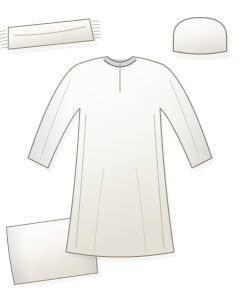
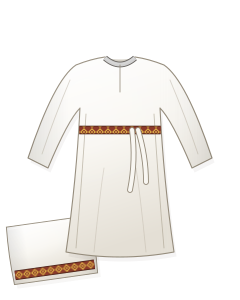
Cham Muslim men wear a white achuba or korong robe to the ankle and a white sarong, sometimes with a long white head cloth for worship. Islam has no seasonal liturgical colour system.
Acar clergy shave their heads, wear white and stay in the Sang Magik mosque to fast and recite scripture. Families bring rice to offer.
Mourning and avoided colours
The body is washed and wrapped in plain white cloth, three sheets for men and five for women. Mourning lasts three days. A widow observes iddah for four months and ten days. There is no prescribed mourning colour, only avoidance of jewellery and decorated clothing.
IIRanks
Sunni Islam has no central church and no clergy ordained in the Christian sense. Imams, Khatibs and Muezzins are chosen by the community for their learning and character. Ulama and Muftis gain standing through learning and receive an ijazah from their teachers. Vietnam has two Cham branches. Cham Islam (An Giang, Hồ Chí Minh City) is self governed by each mosque and by community Representative Boards. Cham Bani (Ninh Thuận, Bình Thuận) has its own Acar clergy class and a Council of Senior Clergy.
- 1Ulama (scholars) and Mufti (jurist who issues fatwas)ʿulamāʾ (علماء), muftī (مفتي)
- 2Imam (Cham Islam)imām (إمام)
- 3Khatib (Cham say Khotib, Katip)khaṭīb (خطيب)
- 4Muezzin (Cham usually say Bilal)muʾadhdhin (مؤذن)
- 5Hakim (Hakem board) and Tuônḥākim (حاكم)
- 1Po Gru, senior cleric (Cham Bani)Po Gru (Gru, chữ Chăm ꨈꨴꨭ)
- 2Imâm (Cham Bani)Imâm
- 3Katip (Cham Bani)Katip, Khotip
- 4Mâdin (Cham Bani)Madin
- 5Acar, entry rank (Jamaah) (Cham Bani)Acar (ꨀꨌꩉ), gốc Phạn ācārya
- 1Ulama (scholars) and Mufti (jurist who issues fatwas) ʿulamāʾ (علماء), muftī (مفتي) · Ulama, Mufti
Not an ordained rank. The Ulama are scholars who preserve and interpret doctrine and law. A Mufti is a qualified jurist who gives a non binding legal opinion (fatwa). Standing comes from learning and the teacher's ijazah licence. No source found on a sitting Mufti in the Cham community of Vietnam.
- 2Imam (Cham Islam) imām (إمام) · Imam
Leads prayer. Chosen by the community for knowledge of the Qur'an and Sunnah and for character, not hereditary and not ordained. Among the Cham these are the teachers who lead the service.
- 3Khatib (Cham say Khotib, Katip) khaṭīb (خطيب) · Khatib
Delivers the khutbah at Friday and Eid prayers. Usually the Imam himself, but may be someone else.
- 4Muezzin (Cham usually say Bilal) muʾadhdhin (مؤذن) · Muezzin
Gives the azan for the five prayers. Chosen for character and a good voice. The name Bilal comes from Bilal ibn Rabah, the first muezzin. No official Vietnamese source found confirming Bilal as the title of the post in Cham mosques.
- 5Hakim (Hakem board) and Tuôn ḥākim (حاكم) · Hakim (mosque community head), Quran teacher
The Hakim heads the elected self governing board of the mosque community and handles the common affairs of the jamaah. The Tuôn (Tuân) teaches Qur'an reading. Sources say these roles in Cham Islam do not form a rigid class as in Bani.
- 1Po Gru, senior cleric (Cham Bani) Po Gru (Gru, chữ Chăm ꨈꨴꨭ) · Chief cleric of Bani
The highest rank of Bani clergy. Spiritual leader of a village or mosque, chosen by community consensus.
- 2Imâm (Cham Bani) Imâm · Imam
Leads rituals and is versed in the Qur'an. One source says about 15 years of study are needed.
- 3Katip (Cham Bani) Katip, Khotip · Khatib
Preaches scripture, gives the Friday sermon.
- 4Mâdin (Cham Bani) Madin · Madin (ritual functionary)
Cleric who performs general ritual duties.
- 5Acar, entry rank (Jamaah) (Cham Bani) Acar (ꨀꨌꩉ), gốc Phạn ācārya · Acar
The entry rank. Today the word Acar is also the general name for all Bani clergy. The clergy recite scripture and perform rites on behalf of believers.
Followers: Muslims. The Cham Bani call believers Bani (meaning followers of the faith).. There are no formal grades of believers. Those who have made the pilgrimage to Mecca are honoured as Haji or Hajah. Bani distinguishes Acar clergy from ordinary believers (Jamaah).
IIIForms of address
| Rank | Spoken address | In writing | Self reference | Original term |
|---|---|---|---|---|
| Imam | Addressed as "Ông Imam" (Mr Imam) or "Thầy Imam" (Teacher Imam) | Written as "Imam" with the name, or "ông Imam" (Mr Imam) with the name | no source found | Imām |
| Those who have made the pilgrimage to Mecca | Addressed as "Haji" (men) or "Hajah" (women) | Written as "Haji" with the name, for example Haji Jaky (Head of the An Giang Muslim Community Representative Board) | no source found | Ḥājj, Hajji |
| Cham Bani clergy | Addressed as "Ông Acar" (Mr Acar), "Po Acar" or "Po Gru" (Po is an honorific) | Written as "Po Acar" or "Cả sư Po Gru" (Senior Cleric Po Gru) | no source found | Po (honorific), Acar, Gru |
IVVestments by rank
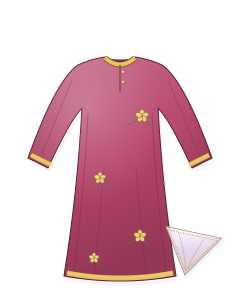
Flat drawings made from the descriptions in the sources, with no people shown. Colours are approximate.

VLine of succession
Islam has no central church. Sunnis recognise the four Rashidun Caliphs and then the caliphal dynasties. The caliphate was abolished in 1924 and there is now no common head. Shia Muslims follow the line of Imams descended from the Prophet. Twelvers believe the twelfth Imam is in occultation and the marja lead in his place. Nizari Ismailis have a present Imam, the Aga Khan. In parallel, the schools of law are passed on through learning from teacher to student.
The Prophet and the Caliphs (Sunni)
- c. 570 to 632The Prophet Muhammad مُحَمَّد
The final prophet in Islamic belief, who received the Qur'an and founded the first Muslim community at Medina.
- #1 · c. 573 to 634, Caliph 632 to 634Abu Bakr al-Siddiq أَبُو بَكْر ٱلصِّدِّيق
First Rightly Guided Caliph in Sunni reckoning, companion and father in law of the Prophet.
- #2 · c. 584 to 644, Caliph 634 to 644Umar ibn al-Khattab عُمَر بْن ٱلْخَطَّاب
Second Caliph, expanded the state and instituted the Hijri calendar.
- #3 · c. 576 to 656, Caliph 644 to 656Uthman ibn Affan عُثْمَان بْن عَفَّان
Third Caliph, commissioned the standard codex of the Qur'an.
- #4 · c. 600 to 661, Caliph 656 to 661Ali ibn Abi Talib عَلِيّ بْن أَبِي طَالِب
Fourth Caliph for Sunnis and first Imam for Shia, cousin and son in law of the Prophet.
- 661 to 750, 750 to 1258 (in Cairo until 1517)The Umayyad and Abbasid Caliphates ٱلْخِلَافَة ٱلْأُمَوِيَّة، ٱلْخِلَافَة ٱلْعَبَّاسِيَّة
After the Rashidun the caliphate became dynastic, beginning with Muawiya I.
- 1868 to 1944, Caliph 1922 to 1924Abdulmecid II, the last Caliph عبد المجيد الثاني
Last Ottoman Caliph, the office abolished by the Turkish parliament on 3 March 1924.
- Born 1946, Grand Imam since 2010No Caliph, Grand Imam of al-Azhar Ahmed el-Tayeb (representative today) أحمد الطيب
Sunni Islam has no single head today. The Grand Imam of al-Azhar is an authoritative Sunni voice without universal jurisdiction.
The Twelve Imams (Twelver Shia) and the marja
- #1 · c. 600 to 661Imam Ali ibn Abi Talib عَلِيّ بْن أَبِي طَالِب
First Imam, believed by Shia to be the Prophet's designated successor.
- #2 · 624 to 670Imam Hasan ibn Ali ٱلْحَسَن بْن عَلِيّ
Second Imam, grandson of the Prophet.
- #3 · 626 to 680Imam Husayn ibn Ali ٱلْحُسَيْن بْن عَلِيّ
Third Imam, martyred at Karbala in 680, commemorated on Ashura.
- #4 · 659 to 713Imam Ali Zayn al-Abidin عَلِيّ بْن ٱلْحُسَيْن زَيْن ٱلْعَابِدِين
Fourth Imam, survivor of Karbala, author of al-Sahifa al-Sajjadiyya.
- #5 · 677 to 732Imam Muhammad al-Baqir مُحَمَّد ٱلْبَاقِر
Fifth Imam, developed Shia jurisprudence and hadith scholarship.
- #6 · 702 to 765Imam Ja'far al-Sadiq جَعْفَر ٱلصَّادِق
Sixth Imam, founder of the Ja'fari school, teacher of Sunni scholars as well.
- #7 · 745 to 799Imam Musa al-Kazim مُوسَىٰ ٱلْكَاظِم
Seventh Twelver Imam, point where the Ismaili line diverges.
- #8 · 766 to 818Imam Ali al-Rida عَلِيّ ٱلرِّضَا
Eighth Imam, entombed at Mashhad.
- #9 · 811 to 835Imam Muhammad al-Jawad مُحَمَّد ٱلْجَوَاد
Ninth Imam, became Imam as a child.
- #10 · 828 to 868Imam Ali al-Hadi عَلِيّ ٱلْهَادِي
Tenth Imam, kept under watch in Samarra.
- #11 · 846 to 874Imam Hasan al-Askari ٱلْحَسَن ٱلْعَسْكَرِيّ
Eleventh Imam.
- #12 · Born 869, Minor Occultation 874, Major Occultation 941Imam Muhammad al-Mahdi مُحَمَّد ٱلْمَهْدِيّ
Twelfth Imam, believed by Twelvers to be in occultation and to return.
- From 941 to the presentThe Major Occultation and the marja (representative) مَرْجِع ٱلتَّقْلِيد
During the occultation, jurists lead the community, the most senior called marja. They are not successors of the Imam.
- 1781 to 1864Morteza Ansari مرتضى الأنصاري
Regarded as the first widely recognised sole marja of the Shia world.
- 1899 to 1992Abu al-Qasim al-Khoei أبو القاسم الخوئي
Leading marja of Najaf, teacher of Ali al-Sistani.
- Born 1930, marja since 1992Ali al-Sistani (representative today) علي الحسيني السيستاني
Most widely followed marja today, based in Najaf, active in 2026. Other marja exist in parallel.
Full list of 12 holders
- 1Imam Ali ibn Abi Talibc. 600 to 661
- 2Imam Hasan ibn Ali624 to 670
- 3Imam Husayn ibn Ali626 to 680
- 4Imam Ali Zayn al-Abidin659 to 713
- 5Imam Muhammad al-Baqir677 to 732
- 6Imam Ja'far al-Sadiq702 to 765
- 7Imam Musa al-Kazim745 to 799
- 8Imam Ali al-Rida766 to 818
- 9Imam Muhammad al-Jawad811 to 835
- 10Imam Ali al-Hadi828 to 868
- 11Imam Hasan al-Askari846 to 874
- 12Imam Muhammad al-MahdiBorn 869, Minor Occultation 874, Major Occultation 941
Nizari Ismaili Imams (Aga Khan)
- #1 · c. 600 to 661Imam Ali ibn Abi Talib عَلِيّ بْن أَبِي طَالِب
First Imam in the Nizari Ismaili count.
- #2 · 626 to 680Imam Husayn ibn Ali ٱلْحُسَيْن بْن عَلِيّ
Nizaris count Husayn as second Imam, Hasan as an entrusted Imam.
- #5 · 702 to 765Imam Ja'far al-Sadiq جَعْفَر ٱلصَّادِق
Imam shared by Twelvers and Ismailis before the split.
- #6 · c. 719 to 762Imam Isma'il ibn Ja'far إِسْمَاعِيل بْن جَعْفَر
Recognised by Ismailis as successor of Ja'far al-Sadiq, eponym of the Ismailis.
- #19 · 1045 to 1095Imam Nizar ibn al-Mustansir نِزَار بْن ٱلْمُسْتَنْصِر
Point of the Nizari and Musta'li split after the Fatimids.
- #46 · 1804 to 1881Aga Khan I (Hasan Ali Shah) حسن علی شاه
First Imam to bear the title Aga Khan.
- #48 · 1877 to 1957Aga Khan III سلطان محمد شاه
48th Imam, reformer and statesman.
- #49 · 1936 to 2025, Imam 1957 to 2025Aga Khan IV (Karim) شاه كريم الحسيني
49th Imam, founder of the Aga Khan Development Network, died 4 February 2025.
- #50 · Born 1971, Imam since 4 February 2025Aga Khan V (Rahim) رحیم آقاخان
Current 50th Imam of the Nizari Ismailis.
Schools of law: Sunni, Shia, Ibadi
- #Hanafi · 699 to 767Abu Hanifa أَبُو حَنِيفَة ٱلنُّعْمَان
Founder of the Hanafi school, dominant in Turkey, South and Central Asia.
- #Maliki · 711 to 795Malik ibn Anas مَالِك بْن أَنَس
Founder of the Maliki school, author of al-Muwatta, prevalent in North and West Africa.
- #Shafi'i · 767 to 820al-Shafi'i مُحَمَّد بْن إِدْرِيس ٱلشَّافِعِيّ
Founder of the Shafi'i school and of usul al-fiqh. Followed by Cham Muslims in Vietnam and most of Southeast Asia.
- #Hanbali · 780 to 855Ahmad ibn Hanbal أَحْمَد بْن حَنْبَل
Founder of the Hanbali school, prevalent in the Arabian Peninsula.
- #Ja'fari · 702 to 765Imam Ja'far al-Sadiq جَعْفَر ٱلصَّادِق
The Twelver Shia Ja'fari school bears his name.
- #Zaydi · 695 to 740Imam Zayd ibn Ali زَيْد بْن عَلِيّ
Imam of the Zaydi Shia, prevalent in Yemen.
- #Ibadi · Died c. 711 to 726Jabir ibn Zayd جَابِر بْن زَيْد
Regarded as founder of the Ibadi school, prevalent in Oman.
Islam in Vietnam: Cham Islam and Cham Bani
- 1038 to 1039Kufic script gravestones at Phan Rang
Gravestones of a Muslim merchant, early evidence of Islam in Champa.
- King of Panduranga c. 1627 to 1651Po Rome
Cham king linked by legend to Islam, worshipped at the Po Rome tower, era when Bani took shape.
- Founded 1960Vietnam Cham Muslim Association
Cham Islam association in Saigon, with a council of mosque heads founded 1966 in Chau Doc, both until 1975.
- Founded 1992Muslim Community Representative Board of Hồ Chí Minh City
First Islamic body recognised by the state after 1975.
- Founded 2004Muslim Community Representative Board of An Giang
Body of the Cham Islam community in An Giang.
- Recognised 2007Council of Senior Clergy of Bani Islam of Ninh Thuận
Organisation of Cham Bani clergy, led by Po Gru.
- Chairman for the 2023 to 2028 termSenior Cleric Châu Minh Hương
Chair of the Ninh Thuan Bani Clerics Council elected 12 July 2023, current Bani leader.
- Head of the Board, named in a report of 25 May 2026Mr Machdares Samael
Current head of the HCMC Islamic Community Representative Board, term VII (2025 to 2030).
A venerated figure: the library shows no portrait, only the name inside a round seal.
VIOrdination and transmission
Sunni Islam has no ordination or chain of consecration. Learning passes along chains of teachers and students, and the teacher grants an ijazah licensing the student to teach and give legal opinions. Imams, Khatibs and Muezzins are chosen by the community. Cham Bani differs: it has an Acar clergy class rising in rank from Acar to Po Gru, and the clergy perform rites on behalf of believers.
- Studying doctrine and receiving an ijazah from a teacherRequirement: Many years of study with a renowned teacherRite: No ordination rite
- Chosen by the community as Imam, Khatib or MuezzinRequirement: Knowledge of the Qur'an and Sunnah, good character, a senior MuslimRite: no source found on an installation rite in Cham Islam mosques
- Cham Bani: entering the Acar rank, then rising to Mâdin, Katip, Imâm and Po GruRequirement: Scriptural study. An Imâm needs about 15 years. A Po Gru is chosen by community consensusRite: no source found describing the rank raising ceremony in detail
VIIWhere the sources disagree
- Green: sources only call it a traditionally associated colour. No source calls it the official colour of the faith. The old data in mau-sac.json gave the basis 'green is the colour of the faith'. It should be corrected to 'green is the traditional colour linked to Paradise'.
- The old basis mentioned 'gold temple domes'. No source found for dome colours at Cham mosques in Vietnam.
- Name and status of Bani: the Council of Senior Clergy of Bani Islam of Ninh Thuận (2020 report) says Bani are simply believers of the same Islam. Some authors call it Awal Islam or Bani Awal, and some state documents treat it as a separate religion. Both views should be presented.
- The order of Bani ranks agrees across sources (Acar, Mâdin, Katip, Imâm, Po Gru), but some sources call the first rank Jamaah and others Acar Jamaat.
- The office of Mufti and the use of Bilal for the caller to prayer in Cham Islam mosques: no official Vietnamese source found.
- Carpet and mihrab colours in Vietnamese mosques: no source found, no colour assigned.
- Comparison with mau-that.json: the wall colour #F4F1EA matches the white marble walls of the Đông Du mosque. The tones #2E6E5A and #1E8C7E (teal tiles) are plausible, but the old source does not record tile colours in Vietnamese mosques. Carpets and gold calligraphy have no source for a specific place of worship.
- Sunnis and Shia differ over who succeeded the Prophet. The page records both without ranking either as more correct.
- The list of Nizari Ismaili Imams has 50 generations. Other Ismaili lines (the Dawoodi Bohra follow the Da'i al-Mutlaq) and the Zaydis have their own lines. Only the main milestones are given here. See danh_sach_day_du_url.
- Ali ibn Abi Talib appears in both the line of Caliphs (fourth) and the line of Imams (first).
- The Shia marja are not successors of the Imam and are listed as representative figures. The Commons image of Ali al-Sistani has an uncertain licence and is not used.
- Every Caliph and Imam is marked sacred as required, including the last Ottoman Caliph, so no images are attached.
- Po Rome is marked sacred because the Cham worship him as a deity at the Po Rome tower. His link to Islam is only legendary.
- Status of Bani: the Council of Senior Bani Clergy says Bani are Muslims, while some documents treat it as a separate religion. After the 2025 provincial merger Ninh Thuận became part of Khánh Hòa. No source found on the Council's new name.
- No list found of earlier Heads of the Muslim Community Representative Board of Hồ Chí Minh City. The name of Mr Machdares Samael comes from a Tuổi Trẻ report of 25 May 2026. The article on the Seventh Congress does not name the Head.
VIIISources
77 sources
- https://en.wikipedia.org/wiki/Green_in_Islam
- https://www.researchgate.net/publication/292100055_Is_green_the_color_of_Islam_Religious_symbolism_and_political_connotations_of_the_green_color_in_Islam
- https://en.wikipedia.org/wiki/Islamic_funeral
- https://en.wikipedia.org/wiki/Mihrab
- https://en.wikipedia.org/wiki/Imam
- https://en.wikipedia.org/wiki/Khatib
- https://en.wikipedia.org/wiki/Muezzin
- https://en.wikipedia.org/wiki/Mufti
- https://en.wikipedia.org/wiki/Ulama
- https://en.wikipedia.org/wiki/Hajji
- https://itourvn.com/blog/musulman-mosque-in-ho-chi-minh-city/
- https://dantocmiennui.baotintuc.vn/thanh-duong-hoi-giao-mubarak-o-an-giang-di-tich-lich-su-van-hoa-quoc-gia-post301691.html
- https://nhandan.vn/van-hoa-trong-trang-phuc-truyen-thong-dan-toc-cham-islam-post728552.html
- https://dantocmiennui.baotintuc.vn/doc-dao-trang-phuc-chuc-sac-dan-toc-cham-post2891.html
- https://dantocphattrien.vietnamnet.vn/net-dep-van-hoa-cua-nguoi-cham-bani-trong-thang-ramuvan-63870.html
- https://petruspaulusthong.wordpress.com/2017/02/10/sinh-hoat-cua-nguoi-cham-ninh-thuan-trong-boi-canh-cac-di-tich/
- https://chamstudies.wordpress.com/2016/01/11/hoi-giao-bani-cua-nguoi-cham-o-viet-nam/
- https://champa.one/article/693
- https://champa.one/article/264
- https://champa.one/article/313
- https://nghiencuulichsu.com/2013/10/24/su-phat-trien-cua-dao-islam-o-nguoi-cham-thuoc-hai-tinh-ninh-thuan-va-binh-thuan/
- https://thanhtra.com.vn/ton-giao-856132D0B/ban-dai-dien-cong-dong-nguoi-cham-islam-cau-noi-giua-cong-dong-va-chinh-quyen-754A9D3B.html
- https://vanhoatamlinh.com/tin-nguong-cua-nguoi-cham-hoi-giao-tai-tp-ho-chi-minh/
- https://en.wikipedia.org/wiki/Abbasid_Caliphate
- https://en.wikipedia.org/wiki/Abdulmejid_II
- https://en.wikipedia.org/wiki/Abu_Bakr
- https://en.wikipedia.org/wiki/Abu_Hanifa
- https://en.wikipedia.org/wiki/Abu_al-Qasim_al-Khoei
- https://en.wikipedia.org/wiki/Aga_Khan_I
- https://en.wikipedia.org/wiki/Aga_Khan_III
- https://en.wikipedia.org/wiki/Aga_Khan_IV
- https://en.wikipedia.org/wiki/Aga_Khan_V
- https://en.wikipedia.org/wiki/Ahmad_ibn_Hanbal
- https://en.wikipedia.org/wiki/Ahmed_el-Tayeb
- https://en.wikipedia.org/wiki/Al-Shafi'i
- https://en.wikipedia.org/wiki/Ali
- https://en.wikipedia.org/wiki/Ali_al-Hadi
- https://en.wikipedia.org/wiki/Ali_al-Rida
- https://en.wikipedia.org/wiki/Ali_al-Sajjad
- https://en.wikipedia.org/wiki/Ali_al-Sistani
- https://en.wikipedia.org/wiki/Caliphate
- https://en.wikipedia.org/wiki/Grand_Imam_of_al-Azhar
- https://en.wikipedia.org/wiki/Hasan_al-Askari
- https://en.wikipedia.org/wiki/Hasan_ibn_Ali
- https://en.wikipedia.org/wiki/Husayn_ibn_Ali
- https://en.wikipedia.org/wiki/Islam_in_Vietnam
- https://en.wikipedia.org/wiki/Isma'il_ibn_Ja'far
- https://en.wikipedia.org/wiki/Ja'far_al-Sadiq
- https://en.wikipedia.org/wiki/Ja'fari_jurisprudence
- https://en.wikipedia.org/wiki/Jabir_ibn_Zayd
- https://en.wikipedia.org/wiki/List_of_Isma'ili_imams
- https://en.wikipedia.org/wiki/List_of_caliphs
- https://en.wikipedia.org/wiki/Madhhab
- https://en.wikipedia.org/wiki/Major_Occultation
- https://en.wikipedia.org/wiki/Malik_ibn_Anas
- https://en.wikipedia.org/wiki/Marja'
- https://en.wikipedia.org/wiki/Morteza_Ansari
- https://en.wikipedia.org/wiki/Muhammad
- https://en.wikipedia.org/wiki/Muhammad_al-Baqir
- https://en.wikipedia.org/wiki/Muhammad_al-Jawad
- https://en.wikipedia.org/wiki/Muhammad_al-Mahdi
- https://en.wikipedia.org/wiki/Musa_al-Kazim
- https://en.wikipedia.org/wiki/Nizar_ibn_al-Mustansir
- https://en.wikipedia.org/wiki/Po_Rome
- https://en.wikipedia.org/wiki/Rashidun_Caliphate
- https://en.wikipedia.org/wiki/The_Twelve_Imams
- https://en.wikipedia.org/wiki/Umar
- https://en.wikipedia.org/wiki/Umayyad_Caliphate
- https://en.wikipedia.org/wiki/Uthman
- https://en.wikipedia.org/wiki/Zayd_ibn_Ali
- https://halalacademy.vn/dai-hoi-dai-bieu-cong-dong-hoi-giao-tp-hcm-nhiem-ky-vii/
- https://tuoitre.vn/lanh-dao-tp-hcm-chuc-mung-cong-dong-hoi-giao-nhan-dai-le-raya-idil-adha-2026052512252515.htm
- https://vi.wikipedia.org/wiki/H%E1%BB%93i_gi%C3%A1o_t%E1%BA%A1i_Vi%E1%BB%87t_Nam
- https://vietnamnet.vn/16-ton-giao-duoc-cong-nhan-tai-viet-nam-co-mot-so-duoc-it-nguoi-biet-den-2422958.html
- https://www.sistani.org/english/
- https://www.stimson.org/2026/navigating-the-succession-to-grand-ayatollah-sistani/
- https://www.vietnamplus.vn/ninh-thuan-dai-hoi-lan-thu-iv-hoi-dong-su-ca-hoi-giao-bani/874565.vnp
?Quick Questions
What is the principal colour of Islam?
Green (akhḍar (أخضر)), #0F6B4F. Green is the colour named with Paradise in the Qur'an and widely used in the Muslim world. It also matches the Jamia Al-Muslimin Mosque in Hồ Chí Minh City. The page should describe it as a traditional colour, not an official colour of the faith.
How many ranks does Islam have?
The library records 10 ranks, from highest to lowest: Ulama (scholars) and Mufti (jurist who issues fatwas), Imam (Cham Islam), Khatib (Cham say Khotib, Katip), Muezzin (Cham usually say Bilal), Hakim (Hakem board) and Tuôn, Po Gru, senior cleric (Cham Bani), Imâm (Cham Bani), Katip (Cham Bani), Mâdin (Cham Bani), Acar, entry rank (Jamaah) (Cham Bani).
Who leads Islam today?
In the line of The Prophet and the Caliphs (Sunni), the most recent milestone is No Caliph, Grand Imam of al-Azhar Ahmed el-Tayeb (representative today) (Born 1946, Grand Imam since 2010). Sunni Islam has no single head today. The Grand Imam of al-Azhar is an authoritative Sunni voice without universal jurisdiction.