
IColours
Colour used for this page of the library: White #FFFFFF / #C8102E. Every colour code is approximate, since most paths name their colours without publishing codes.
Principal colour the colour of the path
The stripe of the Jain flag for the Arihant (one who has conquered all passions) and the vow of non-violence (ahimsa).
For the Siddha (liberated soul) and the vow of truthfulness (satya).
For the Acharya and the vow of non-stealing (achaurya).
For the Upadhyaya (teacher of scripture) and the vow of chastity (brahmacharya).
For the Sadhu and Sadhvi (monks and nuns) and the vow of non-possession (aparigraha).
Place of worship real sanctuaries
Ritual colours by occasion and season
The five venerable beings, Pañca Parameṣṭhi.
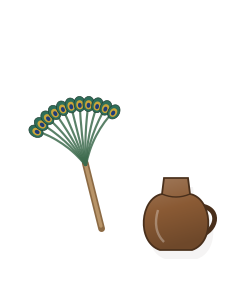
The renunciant gives up possessions, receives the rajoharan broom and puts on white robes.
no source found
Mourning and avoided colours
No Jain source was found that specifies a mourning colour or a forbidden colour.
IIRanks
Jainism has no central church. The two major branches are Digambara (sky-clad, male monks wear no clothing) and Svetambara (white-clad, monks wear white), and Svetambara further includes the Murtipujaka, Sthanakvasi and Terapanthi. Monastics live in orders (sangh, gaccha) led by an Acharya.
- 1Acharya (head of an order)आचार्य (ācārya), Svetambara thường thêm danh hiệu Suri
- 2Elacharya (Digambara only)एलाचार्य
- 3Upadhyayaउपाध्याय (upādhyāya)
- 4Panyas, Gani (Svetambara only)पंन्यास, गणि
- 5Sadhu, Muni (monk)साधु, मुनि
- 5Sadhvi (Svetambara), Aryika (Digambara)साध्वी, आर्यिका
- 6Ailaka, Kshullaka (Digambara only)ऐलक, क्षुल्लक
- 1Acharya (head of an order) आचार्य (ācārya), Svetambara thường thêm danh hiệu Suri · Acharya, head of an order
Leads an order of monastics (sangh). The third of the five venerable beings of the Namokar mantra.
- 2Elacharya (Digambara only) एलाचार्य · Elacharya
The grade below Acharya in the Digambara hierarchy.
- 3Upadhyaya उपाध्याय (upādhyāya) · Preceptor, teacher
Teaches scripture to monks and nuns. The fourth of the Namokar mantra.
- 4Panyas, Gani (Svetambara only) पंन्यास, गणि · Panyas, Gani
Intermediate grades. A Ganivarya leads a small group of monks within a samudaay. Svetambara also has the title pravartak.
- 5Sadhu, Muni (monk) साधु, मुनि · Monk
A monastic who has taken all five great vows. The fifth of the Namokar mantra.
- 5Sadhvi (Svetambara), Aryika (Digambara) साध्वी, आर्यिका · Nun
Nun. Digambara has Ganini Aryika Pramukha, Ganini Aryika, Aryika, then Kshullika.
- 6Ailaka, Kshullaka (Digambara only) ऐलक, क्षुल्लक · Junior ascetics
Ascetic grades below muni, still keeping one or two cloths.
Followers: Jains. Laymen are shravaka, laywomen are shravika.. The fourfold community of sadhu, sadhvi, shravaka and shravika. A source for the concept of the fourfold community was not cited in this round.
IIIForms of address
| Rank | Spoken address | In writing | Self reference | Original term |
|---|---|---|---|---|
| Svetambara monks | Gujarati Jains say Maharaj Saheb, e.g. Namramuni Maharaj Saheb. Vietnamese believers: no source found, as there is no Vietnamese Jain community. | Monastic name with Maharaj Saheb, or Acharya, or Suri for an Acharya | no source found | महाराज साहेब |
| Digambara nuns | Mataji (per the Digambara hierarchy) | Aryika with name | no source found | माताजी |
| Acharya, Upadhyaya, Muni | Addressed by the grade title with the name. No sufficiently reliable source found for the specific greeting. | Acharya, Upadhyaya, Muni with name | no source found | आचार्य, उपाध्याय, मुनि |
IVVestments by rank
Flat drawings made from the descriptions in the sources, with no people shown. Colours are approximate.




VLine of succession
Jainism reveres 24 Tirthankaras as sacred, with Mahavira the last. After him the teaching passed through the Ganadharas, then split into two major branches, Digambara and Svetambara. Each branch divides into many parallel monastic orders (sangh, gaccha), each with its own Acharya. There is no single head of the whole religion. Only the Terapanth keeps the rule of one Acharya for the entire sect.
The 24 Tirthankaras
- #1 · mythological ageRishabhanatha (Adinatha) ऋषभनाथ (Ṛṣabhanātha)
First Tirthankara of the present cosmic age.
- #16 · mythological ageShantinatha शान्तिनाथ (Śāntinātha)
Sixteenth Tirthankara, widely venerated as bringer of peace.
- #19 · mythological ageMallinatha मल्लिनाथ (Mallinātha)
Nineteenth Tirthankara, female according to Svetambaras.
- #22 · mythological ageNeminatha (Arishtanemi) नेमिनाथ (Neminātha)
Twenty-second Tirthankara, associated with Mount Girnar.
- #23 · c. 9th to 8th centuries BCEParshvanatha पार्श्वनाथ (Pārśvanātha)
Twenty-third Tirthankara, widely considered the earliest historical one.
- #24 · 599 to 527 BCE by tradition, scholars place him laterMahavira (Vardhamana) महावीर (Mahāvīra), वर्धमान
Twenty-fourth and last Tirthankara, source of all present Jain lineages.
Full list of 24 holders
- 1Rishabhanatha (Adinatha)mythological time in Jain cosmology
- 2Ajitanathamythological time in Jain cosmology
- 3Sambhavanathamythological time in Jain cosmology
- 4Abhinandananathamythological time in Jain cosmology
- 5Sumatinathamythological time in Jain cosmology
- 6Padmaprabhamythological time in Jain cosmology
- 7Suparshvanathamythological time in Jain cosmology
- 8Chandraprabhamythological time in Jain cosmology
- 9Pushpadanta (Suvidhinatha)mythological time in Jain cosmology
- 10Shitalanathamythological time in Jain cosmology
- 11Shreyamsanathamythological time in Jain cosmology
- 12Vasupujyamythological time in Jain cosmology
- 13Vimalanathamythological time in Jain cosmology
- 14Anantanathamythological time in Jain cosmology
- 15Dharmanathamythological time in Jain cosmology
- 16Shantinathamythological time in Jain cosmology
- 17Kunthunathamythological time in Jain cosmology
- 18Aranathamythological time in Jain cosmology
- 19Mallinathamythological time in Jain cosmology
- 20Munisuvratamythological time in Jain cosmology
- 21Naminathamythological time in Jain cosmology
- 22Neminatha (Arishtanemi)mythological time in Jain cosmology
- 23Parshvanathac. 9th to 8th centuries BCE
- 24Mahavira (Vardhamana)599 to 527 BCE by tradition
After Mahavira: Ganadharas, Kevalins, Shrutakevalins
- #Ganadhara 1 · 607 to 515 BCE by traditionGautama Swami (Indrabhuti) गौतम स्वामी, इन्द्रभूति
Chief of Mahavira's eleven Ganadharas, venerated in temples.
- #Ganadhara 5 · 607 to 507 BCE by traditionSudharma Swami सुधर्मा स्वामी
Fifth Ganadhara, first head of the order after Mahavira, transmitter of the Agamas.
- 543 to 463 BCE by traditionJambu Swami जम्बू स्वामी
Disciple of Sudharma, regarded as the last omniscient being of this age.
- died c. 3rd century BCEBhadrabahu भद्रबाहु
Last Shrutakevali, revered by both sects, linked with the migration to Shravanabelagola.
- 3rd century BCESthulabhadra स्थूलभद्र
Led the Pataliputra recension in Svetambara tradition.
- tradition gives 79 or 82 CESplit into Digambara and Svetambara दिगम्बर, श्वेताम्बर
Traditional date of the schism between sky-clad and white-clad orders.
- c. 454 or 466 CEDevarddhigani Kshamashramana, council of Valabhi देवर्द्धिगणि क्षमाश्रमण
Presided over the Valabhi council that wrote down the Svetambara canon.
Digambara: principal Acharyas to the present
- c. 2nd to 8th centuries, dating disputedAcharya Kundakunda आचार्य कुन्दकुन्द
Foremost Digambara teacher, invoked right after Mahavira and Gautama.
- c. 2nd to 5th centuriesAcharya Umasvati (Umaswami) उमास्वाति
Author of the Tattvartha Sutra, accepted by both sects.
- 9th centuryAcharya Jinasena जिनसेन
Author of the Adi Purana.
- 10th centuryAcharya Nemichandra Siddhanta Chakravarti नेमिचन्द्र
Author of Gommatsara, linked to the Gommateshwara statue.
- 1872 to 1955Acharya Shantisagar आचार्य शान्तिसागर
Revived the Digambara muni tradition in modern times.
- 1891 to 1973Acharya Gyansagar आचार्य ज्ञानसागर
Guru of Vidyasagar.
- 10/10/1946 to 18/2/2024, Acharya from 1972Acharya Vidyasagar आचार्य विद्यासागर
Leader of the largest modern Digambara order, died by sallekhana in 2024.
- born 27/10/1958, Acharya from 16/4/2024Acharya Samaysagar आचार्य समयसागर
Successor of Vidyasagar since April 2024. Digambara has many parallel orders.
Svetambara Murtipujaka: principal Acharyas
- 8th centuryAcharya Haribhadra Suri हरिभद्र सूरि
Major philosopher and commentator.
- 1088 to 1173Acharya Hemachandra आचार्य हेमचन्द्र
Polymath, teacher of King Kumarapala.
- 1527 to 1596Acharya Hiravijaya Suri हीरविजय सूरि
Tapa Gaccha leader at Akbar's court.
- 1624 to 1688Upadhyaya Yashovijaya यशोविजय
Great logician of the Svetambara tradition.
- 1837 to 1896Acharya Vijayanandsuri (Atmaramji) विजयानन्दसूरि (आत्मारामजी)
Revived the Svetambara mendicant order in the 19th century.
- presentMany parallel Gacchadhipatis today गच्छाधिपति
No single head. Each gaccha and samudaya has its own leader.
Svetambara Sthanakvasi: from Lonka Shah to the Shraman Sangh
- 15th centuryLonka Shah लोंकाशाह
Lay reformer who rejected image worship.
- 17th centuryLavaji Rishi and Dharmasingh लवजी ऋषि, धर्मसिंह
Founders of the first Sthanakvasi mendicant lineages.
- #1 · Acharya 1952 to 1962Acharya Atmaramji आचार्य आत्मारामजी
First Acharya of the Shraman Sangh founded at Sadri in 1952.
- #2 · 1900 to 1992, Acharya from 1964Acharya Anand Rishiji आचार्य आनन्द ऋषि
Second Acharya of the Shraman Sangh.
- #3 · Acharya 1992 to 1999Acharya Devendra Muni आचार्य देवेन्द्र मुनि
Third Acharya.
- #4 · Acharya from 1999Acharya Shiv Muni आचार्य शिवमुनि
Fourth and current Acharya of the Shraman Sangh.
Full list of 4 holders
- 1Acharya Atmaramji1952 to 1962
- 2Acharya Anand Rishiji1964 to 1992
- 3Acharya Devendra Muni1992 to 1999
- 4Acharya Shiv Munifrom 1999
Svetambara Terapanth: the eleven Acharyas
- #1 · 1726 to 1803, founded the sect in 1760Acharya Bhikshu आचार्य भिक्षु
Founded Terapanth in 1760 with the rule of one Acharya.
- #4 · Acharya 1851 to 1881Acharya Jeetmal (Jayacharya) जयाचार्य
Framed the order's constitution and the Maryada Mahotsav.
- #9 · 1914 to 1997, Acharya 1936 to 1995Acharya Tulsi आचार्य तुलसी
Launched the Anuvrat movement.
- #10 · 1920 to 2010, Acharya 1995 to 2010Acharya Mahapragya आचार्य महाप्रज्ञ
Philosopher, developer of Preksha meditation.
- #11 · born 13/5/1962, Acharya from 23/5/2010Acharya Mahashraman आचार्य महाश्रमण
Eleventh and current Acharya.
- designated 27/7/2026Yuvacharya Mahavir Kumar युवाचार्य महावीर कुमार
Named designated successor on 27 July 2026.
Full list of 11 holders
- 1Acharya Bhikshu1760 to 1803
- 2Acharya Bharimal1803 to 1821
- 3Acharya Raichand1821 to 1851
- 4Acharya Jeetmal (Jayacharya)1851 to 1881
- 5Acharya Maghraj1881 to 1892
- 6Acharya Manaklal1892 to 1897
- 7Acharya Dalchand1897 to 1909
- 8Acharya Kalugani1909 to 1936
- 9Acharya Tulsi1936 to 1995
- 10Acharya Mahapragya1995 to 2010
- 11Acharya Mahashramanfrom 2010
A venerated figure: the library shows no portrait, only the name inside a round seal.
VIOrdination and transmission
A renunciant takes diksha from an Acharya and joins that Acharya's order. Rising to Upadhyaya and then Acharya depends on scriptural learning and monastic seniority. Digambaras progress from Kshullaka to Ailaka and then Muni.
- Svetambara dikshaRequirement: Giving up family life and possessionsRite: A procession for the renunciant, who gives up possessions, receives the rajoharan broom, puts on white robes and plucks out the hair by hand (keshlonch).
- Rising to Kshullaka, Ailaka, Muni in the Digambara branchRequirement: Keeping ever stricter vows and gradually giving up clothRite: No source found for details of the rite
- Rising to Upadhyaya, then AcharyaRequirement: Scriptural learning and monastic seniorityRite: no source found
VIIWhere the sources disagree
- The old colour in mau-sac.json is green #4A6325, justified as green for non-harm to life. On the Jain flag, non-violence (ahimsa) is the white stripe, while green stands for the Upadhyaya and chastity. The old justification is wrong.
- The last stripe of the flag: Wikipedia says black, Jain Heritage Centres says blue. The Wikipedia page itself notes a contradiction about the colour of the last stripe.
- Order of stripes: Jain Heritage Centres lists red, yellow, white, green, blue from top to bottom. Wikipedia lists white, red, yellow, green, black in the order of the five beings. No original document fixing the order was found.
- The year and body that adopted the flag (often said to be 1974, for the 2,500th anniversary of Mahavira's nirvana) could not be confirmed by a source.
- The hex codes of the five flag colours are estimates. No colour standard for the flag was found.
- The greetings Namostu (Digambara) and Matthaena Vandami (Svetambara) are often mentioned, but no reliable source was found, so they are not included under forms of address.
- mau-that.json records the white marble of Dilwara and Ranakpur (wall #F7F4EE), which matches the sources. The accent #B8862B has no clear basis and may be the colour of aged, yellowed marble.
- Vietnam has no Jain community, so there is no actual Vietnamese form of address.
- Dates of Mahavira: tradition gives 599 to 527 BCE, many scholars place him around 540 to 468 or later.
- The two branches tell different stories of the Digambara and Svetambara split. The year 79 or 82 CE is traditional, not a secure historical date.
- The dating of Kundakunda varies widely between sources, from the 1st century BCE to the 8th century.
- Gautama Swami, Sudharma, Jambu, Bhadrabahu, Sthulabhadra and Kundakunda are marked sacred because they are worshipped or named in the mangala verse with Mahavira. This is a cautious choice under the brief.
- Acharya Tulsi: the Wikipedia table gives his tenure to 1996, but he passed the office to Mahapragya in 1994 to 1995 and died in 1997. Here 1995 is given.
- Shraman Sangh: the Wikipedia page names only Atmaramji, Anand Rishiji and Shiv Muni. Acharya Devendra Muni (third) is taken from the official page of Acharya Shiv Muni. The starting year of Shiv Muni (1999) needs further checking.
- Yuvacharya Mahavir Kumar of the Terapanth was only named on 27/7/2026, with a single news source.
- Svetambara Murtipujakas have no standard list of common Gacchadhipatis, so no full list is given.
- No organised Jain community was found in Vietnam, so no Vietnam line is included.
- No free images of Acharya Samaysagar or Acharya Shiv Muni were found on Commons.
VIIISources
27 sources
- https://en.wikipedia.org/wiki/Jain_flag
- https://www.jainheritagecentres.com/jainism/jain-symbols/jain-flag/
- https://en.wikipedia.org/wiki/Jain_monasticism
- https://jainpedia.org/themes/practices/monks-and-nuns/mendicant-lifestyle/
- https://en.wikipedia.org/wiki/%C5%9Avet%C4%81mbara
- https://en.wikipedia.org/wiki/Digambara_monk
- https://en.wikipedia.org/wiki/Aryika
- https://en.wikipedia.org/wiki/Acharya_(Jainism)
- https://en.wikipedia.org/wiki/Dilwara_Temples
- https://en.wikipedia.org/wiki/Ranakpur_Jain_temple
- https://www.freepressjournal.in/mumbai/mumbai-jain-sadhvi-speaks-on-sadhana-karma-and-bhakti-at-gathering-led-by-spiritual-leader-namramuni-maharaj-saheb-in-bkc
- https://x.com/JainismWay/status/1491647040396623872?lang=en
- https://en.wikipedia.org/wiki/Tirthankara
- https://en.wikipedia.org/wiki/Mahavira
- https://en.wikipedia.org/wiki/Jain_schools_and_branches
- https://en.wikipedia.org/wiki/%C5%9Av%C4%93t%C4%81mbara_Terapanth
- https://en.wikipedia.org/wiki/Acharya_Vidyasagar
- https://digjainwiki.org/wiki/acharya-muni-shri-108-samay-sagarji-maharaj-1958/
- https://pressnote.in/article1511_542449.html
- https://en.wikipedia.org/wiki/Mahashraman
- https://en.wikipedia.org/wiki/Vardhman_Sthanakvasi_Jain_Shravak_Sangh
- https://jainacharya.org/shramansanghiyapadadhikari/
- https://en.wikipedia.org/wiki/Gautama_Swami
- https://en.wikipedia.org/wiki/Sudharma_Swami
- https://en.wikipedia.org/wiki/Kundakunda
- https://en.wikipedia.org/wiki/Hemachandra
- https://en.wikipedia.org/wiki/Shantisagar
?Quick Questions
What is the principal colour of Jainism?
White (श्वेत (śveta)), #FFFFFF. White is supported in three places: the flag stripe for the Arihant and non-violence, the robes of Svetambara monastics and Digambara nuns, and the white marble of the great temples. Since white cannot serve as a text colour, the accent should come from the five flag colours, and the full set of five should be used rather than one alone.
How many ranks does Jainism have?
The library records 7 ranks, from highest to lowest: Acharya (head of an order), Elacharya (Digambara only), Upadhyaya, Panyas, Gani (Svetambara only), Sadhu, Muni (monk), Sadhvi (Svetambara), Aryika (Digambara), Ailaka, Kshullaka (Digambara only).
Who leads Jainism today?
In the line of The 24 Tirthankaras, the most recent milestone is Mahavira (Vardhamana) (599 to 527 BCE by tradition, scholars place him later). Twenty-fourth and last Tirthankara, source of all present Jain lineages.