IOverview
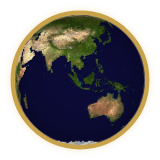
Khmer Theravada Buddhism is the Theravada tradition of the Khmer people of the Mekong Delta. Chanting is in Pali, monks go on alms rounds every morning, and nearly every Khmer village has its temple.
In doctrine and discipline it matches the Theravada of Cambodia, Thailand and Laos. What sets it apart is the temple's close bond with the life of an ethnic minority inside Vietnam. The temple teaches the Khmer script, keeps palm leaf manuscripts, hosts the festivals and settles community affairs.
The 2019 census counted 1,319,652 Khmer in Vietnam. Most are Theravada Buddhists, but there is no reliable separate count of followers.
IIOrigins and History
According to the Can Tho religious affairs office, Buddhism was present in the Mekong Delta by around the 4th century. Sri Lankan style Theravada became the main religion of the Khmer from about the 13th and 14th centuries, as it did in Cambodia. By the late 19th and early 20th centuries almost every Khmer village in the South had its own temple.
- 4th centuryEarliest Buddhist presenceBuddhism is present in the Mekong Delta, according to the Can Tho religious affairs office.
- 13th to 14th c.Theravada becomes the mainstreamSri Lankan style Theravada gradually replaces earlier Buddhist and Brahmanical forms across the Khmer cultural world.
- 1890Thommayut reaches An GiangFounded in Siam in 1833 and brought to Cambodia in 1864, the order is carried into An Giang by Khmer monks.
- 1964Patriotic Monks Solidarity AssociationFounded in the Mekong Delta with the Venerable Thach Som as president.
- 1981Founding the national SanghaThe Venerable Duong Nhon leads the delegation that, with eight other bodies, founds the Vietnam Buddhist Sangha.
- 2006Khmer Theravada Buddhist AcademyEstablished in O Mon, Can Tho. Its first phase was inaugurated on 9 January 2019.
IIITeachings and Distinctive Features
The teaching is Theravada: the Four Noble Truths, the Eightfold Path, and the threefold training of ethics, concentration and wisdom, aimed at arahantship. Temples honour only the Buddha Shakyamuni. The scripture is the Pali Canon, and monks also study Khmer to read translations and commentaries.
The Khmer of southern Vietnam follow two orders. Mahanikaya is the majority. Thommayut has fewer temples, mostly in An Giang, and keeps stricter rules on a few points such as how the bowl is carried and the robe worn. The two share one doctrine and differ in details of discipline and ritual.
Many assume Khmer and Vietnamese temples differ only in architecture. The difference goes much deeper. Khmer temples are Theravada, honour only Shakyamuni, and their monks go on alms rounds, eat before noon and are not required to be vegetarian. Most Vietnamese temples are Mahayana, honour many bodhisattvas, and their monastics are lifelong vegetarians.
IVPractice, Ritual and Daily Life
According to the Can Tho religious affairs office, Khmer boys from about age 12 usually enter the temple for a temporary ordination of at least seven days or three months. Some stay longer, becoming novices and then fully ordained monks who keep 227 rules. The custom is both religious and educational, a time to learn reading and proper conduct before marriage.
Alongside the monks stands the achar, a layman versed in chanting and ritual who leads ceremonies and helps the temple committee manage community affairs. A temple compound usually has a main hall facing east, a sala for gatherings and stupas holding the ashes of village families.
| Festival | Timing | Main features |
|---|---|---|
| Chol Chnam Thmey | Mid April | New Year, offering food to monks, building sand mounds, bathing the Buddha |
| Sene Dolta | Around the 29th of the 8th to the 1st of the 9th lunar month | Festival honouring parents and ancestors at the temple and at home |
| Ok Om Bok | Full moon of the 10th lunar month | Moon offering, floating lanterns, ngo boat races |
| Kathina | After the rains retreat | Lay people offer robes and requisites to the monks |
VOrganisation and Distribution
Khmer monks keep their own traditional offices, such as the Mekon at provincial level and the Anukon at district level, along with officers for discipline and records. This system now runs in parallel with the provincial committees of the Vietnam Buddhist Sangha where Khmer communities are large.
Education has three tiers: Khmer and Pali classes in the temples, six intermediate Pali schools in the provinces, and the Khmer Theravada Buddhist Academy in Can Tho. According to Mat Tran magazine, by the end of 2018 the Academy had graduated 98 monks with bachelor's degrees in Buddhist studies over three cohorts.
| Measure | Figure | Source and year |
|---|---|---|
| Temples | 463 temples, 45 salatel, 1 academy | Can Tho religious affairs office, 2021 |
| Monks | 7,028 in 16 provinces | Can Tho religious affairs office, 2021 |
| Temples and monks, other count | 462 temples, 8,574 monks | Mat Tran magazine, end of 2018 |
| Khmer population | 1,319,652 people | Vietnam census, 2019 |
VIToday
Today Khmer Theravada is a recognised lineage within the Vietnam Buddhist Sangha. The temple remains the centre of village life, and many run Khmer language classes during the summer. Some have become well known destinations, such as the Bat Pagoda and Kh'leang in the former Soc Trang province and Ang Pagoda in the former Tra Vinh province.
The academy in O Mon trains monks to degree level, complementing the traditional classes in the temples. Chol Chnam Thmey, Sene Dolta and Ok Om Bok remain the biggest days of the Khmer year, and the temple stands at the centre of each.
VIISymbol of the Branch
No symbol of its own is recorded with a source for this branch, so the library uses the common symbol of the path.
VIIISub-branches
- Mahanikaya
- Thommayut
IXOther Branches of Buddhism
 Mahayana BuddhismMahāyāna 大乘, the Great VehicleThe largest branch, centred on the bodhisattva ideal of liberating oneself and others.
 Theravada BuddhismTheravāda, the teaching of the eldersThe second largest branch.
 Vajrayana BuddhismVajrayāna, Tibetan rdo rje theg pa, also Mantrayana or Esoteric BuddhismThe branch that uses mantra, mudra and mandala visualisation, with a strong role for the teacher.
 Pure Land Buddhism淨土宗, also called the Lotus School 蓮宗, Japanese JōdoA Mahayana school centred on reciting the name of Amitabha Buddha for rebirth in the Pure Land.
 Chan and Zen Buddhism禪 Chan, Japanese Zen, Korean Seon, Vietnamese Thiền, from Sanskrit dhyānaA Mahayana school that points directly to the mind rather than relying on scripture.Khmer Theravada Buddhism in VietnamTheravāda of the Khmer of southern VietnamThe Theravada tradition of the Khmer people in the Mekong Delta.Uses the common symbol of the pathKhất Sĩ BuddhismĐạo Phật Khất Sĩ Việt Nam, Vietnamese Mendicant BuddhismA Vietnamese lineage founded in the South by Patriarch Minh Đăng Quang around 1944 to 1946.Uses the common symbol of the pathVietnamese (Kinh) TheravadaTheravāda among the Kinh, formerly called Original BuddhismThe Theravada lineage among ethnic Vietnamese, begun at Bửu Quang temple in Thủ Đức in 1938 by monks including Hộ Tông (Vansarakkhita), Thiện Luật, Bửu Chơn and Huệ Nghiêm.Uses the common symbol of the path
XSources
The library cross-checks the sources below. Where they disagree, the page gives both.
- Ban Tôn giáo thành phố Cần Thơ, Đôi nét về Phật giáo Nam tông Khmer ở Nam Bộ, 2021
- Phật giáo Việt Nam, Phật giáo Nam tông Khmer trong sự phát triển của Phật giáo Việt Nam
- Tạp chí Mặt trận, Vị trí, vai trò của Phật giáo Nam tông Khmer ở Tây Nam Bộ
- Báo Nhân Dân, Khánh thành Học viện Phật giáo Nam tông Khmer
- Wikipedia, Khmer Krom (điều tra dân số 2019)
?Quick Questions
How do Khmer temples differ from Vietnamese temples
Khmer temples are Theravada, honour only Shakyamuni, chant in Pali, and their monks go on alms rounds and eat before noon. Most Vietnamese temples are Mahayana, chant in Sino-Vietnamese or Vietnamese, honour bodhisattvas, and their monastics are vegetarian.
Why do Khmer boys become monks
It is the custom of temporary ordination. Boys from about 12 enter the temple for at least seven days or three months to learn the Dharma, reading and good conduct. It is seen as repaying one's parents and as preparation for married life.
Who is the achar
The achar is a layman versed in chanting and ritual, usually a former monk. He leads ceremonies and works with the temple committee on community matters, linking the monks and the villagers.
Is Khmer Theravada part of the Vietnam Buddhist Sangha
Yes. In 1981 the Patriotic Monks Solidarity Association, led by the Venerable Duong Nhon, joined eight other bodies to found the Vietnam Buddhist Sangha. It is now the Khmer Theravada lineage within it.